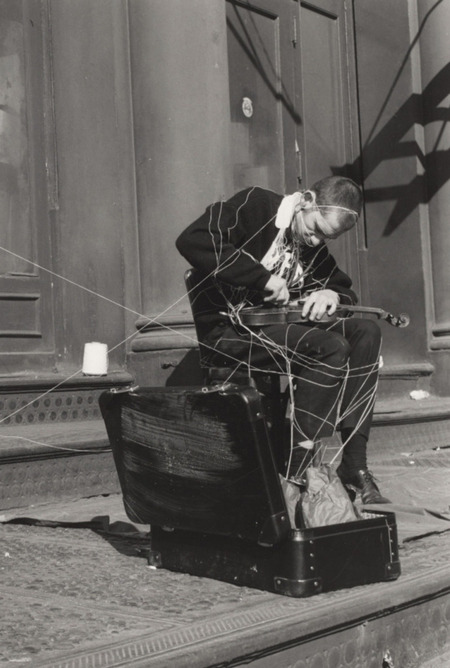
Definition
Fluxus was an international avant-garde art movement that emerged in the early 1960s in the United States, Europe, and Japan. The movement combined visual art, music, poetry, theater, and performance, rejecting traditional ideas of artistic value and professionalism. Fluxus artists believed that art should not exist separately from everyday life and that creative activity could be simple, collective, humorous, and accessible to everyone.
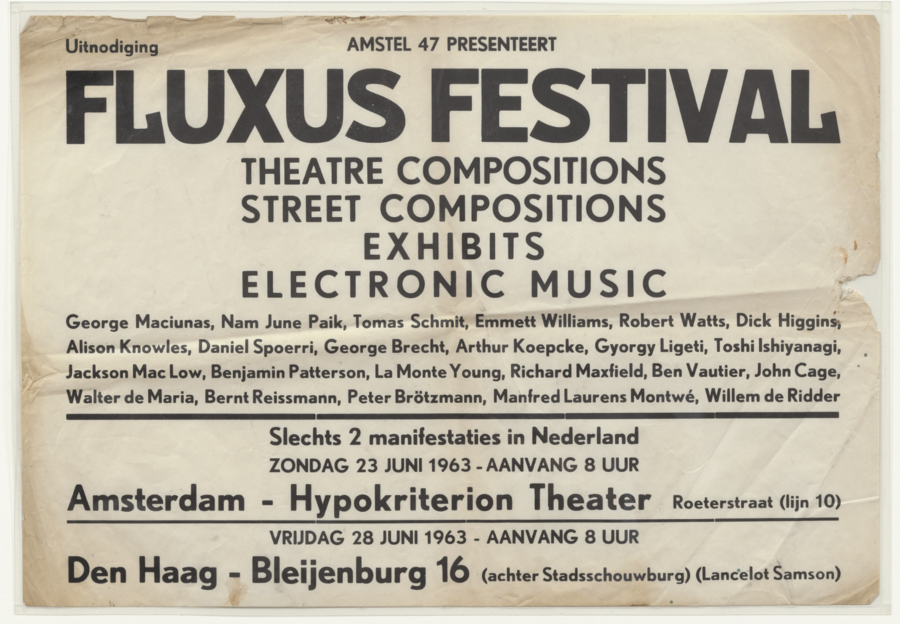
Poster for Fluxus Festival, 1963
Unlike traditional modernist movements focused on aesthetic perfection, Fluxus emphasized process, experimentation, and participation. Many Fluxus works existed only temporarily in the form of performances, instructions, or events. The movement often used irony and absurdity to criticize the commercialization and elitism of the art world.
Key Artworks
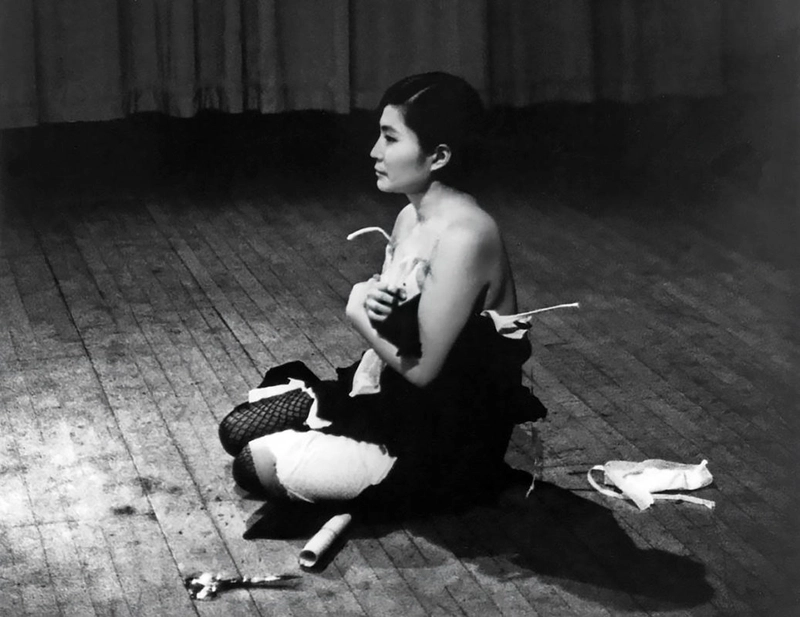
Yoko Ono, Cut Piece, 1965
One of the most important Fluxus works is Cut Piece (1964) by Yoko Ono. During the performance, the audience was invited to cut pieces of the artist’s clothing with scissors. The work explored vulnerability, aggression, and the relationship between performer and viewer.
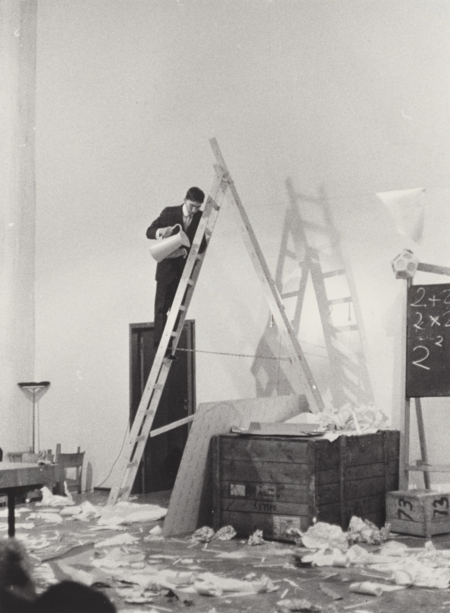
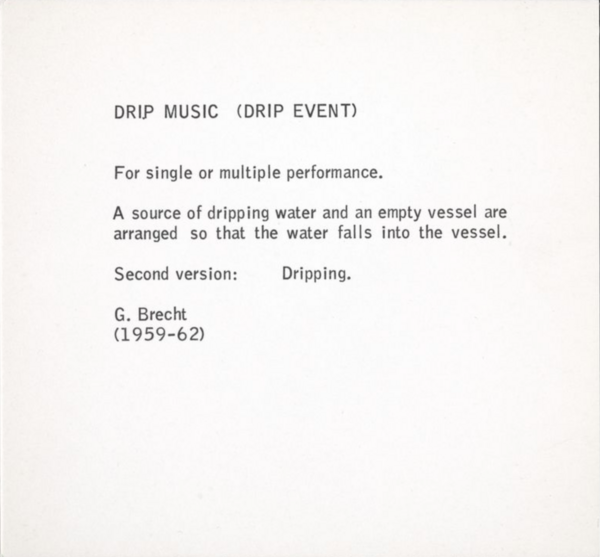
George Brecht, Drip Music, 1963
Another significant example is Drip Music (1962) by George Brecht, consisting of simple instructions describing the act of dripping water into a container. The work demonstrated Fluxus interest in ordinary actions and chance events.
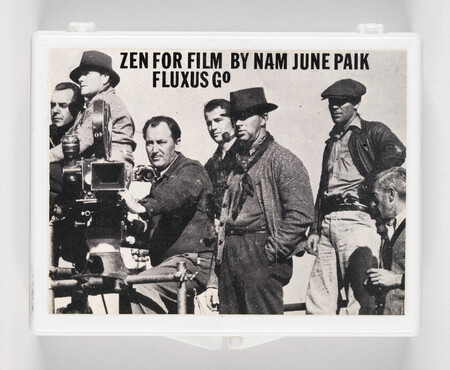
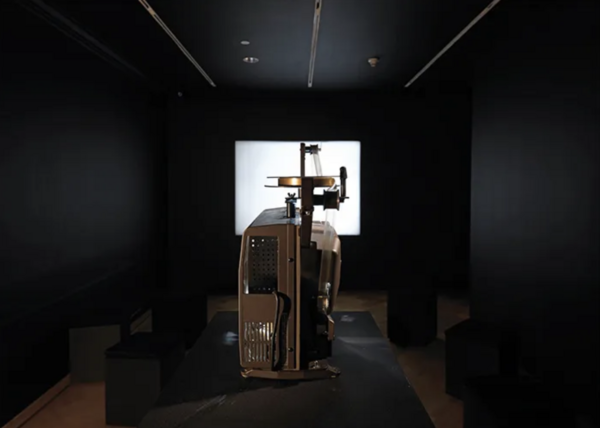
Nam June Paik, Zen For Film, 1964 / Bard Graduate Center Gallery, New York, 2015
Nam June Paik’s Zen for Film (1964) also became an iconic Fluxus artwork. The piece consisted of a blank film projection, transforming dust, scratches, and accidental marks into part of the artistic experience.
Major Artists and Theorists
George Maciunas, 1961
The founder and principal theorist of Fluxus was George Maciunas, who organized festivals, published manifestos, and promoted the movement internationally. Maciunas described Fluxus as anti-commercial and anti-academic art intended to erase the boundaries between art and life.
John Cage, 1947
Another important influence was composer John Cage, whose experimental music and ideas about chance strongly shaped Fluxus aesthetics. Cage encouraged artists to pay attention to everyday sounds and accidental processes.
Important Fluxus practitioners also included Yoko Ono, Nam June Paik, George Brecht, Alison Knowles, and Dick Higgins. Their works combined performance, sound experimentation, poetry, and conceptual practices.
Influences on Fluxus
Marcel Duchamp with readymades Fountain and Bicycle Wheel, 1961
Fluxus developed under the influence of Dadaism, especially the ideas of Marcel Duchamp, who challenged traditional definitions of art through ready-made objects. The movement was also shaped by experimental music, Zen Buddhism, and Allan Kaprow’s «happenings, ” which transformed art into participatory events.
Influence of Fluxus
Fluxus had a major influence on the development of performance art, conceptual art, video art, and contemporary multimedia practices. Many contemporary artistic forms involving participation, interactivity, sound experimentation, and mixed media continue the ideas first explored by Fluxus artists.
The movement also changed the understanding of the artist’s role in society. Instead of producing expensive objects for galleries, Fluxus proposed art as an open process connected to everyday experience, communication, and play.
Fluxus // The Museum of Modern Art (MoMA). URL: https://www.moma.org/collection/terms/fluxus (дата обращения: 05.06.2026).
Charting Fluxus: George Maciunas’s Ambitious Art History // The Museum of Modern Art (MoMA). URL: https://www.moma.org/calendar/exhibitions/1339 (дата обращения: 05.06.2026).
Kedmey K. What Is Fluxus? // Artsy. 2017. URL: https://www.artsy.net/article/artsy-editorial-fluxus-movement-art-museums-galleries (дата обращения: 05.06.2026).