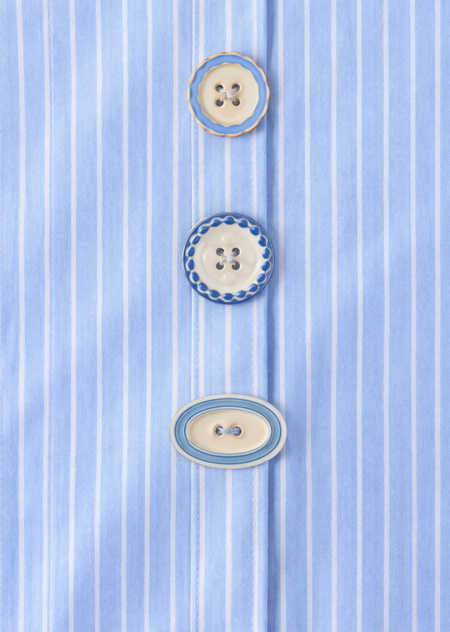
Серия пуговиц tableware you can wear обращается к визуальной памяти о советском быте, беря за основу формы и орнаментальные логики тарелок и блюдец из СССР. Эти предметы — повседневные, массовые, знакомые по кухонным сервировкам и семейным фотографиям — выступают здесь как носители мягкой ностальгии: не как «историческая цитата», а как устойчивый образ домашнего уклада, в котором повторяемость и простота становились эстетикой повседневности.

Функциональность пуговицы — отверстия под нить — намеренно интегрируется в композицию «зеркала», фиксируя двойной статус объекта: одновременно элемент одежды и миниатюрная «посуда». В этом смещении масштаба ностальгия становится не сюжетом, а способом действия: знакомый предмет переносится в новую среду и начинает работать как тихий знак личной памяти.
Минималистичная геометрия и крупные поверхности делают серию принципиально пригодной для 3D-производства. Пуговицы проектируются как монолитные формы с мягкими переходами и читаемым рельефом, где повторяемость и стандартизация, характерные для советской предметной культуры, превращаются в художественный метод, обеспечивающий цельность серии.

промо баннер всей серии
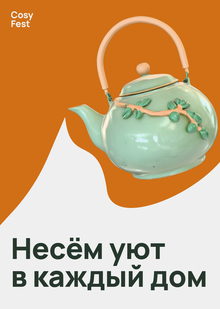
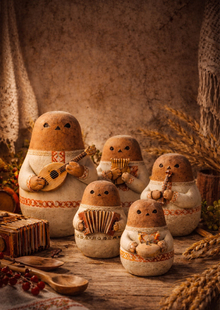
рекламные плакаты
Объекты


Техническое задание
1. Назначение изделия Пуговицы для пришивания на одежду/аксессуары. Серия выполнена в форме миниатюрных тарелок: вогнутая центральная часть + выраженный борт/кант, иногда ажурный край, с декоративным принтом/орнаментом по борту.
2. Технология изготовления Основная технология: SLA/MSLA фотополимерная 3D-печать (высокая детализация, гладкая поверхность, точная геометрия).
Рекомендованные параметры печати:
- Высота слоя: 0.03–0.05 мм
- Экспозиция/параметры — по материалу и конкретному принтеру исполнителя
- Ориентация: лицевой стороной вверх, поддержка только на тыльной стороне, чтобы лицевая поверхность оставалась чистой
- Поддержки: минимальные, с мелкими точками контакта, чтобы не портить кант и край
3. Материал Рекомендованный материал: инженерный фотополимер «tough/ABS-like» (ударопрочнее стандартного, меньше риск сколов у кромки и вокруг отверстий). Допустимы аналоги: tough resin», «durable resin», «ABS-like resin» от производителя принтера/смолы.
Требования к материалу:
- достаточная прочность на тонких элементах (край/кант/ажур)
- минимальная хрупкость (пуговицы должны выдерживать пришивание и носку)
- стабильность геометрии после дозасветки (без коробления)
4. Габариты и вариативность
- Размерный диапазон: Внешний размер пуговицы (Ø или длина по овалу): 10–30 мм
- Рекомендуемый размерный набор: S: 12–15 мм M: 18–22 мм L: 25–30 мм
Толщина (рекомендация для прочности и «тарелочного» профиля):
- Общая толщина: 3.0–5.0 мм (в зависимости от модели)
- Минимальная толщина в зоне «дна чаши»: не менее 1.6–2.0 мм
- Минимальная толщина борта/канта: не менее 1.8–2.2 мм
- Ажурные/волнистые края: перемычки не тоньше 1.2–1.5 мм (для уверенной печати и прочности)
5. Отверстия и крепление Варианты: 2 отверстия или 4 отверстия (в зависимости от модели).
Рекомендуемые параметры:
- Диаметр отверстия под нить: 2.0–2.5 мм
- Фаска на отверстиях (с обеих сторон): 0.3–0.6 мм, чтобы нитка не перетиралась Для 2 отверстий: расположение по вертикальной оси, симметрично центру Для 4 отверстий: квадрат/прямоугольник, симметрично центру
Требование: отверстия должны быть чистыми, без «заплывов» смолы; допускается аккуратная механическая дочистка сверлом соответствующего диаметра после печати.
6. Требования к поверхности и качеству
Лицевая сторона (видимая): 1.1. без следов поддержек 1.2. без грубых ступеней/полос 1.3. аккуратный кант/край, без сколов
Тыльная сторона: 2.1. допускаются следы поддержек, но после снятия — без острых «пеньков» 2.2. поверхность гладкая, чтобы не цепляла ткань
Допуски (ориентиры): 3.1. Габарит Ø/длина: ±0.2 мм 3.2. Толщина: ±0.2 мм 3.3. Отверстия: ±0.15 мм
7. Постобработка (обязательная)
- Промывка в IPA/очистителе (2 стадии), удаление остатков смолы
- Снятие поддержек (до финальной дозасветки, чтобы уменьшить риск сколов)
- УФ-дозасветка по регламенту материала
- Шлифовка тыльной стороны/мест контакта поддержек (P600–P1000) При необходимости: тонкий слой грунта/праймера под окраску (для равномерного покрытия)
8. Нанесение принта и защита (декор) Способы нанесения принта:
Ручная покраска: 1.1. базовый цвет (эмаль/акрил) 1.2. нанесение орнамента кистью/через трафарет 1.3. финишное покрытие лаком
Тампопечать: 2.1. подготовка клише под выбранный орнамент 2.2. нанесение принта по борту/канту 2.3. финишное покрытие лаком
UV-печать: 3.1. тест адгезии к грунту/материалу 3.2. печать орнамента на борту/полосе 3.3. финишное покрытие лаком
Защитное покрытие (рекомендуется для всех вариантов с декором):
- Прозрачный лак: сатин / глянец (в зависимости от эстетики серии)
- Предпочтительно: 2K полиуретановый лак
- Альтернатива: качественный акриловый clear coat
- Нанесение: 1–2 тонких слоя, межслойная сушка, финальная выдержка до набора прочности
- Требование: покрытие не должно «заплывать» в отверстия и ухудшать пришивание
9. Контроль качества (проверки) Проверка отверстий:
- отверстия чистые, без «заплывов» материала
- нитка проходит свободно, без зацепов
- фаски сохранены, нет острых кромок
Проверка поверхности:
- лицевая сторона без следов поддержек и заметных артефактов печати
- тыльная сторона гладкая, без острых выступов, не цепляет ткань
- кант/край без сколов и трещин
Проверка прочности в использовании:
- тест на пришивание: 10–15 циклов протяжки нити без повреждений вокруг отверстий
- тест на износ принта/лака (если есть декор): лёгкое трение тканью/ногтем — без заметного стирания и сколов
10. Файлы и передача Формат и структура:
- передача моделей в формате STL
- единицы измерения: мм
- модели «watertight» (замкнутые), без самопересечений, корректные отверстия
STL
Процесс
скетчи
Этап 1 — Исследование и формирование визуального языка.
- Поиск и изучение фотографий советской посуды в интернете: сбор референсов тарелок, выделение характерных признаков.
- Отбор ключевых мотивов и формирование «семейства» объектов: определение, какие типы тарелок будут переведены в пуговицы и за счёт чего серия будет выглядеть цельно.
- Ручная отрисовка эскизов: быстрые скетчи профилей и силуэтов будущих пуговиц, предварительная компоновка отверстий.
Этап 2 — Генерация и итерации 2D-скетчей
- Подготовка промптов и генерация концепт-скетчей в Sora: получение вариаций пуговиц в заданной стилистике (студийный сеттинг, белый фон, мягкий свет).
- Итеративная доработка промптов: уточнение формулировок для контроля формы, количества и расположения отверстий.
- Финальный выбор скетчей: фиксация набора вариантов, которые задают единую визуальную систему серии и служат основой для 3D-моделирования.
Этап 3 — Создание 3D-моделей и приведение к печати
- Генерация 3D-моделей по выбранным скетчам в Meshy.ai: создание первичных STL версий объектов.
- Коррекция геометрии в Blender: очистка сетки, устранение артефактов, выравнивание толщин, доработка кромок и отверстий, приведение моделей к единой системе размеров и пропорций.
- Проверка технической корректности модели: целостность, отсутствие самопересечений, достаточные толщины, корректные отверстия под нить.
- Подготовка к 3D-печати в Anycubic Photon Workshop: ориентация моделей, генерация поддержек при необходимости, настройка параметров печати под выбранную технологию, экспорт STL.
Этап 4 — Визуализация и промо-материалы
- Рендер готовых моделей в Blender: рендер изображений объектов для презентации.
- Генерация промо-изображений в Sora: имиджевые кадры серии.
- Сбор рекламных материалов: подготовка постера/кей-визуала, подбор композиции и типографики под название серии.
Этап 5 — ТЗ и финальная упаковка проекта
- Формирование ТЗ на производство: размеры, материал, технология печати, требования к поверхности/точности, рекомендации по постобработке.
- Уточнение и редактирование ТЗ в ChatGPT: приведение требований к ясной технической структуре и проверка логики параметров.
- Сбор всех материалов в итоговую презентацию: концепция, эскизы, промо, рендеры, ракурсы, ссылка на STL, ТЗ, описание процесса.