Hello!
I am an urban designer.
Education
2023 — 2027 (expected) St. Petersburg School of Design, HSE Environmental and Interior Design + Urbanism 2026 Xi’an Jiaotong-Liverpool University Urban Planning and DesignCompetitions 1st place Young Design 3rd place XI RBC Architectural & Urban Planning ForesightSofts 2D AutoCAD 3D 3ds Max, SketchUp Rendering V-Ray, Corona, Enscape, Unreal Engine, Twinmotion Web and Layout Photoshop, Illustrator, InDesign, Figma Analytics QGIS, Python + Pandas, Excel, SPSSWhat I bring
Driven by questions. Guided by answers.
Nan Zhuang Village Master Plan and Public Space Activation Strategy: Active Aging and Co-Production Community
First comes research, and then does the design phase begin.
When developing the masterplan and environment design concept for the Nan Zhuang village in Suzhou (China) my initial question was simple: who actually lives here?
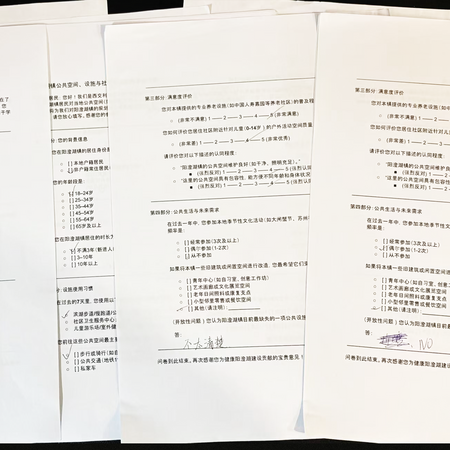
Census data analysis showed growth in both the child and elderly populations, pointing to two groups living side by side: newly arrived families and an aging local community.A survey then revealed a gap. Most of the infrastructure was being built for the younger group, leaving older locals underserved.
How does the place live through the year?
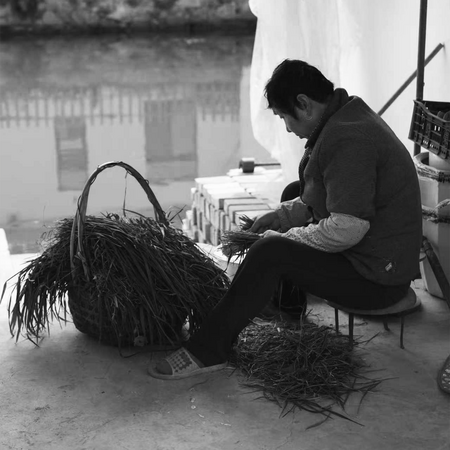
Field research indicated seasonal economy: older residents were involved only in winter, through the crab industry, while summer brought a surge of tourists. In-depth interviews uncovered a group I had not expected: digital nomads, drawn by seclusion close to the city. New venues for young people were appearing around them.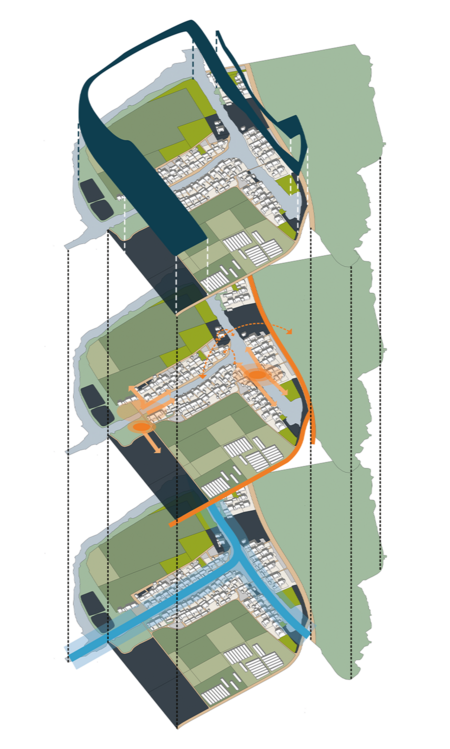
What is not working?
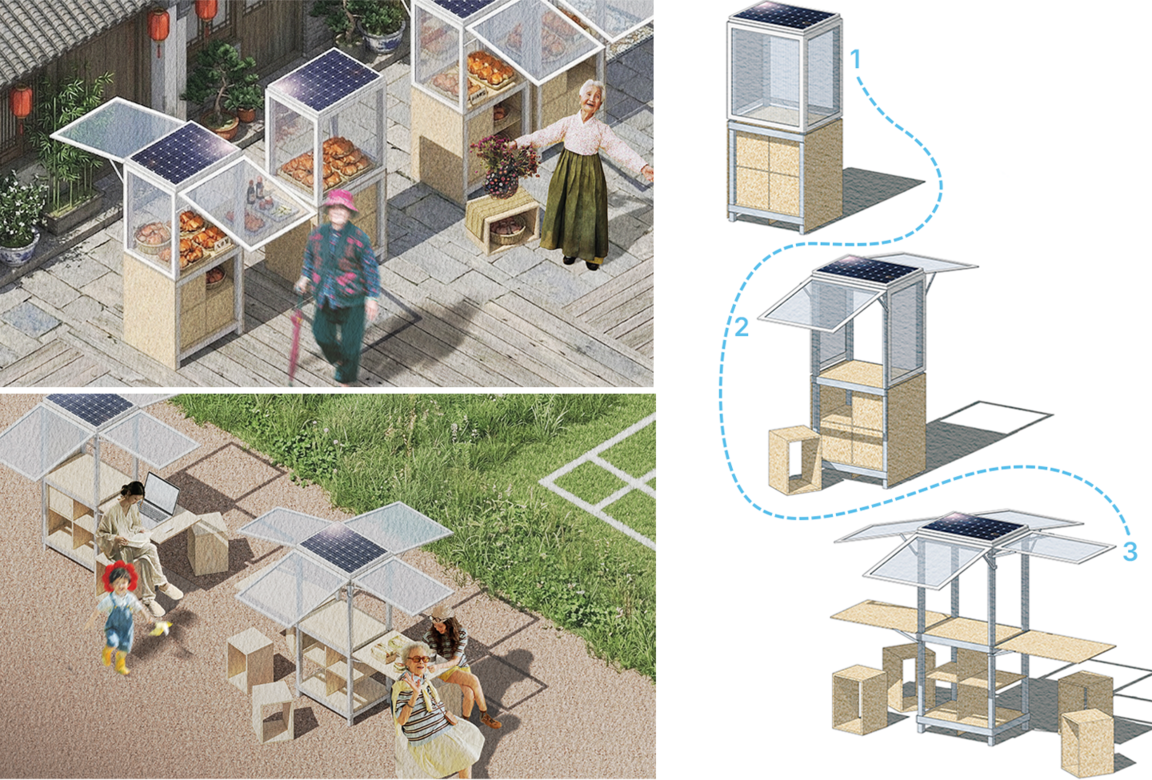
I identified three core problems:1 | older residents were excluded from the local economy 2 | tourism and local life did not benefit each other 3 | tourism revenue was captured almost entirely by private campsites
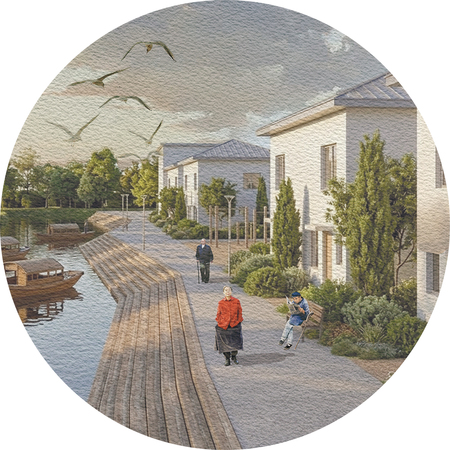
What would change that?
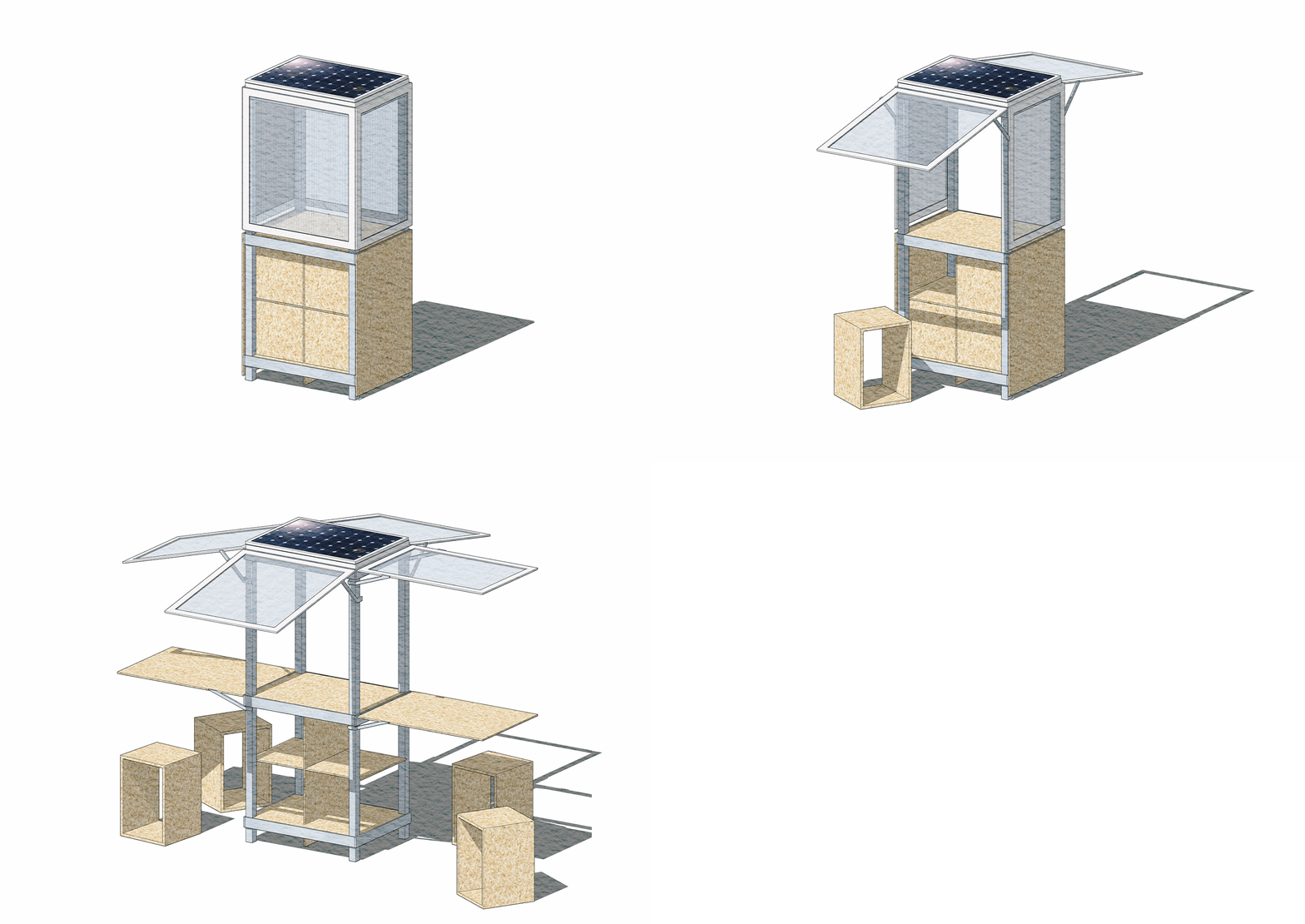
My proposal responded with three moves:1 | converting old buildings into shared housing for retirees and multigenerational families 2 | creating public spaces where visitors and locals could meet 3 | using the area’s sports potential to support the local economy and active aging
That is how I work.
What I value
The site already has a plot. I just direct it.
Children’s Science Park in Novoznamenka
I am always interested in the unique local context. I design environments that are tailored to specific place. My project of the Children’s Science Park in Novoznamenka in St. Petersburg (Russia) began with defining that context.

What makes this place special?
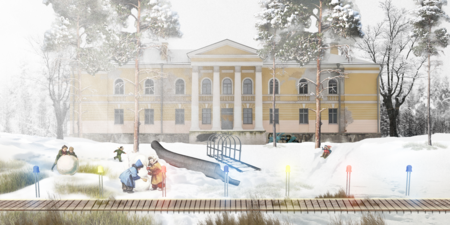
Most of Novoznamenka’s historic buildings serve educational purposes, reflecting the cluster of schools in the area. One site stands out: the Strelna traction substation with a railway line nearby. Over 200 years, Minich’s neoclassical dacha has become an unusual place: its main house now shelters electrical equipment, and railway tracks run through its territory.
What is not working?
The site is surrounded by three schools and a kindergarten, yet it is not adapted for children who could spend time here after class. It is also unsafe and inconvenient for both children and residents who cut through it on their way home. The district seems to lack places for teenagers, who end up organizing their own gathering spots.What could the place become?
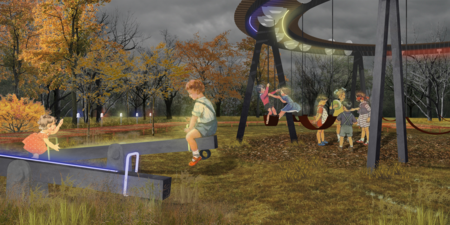
I proposed a science park for children with these goals:1 | a safe place where locals want to spend time 2 | a new function: opening up the secrets of the substation 3 | outdoor classrooms for local schools 4 | a gathering point for local events and festivals 5 | preserving the historic landscape and its atmosphere


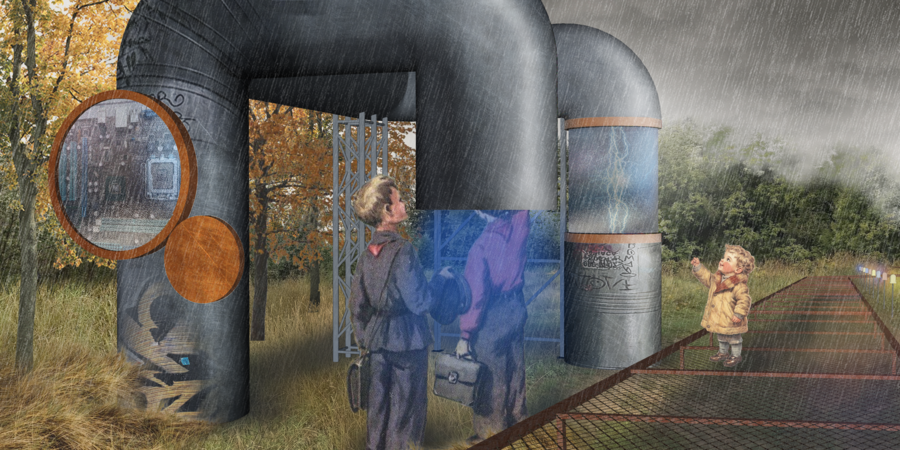
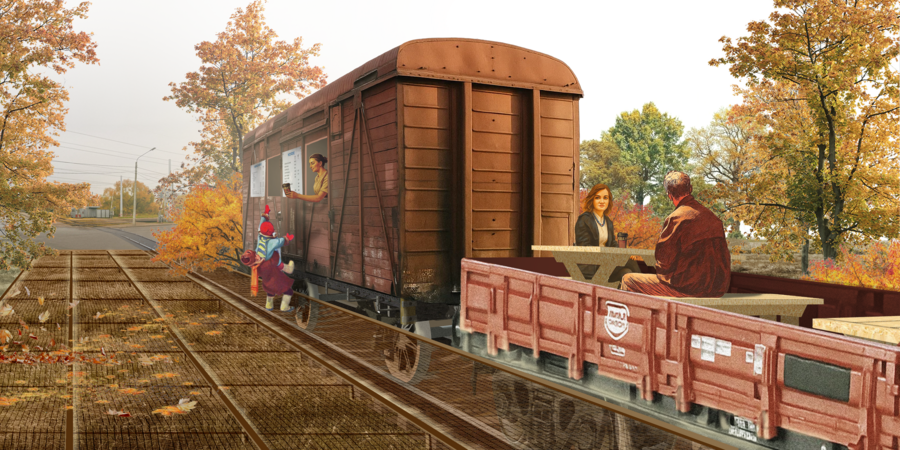
How does history become design? I drew the masterplan like an old electrical circuit board. Instead of pavilions, I reused old freight wagons. They house food trucks, public toilets, and a small walk-through museum of electricity.
What I envision
Make room for what’s next.
Museum of New Petersburg Design
Almost everyone who works in design has asked whether Russian design exists. I chose to approach the question through locality. St. Petersburg has no formed school yet, but it has its own approach, and the idea is still tied to the past: folk motifs, Soviet constructivism. But is national design ready for something completely new?