What is Pop Art?
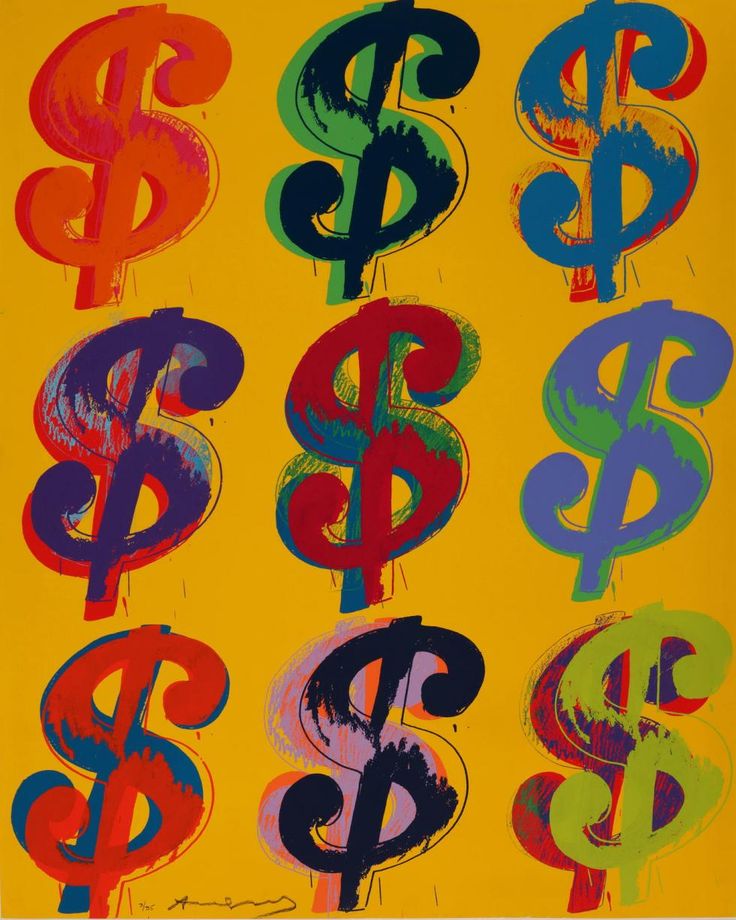
Pop Art appeared in the mid-1950s in Great Britain and reached its peak in the United States during the 1960s. The movement deliberately appropriated imagery from popular culture, including advertisements, comics, products, celebrity portraits and packaging. Unlike Abstract Expressionism, which was sublime and elitist, Pop Art embraced the banal and the mechanical, blurring the line between «high» art and «low» mass culture.
Main practitioners and key examples
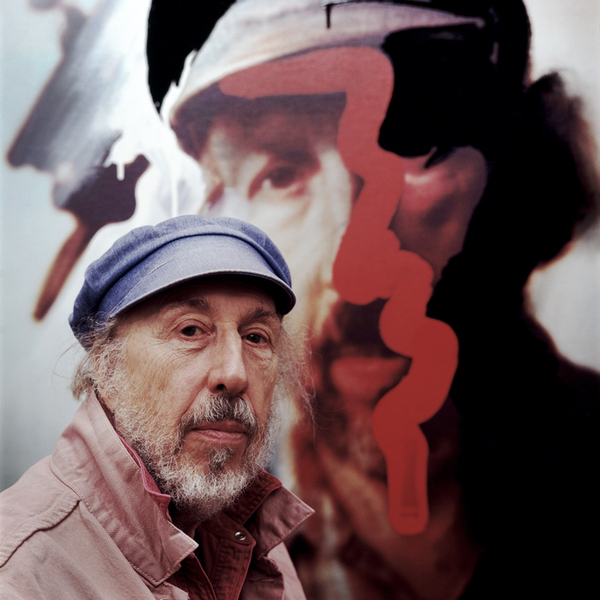
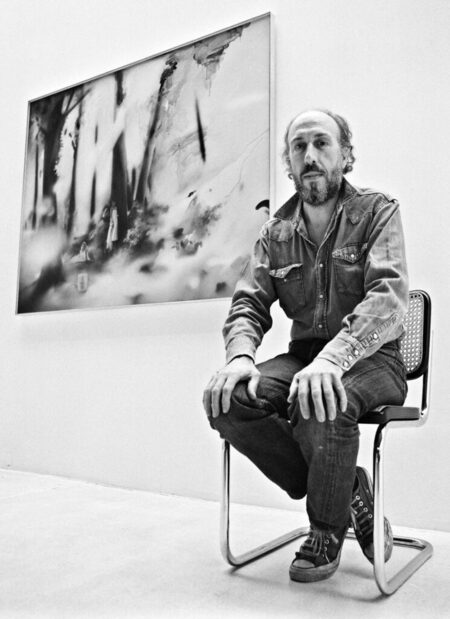
Portraits of Richard Hamilton
Four works by the most prominent practitioners illustrate the phenomenon with clarity. The first is Richard Hamilton’s 1956 collage «Just what is it that makes today’s homes so different, so appealing?». The image shows a bodybuilder holding a giant lollipop, a vacuum cleaner, a TV set, and a canned ham, condensing the post-war consumer dream into a single ironic image.
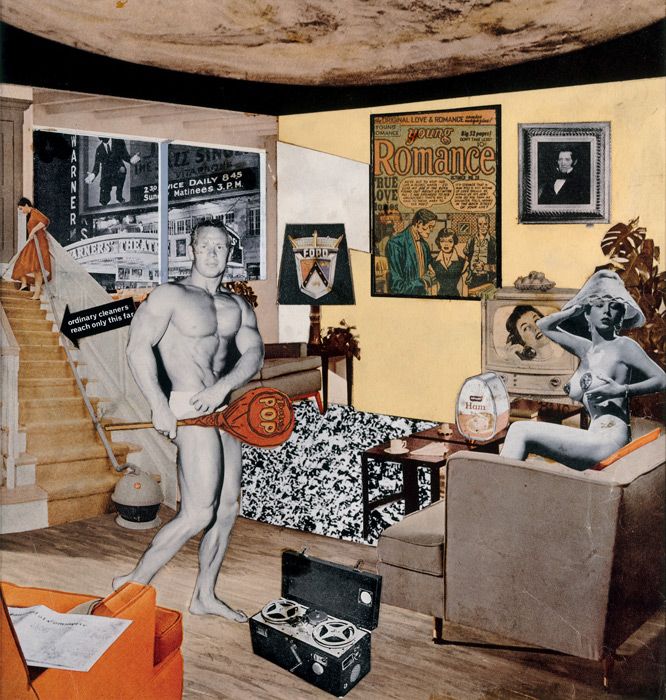
Just what is it that makes today’s homes so different, so appealing? / Richard Hamilton / 1956 / Collage (paper, magazines, advertising cutouts)
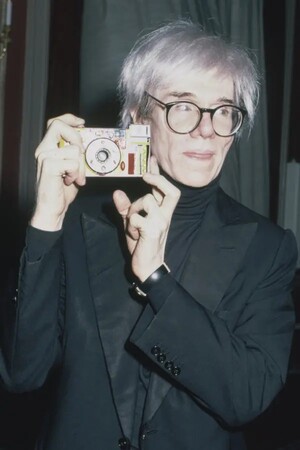
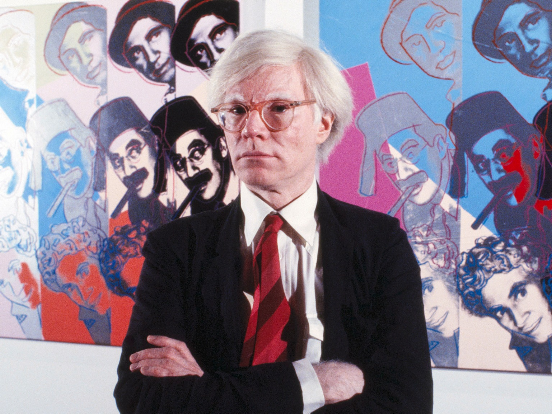
Portraits of Andy Warhol
The second key work is Andy Warhol’s Marilyn Diptych from 1962. Warhol took a photograph of the actress and silkscreened it repeatedly across two large panels. The left side is brightly coloured, mimicking magazine advertisements, while the details of the portraits on the right side, which is black and white, gradually disappear. In an interview, Warhol stated that he wanted to be a machine, doing the same thing repeatedly, and that Pop Art was simply «liking things» [3]. The work also comments on the Hollywood star machine and mourns Monroe’s death.
Marilyn Diptych / Andy Warhol / 1962 / Silkscreen ink on canvas (two panels)
Portrait of Roy Lichtenstein
The third example is Roy Lichtenstein’s «Whaam!» from 1963, a monumental diptych based on a war comic book. The artist enlarged the image, manually reproduced the Ben-Day dots of commercial printing, and added the explosive word. By magnifying a disposable image to the scale of history painting, Lichtenstein forces viewers to take popular culture seriously.
Whaam! / Roy Lichtenstein / 1963 / Paint and oil on canvas (two panels)
Portrait of Claes Oldenburg
The fourth example is by Claes Oldenburg, who took a different path by working in three dimensions with unconventional materials, such as foam, rubber and latex. In his manifesto Oldenburg declared: «I am for an art that embroils itself with everyday crap & still comes out on top. I am for an art that takes its form from lines of life itself» [5]. By replacing traditional materials, he introduces absurdist humour and the mockery of consumer abundance to Pop Art.
Soft sculpture Toilet, Soft sculpture Cello, Soft sculpture Mixer / Claes Oldenburg / Foam, rubber, painted latex
Together, they redefined what art could look at and look like.
Main theorists and key texts
Pop Art also had its theorists, including Alloway, who coined the term «Pop Art» and argued against Clement Greenberg’s dismissal of mass culture as mere «kitsch» in his «The Arts and the Mass Media» [1].
Portrait of Lawrence Alloway
Also, Richard Hamilton himself produced a list of Pop Art characteristics, describing it as «Popular, Transient, Expendable, Low cost, Mass produced, Young, Witty, Sexy, Gimmicky, Glamorous, Big business», which remains a fundamental theoretical statement [6].
Portrait of Richard Hamilton
Influences on Pop Art
Several earlier phenomena influenced Pop Art: for instance, Dada, especially Marcel Duchamp’s readymades, which first introduced everyday objects into art.
Influence of Pop Art on later art
In turn, Pop Art influenced Conceptual Art and Postmodernism, anticipating the blurring of high and low culture, irony, and the questions of artistic authorship.
Alloway L. The Arts and the Mass Media / L. Alloway // Art in Theory, 1900–1990: An Anthology of Changing Ideas / ed. by Ch. Harrison, P. Wood. — Oxford: Blackwell Publishers, 1992. — P. 700–703.
Hamilton R. For the Finest Art, Try Pop / R. Hamilton // Art in Theory, 1900–1990: An Anthology of Changing Ideas / ed. by Ch. Harrison, P. Wood. — Oxford: Blackwell Publishers, 1992. — P. 726–727.
Warhol A. Interview with Gene Swenson / A. Warhol // Art in Theory, 1900–1990: An Anthology of Changing Ideas / ed. by Ch. Harrison, P. Wood. — Oxford: Blackwell Publishers, 1992. — P. 730–733.
Lichtenstein R. Lecture to the College Art Association / R. Lichtenstein // Art in Theory, 1900–1990: An Anthology of Changing Ideas / ed. by Ch. Harrison, P. Wood. — Oxford: Blackwell Publishers, 1992. — P. 733–735.
Oldenburg C. I Am for an Art… / C. Oldenburg // Art in Theory, 1900–1990: An Anthology of Changing Ideas / ed. by Ch. Harrison, P. Wood. — Oxford: Blackwell Publishers, 1992. — P. 727–730.
Pop art [Электронный ресурс] // Tate. — URL: https://www.tate.org.uk/art/art-terms/p/pop-art (дата обращения: 08.06.2026).
https://tse2.mm.bing.net/th/id/OIP.04Rz1QMbJC3UvfX_Fk4UCwHaJQ?r=0&cb=thfc1falcon2&rs=1&pid=ImgDetMain&o=7&rm=3 (Дата обращения: 08.06.2026)
https://th.bing.com/th/id/R.d0eb3cfee46f70cbac8ccefc9e8c698c?rik=o9sFKkiXoq%2bNMA&pid=ImgRaw&r=0 (Дата обращения: 08.06.2026)
https://www.sciencehistory.org/wp-content/uploads/2023/04/peo_1-1-745x1024.jpg (Дата обращения: 08.06.2026)
https://blogger.googleusercontent.com/img/a/AVvXsEhqyoTDdzmCi__fsT2PSsajHuhBkvlsGUGY3MEWFwMRruoVlPRSX4TBaQY1T6AwO_hAX5IdnM0eotcSYe5luCzs9u1S6qPtSzhlf0Q76IrwAepU8MXrXBwJiAYOkJkhnJ55RXrameEU4EceK1XZhpRs3bZoU5yhFD1dVTeirQOQ0rZ_XM5-lAvnMHcj=w552-h414 (Дата обращения: 08.06.2026)
https://static01.nyt.com/images/2019/07/02/arts/02warhol-prince/02warhol-prince-jumbo.jpg?quality=75&auto=webp (Дата обращения: 08.06.2026)
https://static.independent.co.uk/s3fs-public/thumbnails/image/2013/02/02/18/lichtenstein-gt.jpg?quality=75&width=990&auto=webp&crop=982:726 (Дата обращения: 08.06.2026)
https://nypost.com/wp-content/uploads/sites/2/2022/07/Claes-Oldenburg-sculptor-artist-dies-04.jpg (Дата обращения: 08.06.2026)
https://i.pinimg.com/736x/2e/35/73/2e357374095c66346549c781907fb7d3--claes-oldenburg-arte-d.jpg (Дата обращения: 08.06.2026)
https://tse4.mm.bing.net/th/id/OIP.JGqXRKOS3ZIf2B1CUentFwHaKk?r=0&cb=thfc1falcon&rs=1&pid=ImgDetMain&o=7&rm=3 (Дата обращения: 08.06.2026)
https://i.pinimg.com/originals/c6/af/51/c6af51ce180fcb71fa6f095dd02bf5d5.jpg (Дата обращения: 08.06.2026)
https://www.guggenheim.org/wp-content/uploads/2016/01/people-alloway-lawrence-1964-guggenheim-international-awards-2.jpg (Дата обращения: 08.06.2026)