
Original size 1140x1600

Analysis of Duolingo brand communications

This project is a student project at the School of Design or a research project at the School of Design. This project is not commercial and serves educational purposes
The project is taking part in the competition
Original size 3500x1751

Brand positioning and ecosystem

post

Core functionality of the app and target audience

Duolingo is one of the most popular language-learning applications in the edutainment niche. Initially, it sought to convey support and care for users through its brand communication, but its positioning has changed over time. As of 2026, the number of paid subscribers exceeds 12 million, with a daily active audience of 50 million users.

Initially, Duolingo was an application that improved the accessibility of education, thereby mitigating some aspects of acute social inequality. The mobile application format implies a low barrier to entry, which opens up learning opportunities for a vast number of people, making education free, fun, and universally accessible. The active development of the application led to the adoption of a freemium business model: the core functionality is free, while additional features are available via subscription. However, a challenge arises as the Duolingo application coexists on a single smartphone with numerous social media and entertainment applications. This creates a need to attract the user’s attention in a specific way.

«You see, teaching with the help of a smartphone means expecting people to eat broccoli when placed next to it is the world’s most delicious dessert»

Luis von Ahn, Duolingo Founder

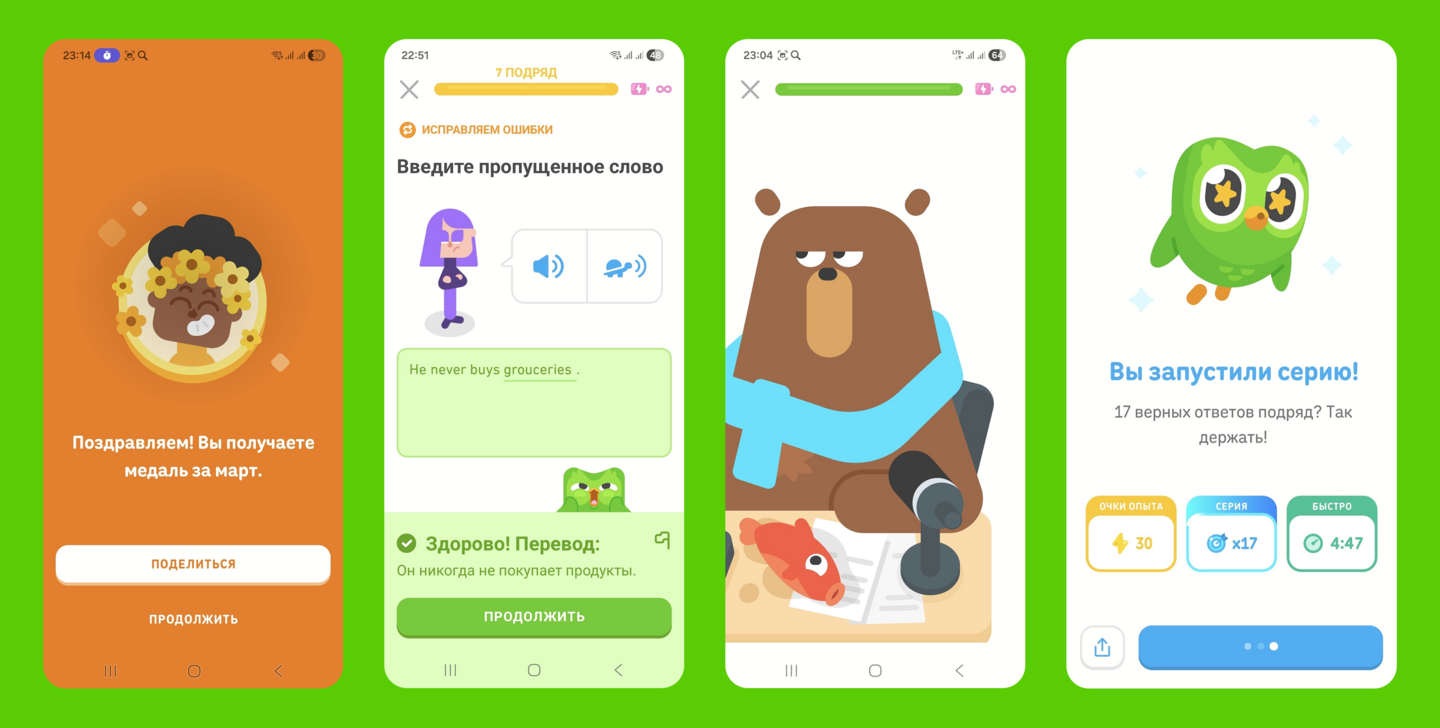
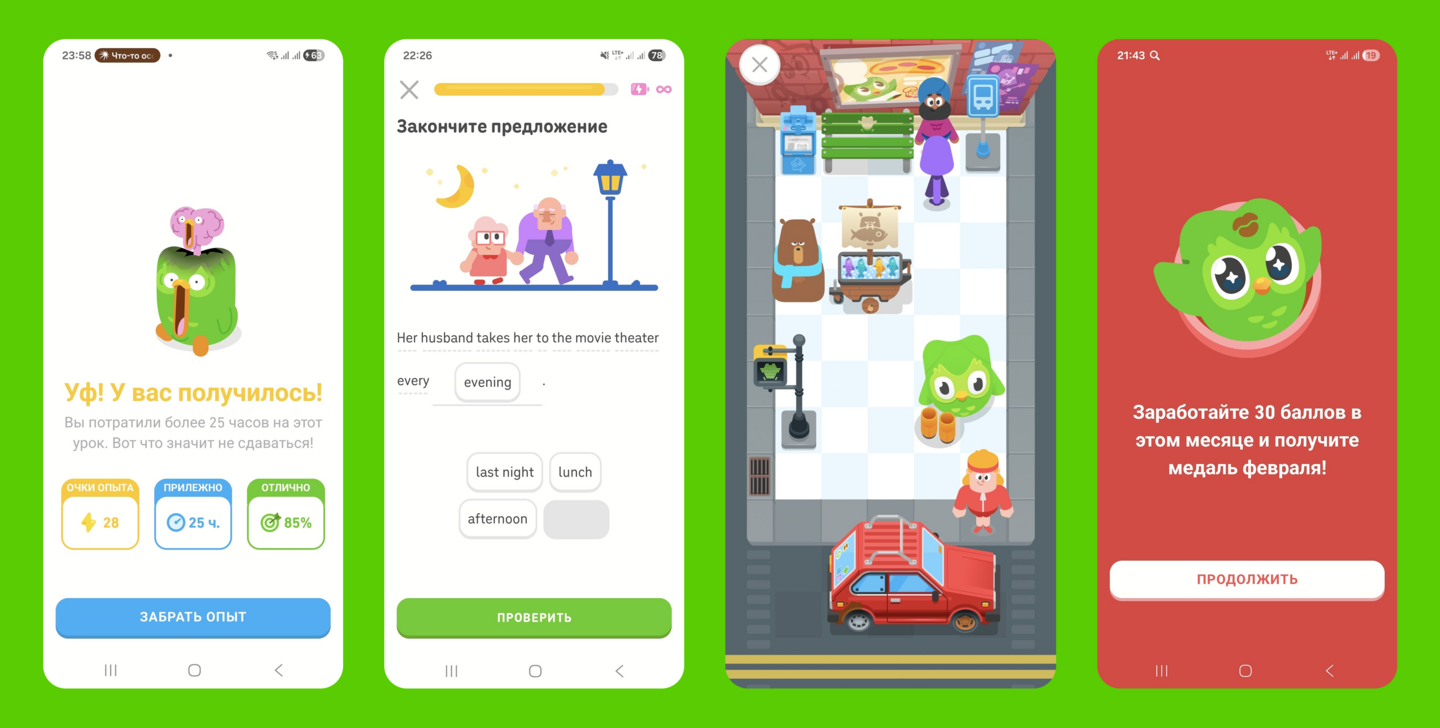
Thus, the startup’s target audience became a highly digitally engaged demographic, consisting of Generation Z (18–24 years old) and millennials. This user group can be characterized as casual learners who consciously reject classical, tedious formats of academic cramming in favor of gamification. They highly value the concept of microlearning, short game sessions, flexible time management, and instant emotional feedback from the product, which allows them to organically integrate daily lessons into their busy and dynamic schedules.
0

Duolingo app screens

Gamification and instant reward strategies were not the only effective tools for user engagement; various bold marketing strategies also played a massive role in the brand’s popularity.

Original size 3500x1559

Duolingo social media posts

Brand communication channels and PR-strategies

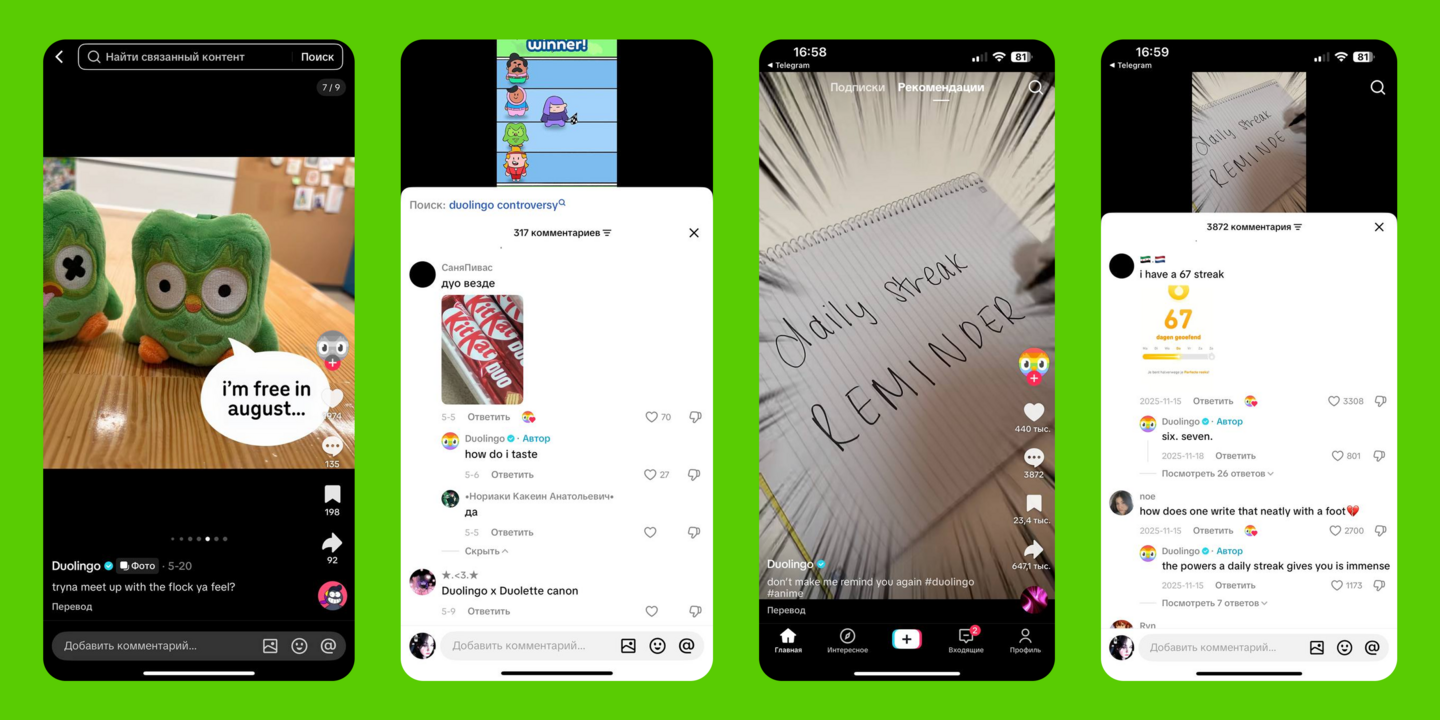
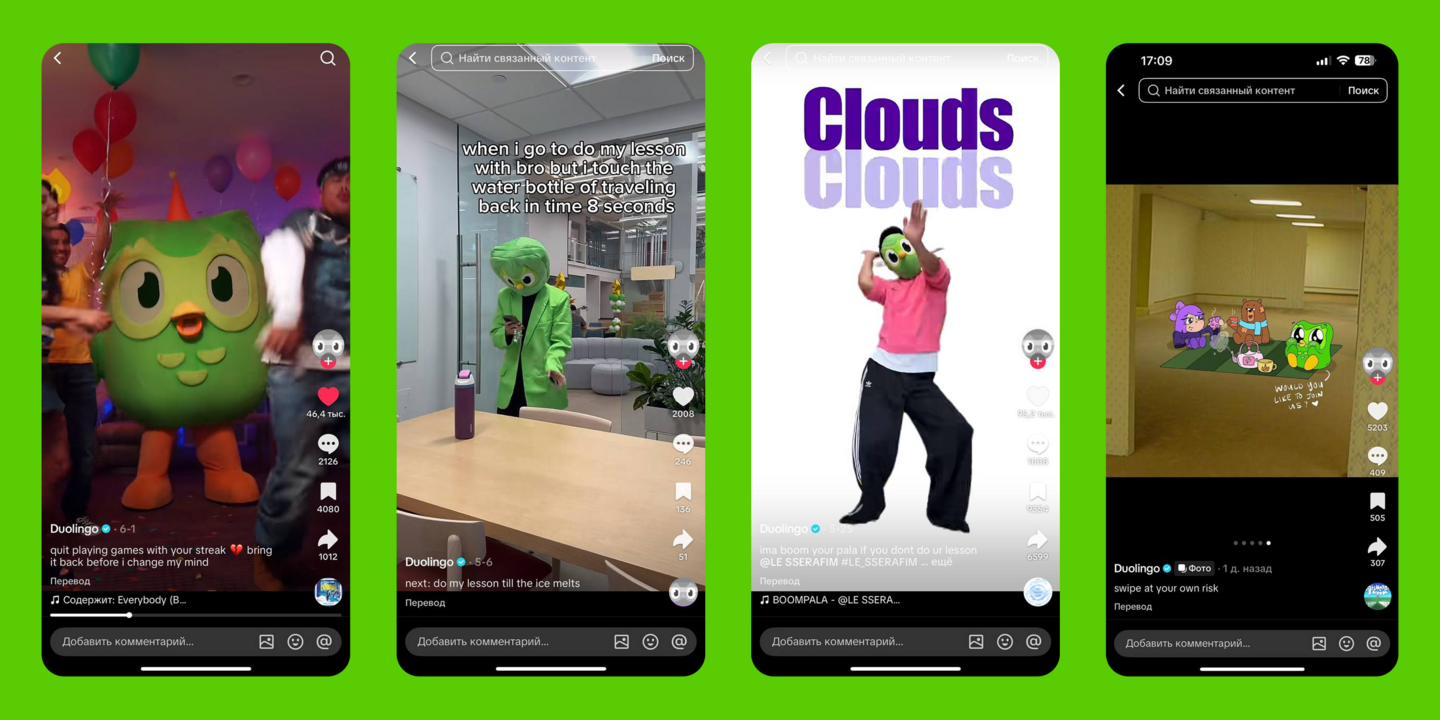
Speaking of the brand’s communication channels, it is worth noting that Duolingo’s public activity relies on a diversified system of media resources, where each channel performs a strictly defined task within the communication ecosystem. The flagship tool for viral marketing is its multimillion-follower TikTok account, entirely built on ultra-short entertaining videos featuring the mascot. Social networks Twitter/X and Instagram* serve as platforms for real-time marketing, text memes, and instant, ironic reactions to global news events. Thus, the brand actively monitors trends and news, maintaining contact with the audience and fostering trust.
0

Average Duolingo TikTok posts | Duolingo сommunication with the audience in TikTok

In-app communications also play a crucial role: customized smartphone widgets, personalized push notifications, and strict behavioral micrometrics, such as streaks, create a closed retention loop that regularly brings the user back to the application.

*Meta recognized as an extremist organization and banned in the Russian Federation

*Meta Признана экстремистской организацией и запрещена на территории РФ

Original size 3483x970

Duolingo widgets

Initially, the brand adhered to an approach based on openness, sincerity, and friendliness in its copywriting: «Goodbye language barrier», «Everyone will succeed», and «Language never stands still». Following the 2019 rebranding, Duolingo launched its first advertising campaign in the UK. Its goal was not only to attract a new audience but also to renew the interest of users who had previously stopped using the application. Therefore, posters centered around the mascot were accompanied by unusual and sometimes aggressive copy, urging users to continue learning and become better.

Original size 3500x2294

Early Duolingo Communication Strategy

Currently, Duolingo’s modern PR strategy is built on a radical departure from the conservative promotion of IT products in favor of direct participation in mass digital culture through the concept of human branding. The company has completely erased the barrier between a faceless corporation and the consumer by building all communication around the image of a lively, anthropomorphic character — the Duo owl mascot. The personality of this character is intentionally far from idealized corporate standards: Duo is portrayed as an eccentric, self-ironic, and sometimes obsessive and slightly toxic hero. Thanks to the mascot’s deep integration into the current internet discourse, Duolingo is perceived by users not as a utilitarian technological tool, but as a fully-fledged, living participant in the online community.

Original size 1150x660

Duolingo app ads, 2023-2026

For instance, artificial intelligence was initially utilized in the user notification system: the program tracked how long a person had been away from the app, and the longer they went without studying languages, the more dissatisfaction the mascot expressed through messages. At a certain point, the notifications arriving on users' smartphones became the subject of jokes and memes. The brand quickly recognized this and began leveraging it in its advertising campaigns. Duolingo escalated this passive aggression to the point of absurdity. Consequently, Duolingo established humor and irony, expressed through human branding, as its primary marketing techniques.

Original size 1920x1080

«Do your lesson, no buts.» 2024

Theoretical models used

Overview

The selection of theoretical frameworks for our project is directly dictated by the unique, dual nature of Duolingo’s communication. On the one hand, the brand is widely known for its absurd, viral memes featuring the Duo owl on social media; on the other hand, it successfully promotes a complex, high-tech educational product with millions of paid subscribers. To investigate in detail exactly how Duolingo manages to combine pure chaotic humor with commercial effectiveness, we have selected two fundamental theories from our course syllabus: the Elaboration Likelihood Model (ELM) and the Dialogic Theory of Communication. These concepts serve as precise analytical lenses: they will help us scientifically explain how the brand manages the psychological mechanisms of perception and builds long-term relationships with its audience.

Original size 3315x1244

The Elaboration Likelihood Model

The Elaboration Likelihood Model (ELM), developed by Richard Petty and John Cacioppo, is a tool for analyzing the mechanisms of persuasion. The theory explains that consumers can process brand messages through two different routes: the central route (when the user is motivated and deeply engages with the logic, facts, and value of the product) and the peripheral route (when information is processed quickly or lazily, based on simple shortcuts — humor, affinity for the source, or fear of missing out). This framework is perfectly suited for analyzing Duolingo, as their entire strategy is built on balancing these two routes. Through the lens of the ELM, the brand uses the peripheral route (memes, the mascot’s intimidating jokes on TikTok, and push notifications) to instantly grab the user’s attention, and then activates the central route (performance statistics, scientific justification of methodologies on the website) to convert this fleeting attention into an actual app subscription.

The Dialogic Theory of Communication

The Dialogic Theory of Communication by Michael Kent and Maureen Taylor was chosen by us as a tool to evaluate the brand’s interactivity and social media engagement. This theory proposes shifting away from traditional, «top-down» corporate PR (where a brand simply broadcasts its news) in favor of ethical, two-way interaction, where the company communicates with its audience as equals. Duolingo is a prime example of putting this concept into practice. The brand builds dialogic loops in post comments, instantly reacting to user remarks. Through its specific conversational style, the demonstration of a human touch, and the conservation of visitors within its content ecosystem, Duolingo transforms ordinary commenters into devoted brand advocates.

Practical case study analysis

ELM Analysis

In an oversaturated media environment, users increasingly avoid actively processing advertising. Therefore, to capture their attention, the brand activates the peripheral route, relying on quick emotional stimuli. Meanwhile, to engage target segments and retain them within the product, Duolingo switches to the central route, appealing to intrinsic motivation and the rational value of the product.

Peripheral route

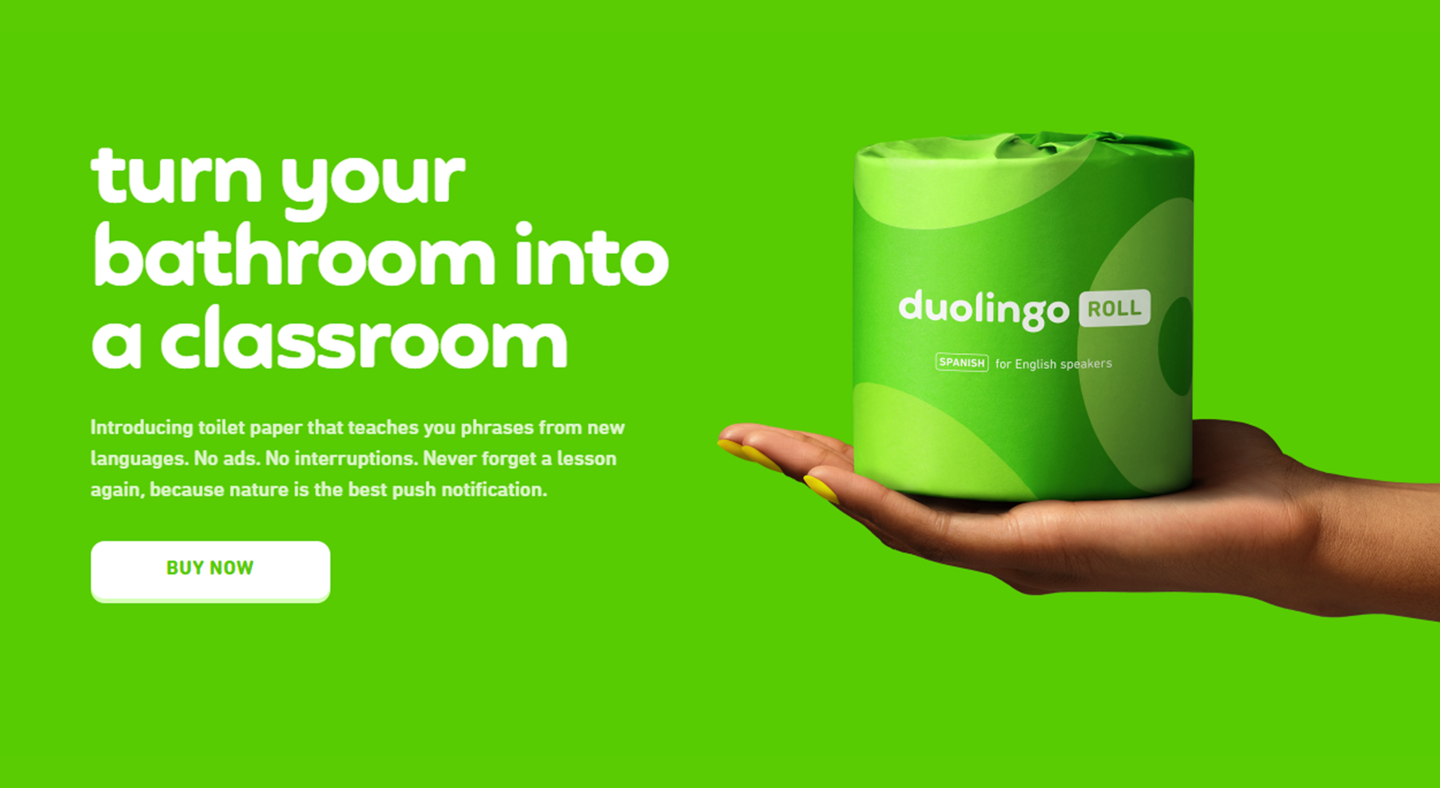
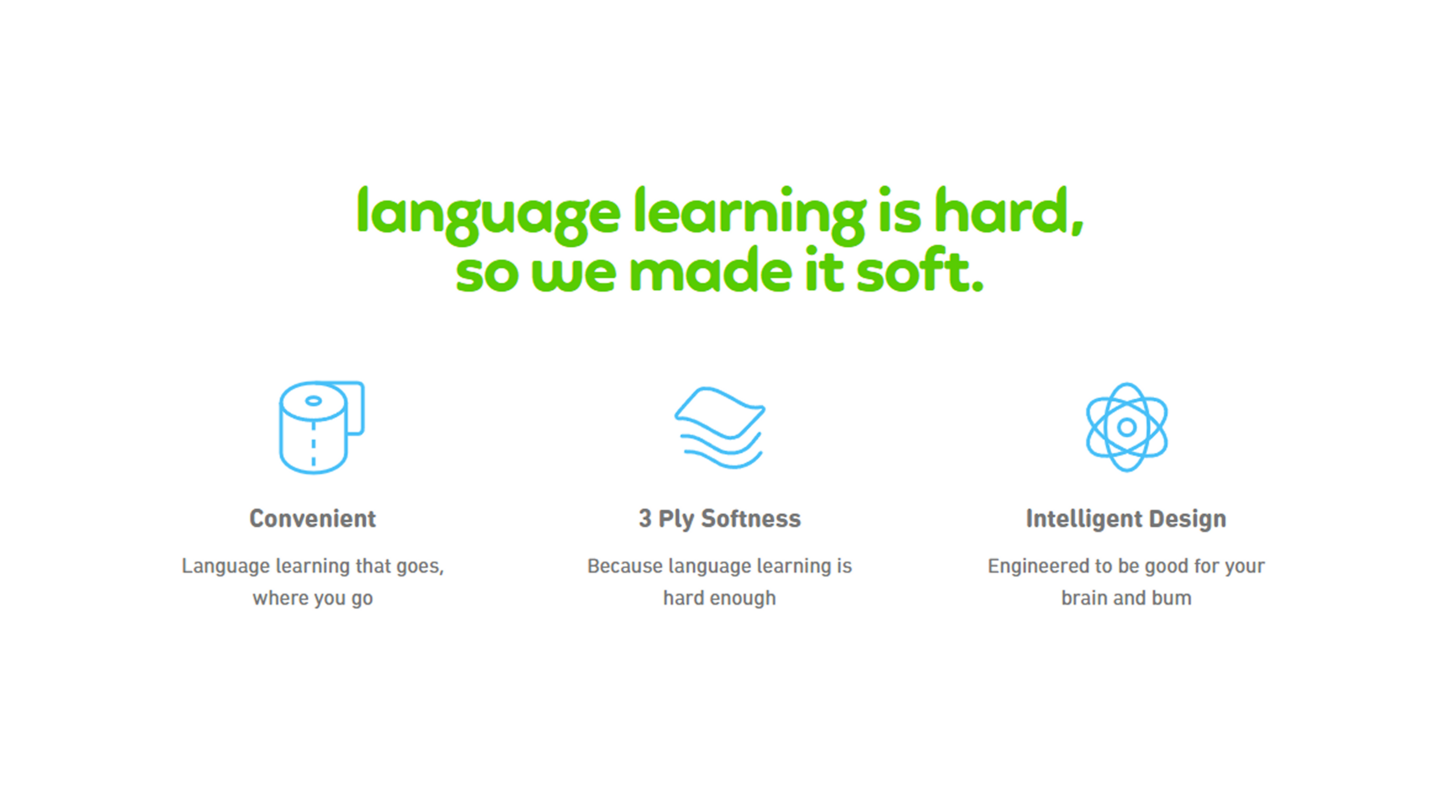
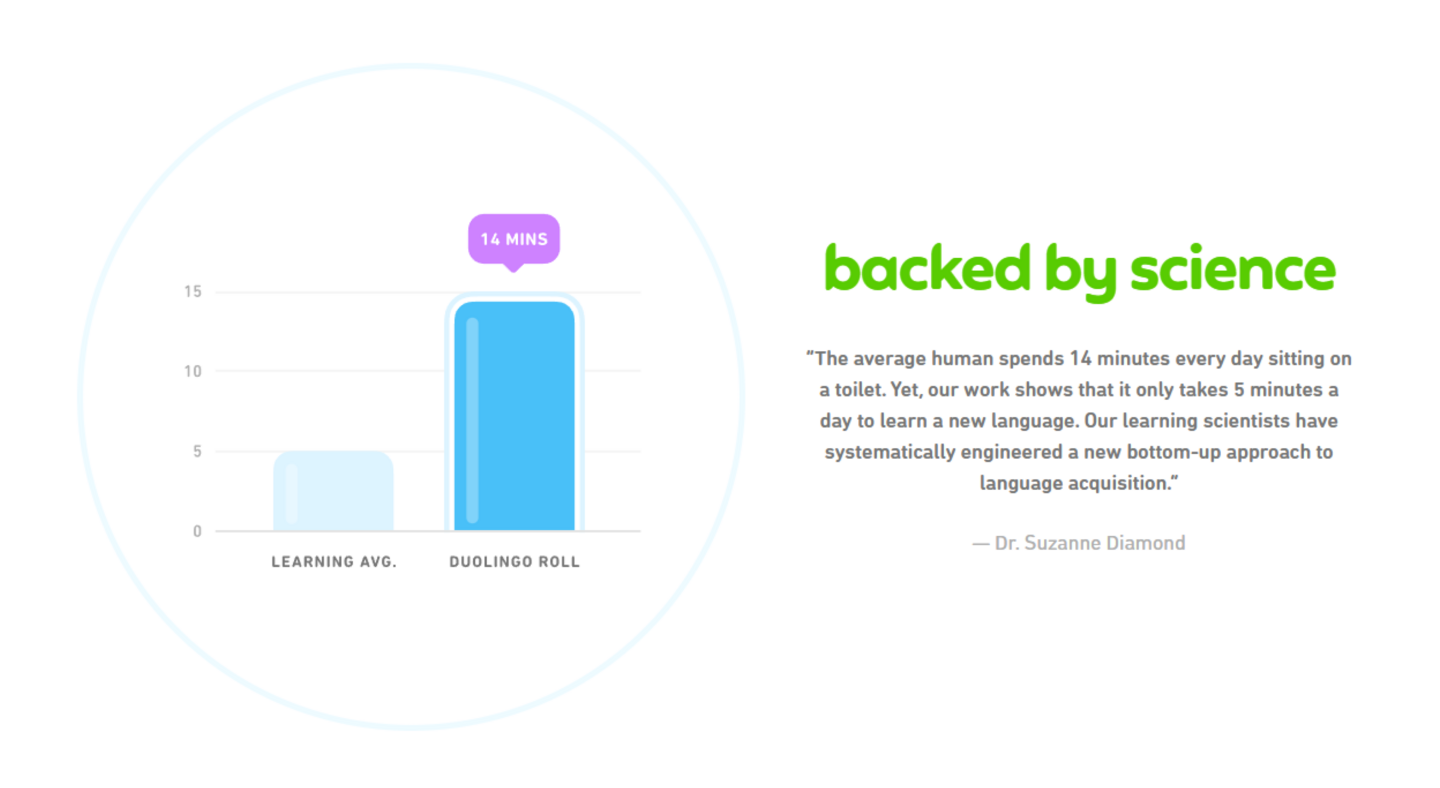
Within the peripheral route, Duolingo actively utilizes peripheral cues such as humor, absurdity, and real-time marketing, which operate under low elaboration likelihood and do not require deep mental effort from the consumer. A prime example is the April Fools' campaign «Duolingo Roll», where the brand suggested printing educational phrases directly on toilet paper. In this way, the company reduces consumer cognitive resistance: the slogan «Language learning is hard, so we made it soft» ironically plays on the audience’s primary barrier — a lack of time. By employing a peripheral shortcut in the form of an everyday metaphor and humor, the brand generated strong liking for the source and led users to associate learning with an easy, unobtrusive process.
0

«Duolingo Roll», 2021

Original size 3500x1969

«Duolingo Roll», 2021

During the retention stage for its existing audience, Duolingo transforms its peripheral triggers, shifting from pure humor to triggers of fear of missing out and scarcity. Mobile push notifications and customized widgets, where the mascot Duo cries, gets angry, or literally threatens the user, act as instant behavioral stimuli. They compel the user to click on the notification not out of prolonged logical reflection on the benefits of education, but rather to quickly alleviate guilt and preserve their accumulated micrometric — streaks.

Original size 4578x1005

Duolingo widgets

Original size 2355x837

Duolingo pushes

Central route

When the brand needs to engage clients on a long-term basis, explore new markets, or sell paid products, peripheral stimuli become insufficient. In such cases, Duolingo deliberately shifts its communication to the central route, which targets users with high initial motivation and a readiness for high elaboration. Here, the company deploys a comprehensive body of evidence to help form stable attitudes among consumers.

The first level of the central route involves engaging with narrow market segments that possess a strong intrinsic need for the product. The launch of an original 5-episode anime in Japanese served as a highly targeted approach toward the community of Japanese pop culture enthusiasts. These individuals learn the language for a very specific, rational goal: to watch original content without subtitles. In this case, Duolingo itself created a valuable product that served as a strong logical argument to begin learning. The consumer makes a conscious cognitive choice: they evaluate the application’s utility as a practical tool for understanding this culture, which ultimately leads to long-term conversion.

0

Duolingo Anime, 2025

The primary embodiment of the central route within the brand’s communication ecosystem is Duocon — the company’s large-scale annual technology conference. At this venue, the brand’s tone shifts dramatically: top executives, linguistic scholars, and IT developers present detailed reports on the platform’s future. During the conference, high audience involvement is addressed with strong arguments: the company showcases its integrations with advanced artificial intelligence models (GPT-4o), scientific research on the efficacy of game mechanics, and the launch of new educational verticals (math, music, and chess). Users, investors, and experts spend hours watching this broadcast, deeply analyzing data, charts, and the company’s technological roadmap. This process transforms their fleeting affinity for the mascot into profound respect for the brand as an industry leader.

0

Duocon 2025

The ultimate proof of the central route’s effectiveness is the promotion of the Duolingo English Test, a digital alternative to the international TOEFL and IELTS exams. Because the results of this test are used for immigration and admission to top global universities, the audience demonstrates a maximum level of critical thinking. To persuade the user to take the exam on their platform, Duolingo completely eliminates entertainment content. DET communication is built on dry, verifiable argumentation: the publication of scientific whitepapers with evidence of test validity, lists of recognizing universities (including Yale and Columbia), strict AI-based security protocols, and financial advantages (the test is four times cheaper than offline alternatives). The consumer makes a decision based on a balanced cost-risk-benefit analysis, which serves as a prime example of the central route of the ELM in action.

Original size 1920x889

Duolingo English Test site, 2026

Dialogic Theory of Public Relations Analysis

The Dialogic Theory of Communication in PR requires a brand to shift from one-way audience informing to creating a fully-fledged space for a two-way exchange of meaning. Duolingo’s social media strategy fully aligns with the principles of this theory. The brand does not simply publish content, but rather builds extensive dialogic loops, demonstrating a distinct conversational style, positive regard for every commenter, and a pronounced human touch.

The large-scale PR campaign of February 2025, in which Duolingo «killed» its mascot, the Duo owl, clearly illustrates the practical application of the shared meaning principle. The news event instantly transcended the boundaries of standard PR because the brand engaged other major media corporations in the dialogue. The collaborative generation of memes by Netflix, Ubisoft, and Crunchyroll transformed the tragicomic «death» of the mascot into a global cultural event within the online community. Communication developed not along a linear B2C vector, but as a polylogue, where Duolingo acted as an equal, living participant in the internet space, keenly responding to the remarks of partners and fans.

0

Duolingo Owl death, 2025

A key technical parameter of the Dialogic Theory is the conservation of visitors and return visits. In the case of Duo’s «death,» the brand masterfully utilized this mechanism by setting an interactive dialogic condition for the audience: to «resurrect» the beloved character, users had to collectively earn 50 billion points from completed lessons. This led to an instant closure of the dialogic loop: the brand’s communicative stimulus provoked a massive reciprocal action from consumers. Thousands of inactive users who had abandoned their learning returned to the application en masse, transforming from passive observers into active content creators and saviors of the mascot, which culminated in the successful «resurrection» of the owl on February 28.

Original size 1700x897

Duo Owl resurrection in TikTok, 2025

Conclusion & Recommendations for the brand

Effectiveness Evaluation and Key Communication Issues of Duolingo

Our theoretical analysis indicates that Duolingo’s communication strategy demonstrates exceptionally high effectiveness in capturing attention through the masterful use of the peripheral route to persuasion (ELM) and the construction of large-scale dialogic loops that engage entire media corporations. However, a major strategic risk lies within this strength: the brand is gradually becoming a hostage to its own chaotic PR and ironic mascot. There is a dangerous gap between the vast, entertained social media audience and the commercial aspect of the product. A meme fatigue effect is emerging, where aggressive push notifications and the manipulation of the fear of losing streaks begin to cause genuine irritation and a sense of guilt among users, ultimately leading to emotional burnout and app deletions.

Original size 2821x1433

Recommendation No. 1: Balancing Persuasion Routes (ELM Optimization)

To ensure long-term commercial sustainability, we believe Duolingo must equalize the balance of its audience’s cognitive engagement by integrating elements of the central route directly into the sphere of its peripheral channels. The brand should diversify its purely entertaining and absurd content on TikTok and Twitter/X with brief, yet compelling, rational arguments. For instance, viral videos featuring the Duo owl could be paired with a visual demonstration of Duolingo Max’s AI technologies or facts regarding the acceptance of the Duolingo English Test by global universities. This approach will help retain the attention of the lazy user while simultaneously beginning to cultivate stable attitudes in their mind concerning the high academic and technological value of the platform, thus preparing them for a conscious purchase of premium products.

Original size 3500x1034

Our Duolingo Super promo concept

Recommendation No. 2: Empathetic Transformation of Dialogic Loops

Within the framework of the Dialogic Theory of Communication, Duolingo is recommended to revise the tone of its in-app communications during moments when a user loses motivation. Instead of a linear escalation of passive aggression in push notifications, the brand should demonstrate a genuine human touch and an ethos of mutual respect. When a student has not accessed the application for an extended period or is on the verge of losing their progress, the dialogic loop should switch to a supportive, facilitative mode. The Duo owl in the notifications could offer a gentle, adaptive mini-lesson, check on the user’s mood, or provide encouragement without utilizing guilt triggers. Such an approach will strengthen brand trust as a caring mentor and reduce audience churn by protecting users from negative emotional pressure.

Original size 3500x1034

Our Duolingo widgets redesign concept

Sources and References

Bibliography
1.

https://www.duolingo.com — The official website of Duolingo.

2.

https://englishtest.duolingo.com — Official website of the Duolingo English Test

3.

https://www.duolingo.com/duocon — Официальный портал ежегодной технологической конференции Duocon

4.

https://www.prdaily.com/duolingo-shares-pr-secrets-of-viral-death-of-duo-campaign/ — Analysis of the secrets of PR and the reach of the viral campaign with the «death» of the Duo owl in February 2025.

5.

https://www.cbsnews.com/pittsburgh/news/duolingo-owl-dead/ — CBS News report on the launch of the «Death of Duo» campaign, partner brands' reactions, and the community.

6.

https://www.thestable.com.au/wieden-kennedy-duolingo-an-april-fools-prank-or-product-launch-brilliance/ — A detailed analysis of the April Fool’s Day toilet paper «Duolingo Roll» case by Wieden + Kennedy.

7.

https://www.mediapost.com/publications/article/385517/new-duolingo-campaign-woos-anime-enchanted-learner.html — Article about the launch of Duolingo’s anime campaign, collaboration with Crunchyroll, and motivation of the target audience.

8.

https://www.topuniversities.com/student-info/admissions-advice-articles/where-duolingo-english-test-accepted — Analytical material on the international recognition of DET by Ivy League universities

Analysis of Duolingo brand communications
Project created at 15.06.2026
We use cookies to improve the operation of the website and to enhance its usability. More detailed information on the use of cookies can be fo...
Show more