Introduction

Duolingo is one of the largest language learning platforms in the world, offering over 45 courses across more than 40 languages. The company was founded in 2011 by professor Luis von Ahn and Severin Hacker.
The core innovation of Duolingo lies in its deep integration of gamification techniques: learning is structured as a game with levels, lives, experience points (XP), leagues, and daily streaks. This approach transforms routine memorisation into an engaging quest, effectively building a learning habit.
The brand’s core positioning is built on the slogan «Make learning a daily habit».
Duolingo positions itself as «free education for everyone», but its key differentiator from other educational platforms is its emphasis on lightness, humour, and entertainment. The application remains free, allowing people around the world to access language education regardless of their income.

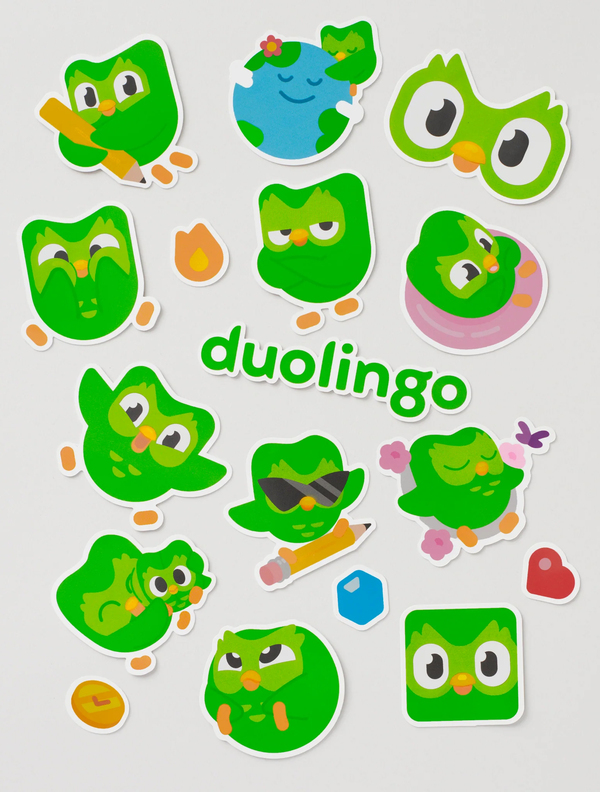
The brand symbol is a green owl named Duo. Originally designed as a friendly motivator, Duo has evolved into one of the most recognisable internet memes globally. Even people who have never used the application recognise the character.
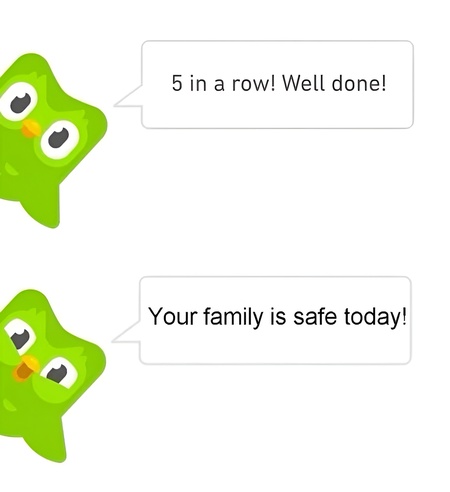

Memes about Duo threatening users to keep studying from Duolingo social media
In February 2023, Duolingo «killed» Duo in a TikTok video, generating millions of views and worldwide media coverage. Several days later, Duo «resurrected» — an act of absurdist marketing that only deepened audience engagement.

Icon with dead Duo from Duolingo app
Target audience The primary audience of Duolingo is people aged 16-30, representing Generation Z and millennials. This is a digitally native audience that: dislikes direct advertising but appreciates memes and irony, wants to learn but loses focus quickly, values humour, absurdity and brand self-irony, actively uses TikTok, Instagram* and Twitter.
Communication Channels
Duolingo maintains an active presence across multiple social media platforms, each serving a distinct function within the brand’s overall communication strategy.

On TikTok, where the brand has accumulated 17 million subscribers, the primary focus is on viral content, memes, and the ongoing «Dead Duo» narrative that periodically reinvents the mascot’s public image.
YouTube, with 6.68 million subscribers, serves a different purpose: here Duolingo publishes educational videos, character-driven stories, and engages in longer-form audience interaction.
The brand’s Instagram* account with 4.8 million subscribers functions as a hub for memes, Stories, and daily engagement, maintaining a consistent visual presence.
Finally, on Twitter/Xwith 1 million subscribers, Duolingo deploys its signature fast-paced humour, delivering quick jokes, direct replies to haters, and real-time reactions to breaking news and cultural events.
Together, these channels form an integrated ecosystem where each platform supports a specific aspect of the brand’s dialogic and entertainment-driven communication strategy.
PR strategies and notable campaigns.
Collaborations with pop culture. Duolingo has launched a Dothraki language course with HBO for the finale of Game of Thrones, as well as a Klingon course with Star Trek. In 2023, the brand partnered with Lucha Libre in Mexico, featuring Duo in a wrestler’s mask.
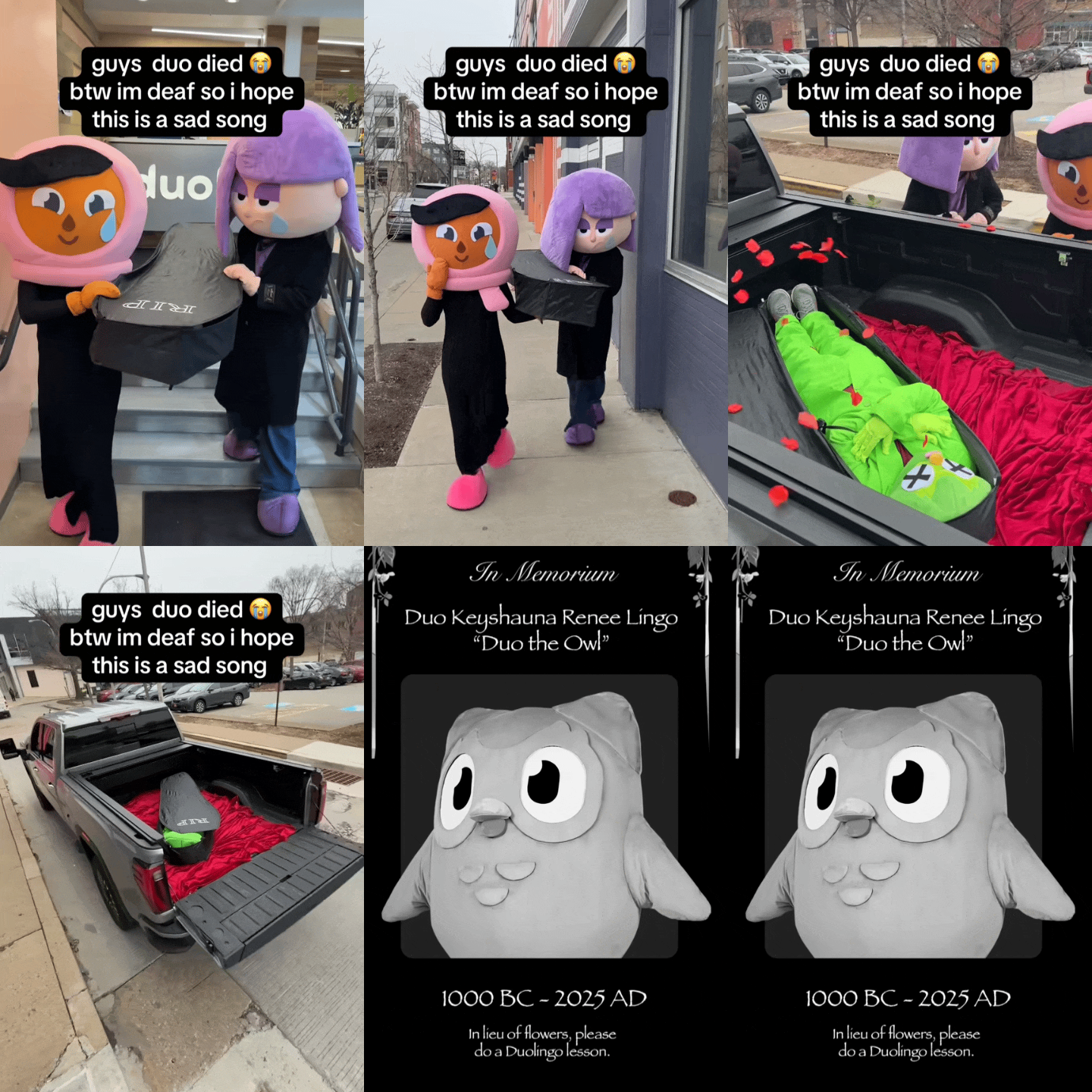
Memes like Death of Duo, 2023. In February 2023, Duolingo «killed» its mascot in a TikTok video, generating millions of views and widespread media coverage. Several days later, Duo «resurrected» — an example of absurdist marketing that only Generation Z can fully appreciate.
Reaction to world events. Following the TikTok ban in the United States, Duolingo published a post stating: «Learn Chinese, just in case». The post became viral, gathering hundreds of thousands of likes and being republished by major international media.
Picture of Duo in a «Game of thrones» theme from Duolingo social media
Key feature: unconventional communication. Duolingo’s strongest weapon on social media is its non-standard replies in comments. The brand does not ignore haters — it jokes back with them. Users deliberately provoke Duo in order to receive a funny response, which increases the platform’s visibility and benefits the brand.
Theoretical Framework
Dialogic Theory (Kent and Taylor)

Kent and Taylor (2002) consider dialogue in public relations to be a more ethical approach, «because it is based on principles of honesty, trust, and positive regard for the other rather than simply a conception of the public as means to end» [8].
According to the authors, dialogue includes five features: mutuality, propinquity, empathy, risk and commitment. All these features together highlight that dialogue is not merely the transmission of information but an ongoing process built on equality, mutual understanding and continuous engagement.
Duolingo efficiently follows these features to different extents.
Duolingo’s respond to user’s comment on its Youtube official channel
Mutuality refers to recognizing both the organization and the audience as valuable participants in communication. Duolingo demonstrates mutuality by actively responding to users’ comments and engaging in conversations rather than relying solely on one-way communication.


Picture with Duo the owl from the app referencing to the popular meme // KC Green, «This is fine» meme from the comic book «The Pills Are Working»
Propinquity emphasizes timely participation in ongoing conversations. Duolingo frequently reacts to social media trends and internet culture, allowing the brand to engage with audience in a relevant context.
Illustration of Duo’s support, picture from Duolingo’s website
Empathy involves understanding and acknowledging the audience’s experiences. Duolingo often creates content that reflects common struggles of language learners, making users feel understood and represented.


Short video on Duolingo official Youtube-channel // Audience’s reaction
Risk refers to the willingness to engage in communication that may not always be predictable or universally accepted. Duolingo uses a bold and unconventional tone, often adding to it humour that could be interpreted differently by various audiences.
Illustration of regular Duo’s reminders from Duolingo’s website
Commitment reflects a long-term dedication to maintaining relationships with audience. Duolingo encourages continuous engagement through learning streaks, progress tracking, and regular interaction across its communication channels.
These five features serve as an analytical lens through which Duolingo’s communication strategy can be examined.