
Original size 1860x2625

Communication Strategies of Sowok

This project is a student project at the School of Design or a research project at the School of Design. This project is not commercial and serves educational purposes
The project is taking part in the competition
big
Original size 1818x606

Sowok Noodle House

Rubricator

(1) Introduction

(2) Communication Channels

(3) Theoretical Framework

(4) Analysis

(5) Conclusion & Recommendations

(6) Sources

(1) Introduction

About the Brand

Sowok Noodle House is a local restaurant chain founded in Nizhny Novgorod, Russia. The brand combines Asian noodle cuisine with Soviet-inspired aesthetics and branding. Its concept is based on offering handmade noodles that customers can customize by choosing different ingredients, toppings, and sauces. The restaurant focuses on providing affordable, high-quality food in a casual and welcoming atmosphere.

Brand Positioning

Sowok positions itself as a modern and accessible restaurant with a unique identity. The brand successfully combines Asian street food with elements of Soviet culture, creating a recognizable and memorable image. This positioning is reflected in the restaurant’s name, visual identity, interior design, and communication style.

Another important aspect of Sowok’s positioning is personalization. Customers are encouraged to create their own noodle boxes by selecting different ingredients and sauces according to their preferences. This approach emphasizes convenience, flexibility, and customer choice. In addition, the restaurant offers affordable prices and fast service, making it an attractive option for everyday dining.

Target Audience

Sowok primarily targets young adults between the ages of 18 and 35, including students and young professionals. This conclusion can be drawn from the brand’s communication style, product offering, and social media presence. The restaurant actively communicates through social media platforms, using informal language, humor, and modern online trends that appeal to younger audiences.

The customizable menu also reflects the preferences of modern consumers who value individuality and flexibility when making purchasing decisions. Affordable pricing makes the restaurant accessible to students and young professionals, while its contemporary and urban image attracts people who enjoy casual dining experiences and modern food culture.

(2) Communication Channels

Analysis of Social Media and Other Brand Communication Channels

Original size 1024x1011

Information from the website

Original size 1024x823

Analysis of Social Media and Other Brand Communication Channels

Original size 2478x1445

Telegram bot / Yandex food

Overall conclusion on channels: The brand has formal channels for communication, but they are either inconvenient (email), operate with long delays (VK, maps), or contain «dead zones» (Telegram bot). The most active channel is replying to reviews on mapping services, but the quality leaves much to be desired.

(3) Theoretical Framework

Dialogic Theory

Dialogic Theory, developed by Kent and Taylor (1998), is one of the most influential theories in public relations. The theory argues that effective communication is based on dialogue rather than one-way information delivery. Instead of simply sending messages to an audience, organizations should build meaningful relationships through interaction, openness, and mutual understanding.

According to Dialogic Theory, communication becomes more effective when organizations actively engage with their audiences and encourage participation. The theory views communication as an ongoing process that helps organizations create trust, strengthen relationships, and better understand the needs of their stakeholders.

The theory is based on five key principles.

Mutuality refers to recognizing audiences as equal participants in communication.

Propinquity emphasizes timely interaction and the involvement of stakeholders in conversations.

Empathy focuses on understanding and respecting the audience’s needs and perspectives.

Risk refers to an organization’s willingness to accept criticism and engage in open discussion.

Commitment highlights the importance of maintaining long-term relationships through continuous communication.

By applying Dialogic Theory, we are going to analyze how Sowok Noodle House encourages interaction and maintains engagement with its audience. This approach helps assess the effectiveness of Sowok’s communication strategy and the quality of its relationships with customers.

(4) Analysis

Content Analysis Through the Lens of Dialogic Theory

Original size 2478x1505

Posts from June 5, June 3, May 23

Post from June 5 (festival at Grebnoy Canal)

• What works: The brand invites people to an offline event, offers activities. This creates an opportunity for mutuality — people can come and talk in person.

• What doesn’t: The post itself has no direct question to the audience, no call to comment. It is more of a one‑way announcement.

• Dialogic potential: Low — no interactive elements (poll, contest, question).

Post from June 3 (new menu)

• What works: It says «stay in touch» and «we look forward to seeing you».

• What doesn’t: Again, no specific question, no request to share opinions about new dishes. This is advertising, not dialogue.

• Dialogic potential: Medium — they could have asked: «Which dish would you try first?»

Post from May 23 (collaboration with HSE Design School)

• What works: Creative format — «Designer, what kind of noodle are you?» It engages through identity.

• What doesn’t: Only one comment under the post (and a delayed reply). The opportunity for dialogue was missed.

• Dialogic potential: High (meme/test format), but not realised.
0

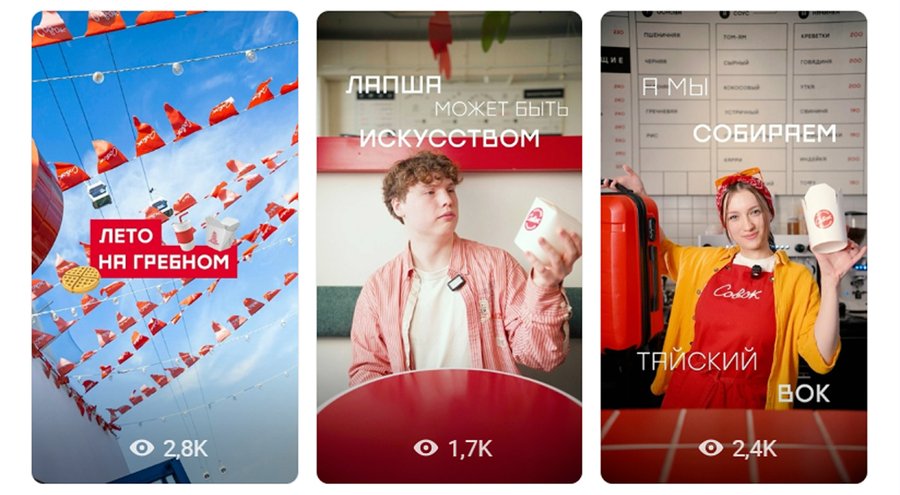
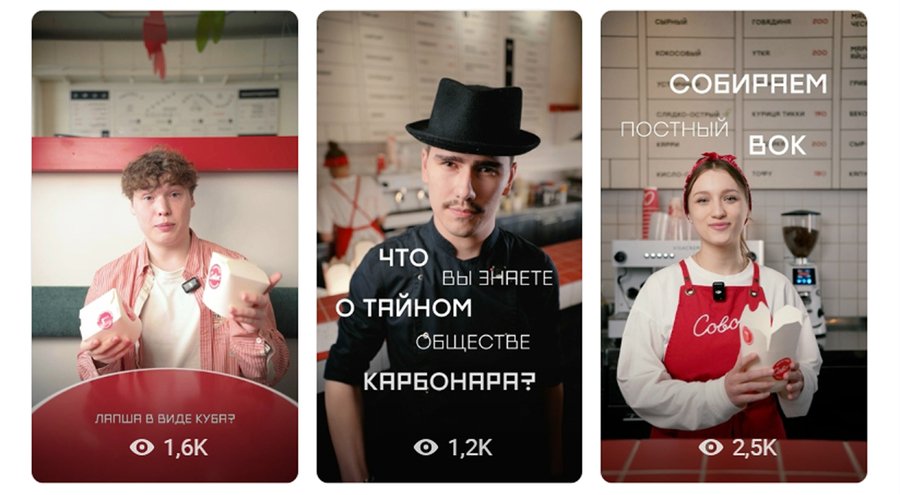
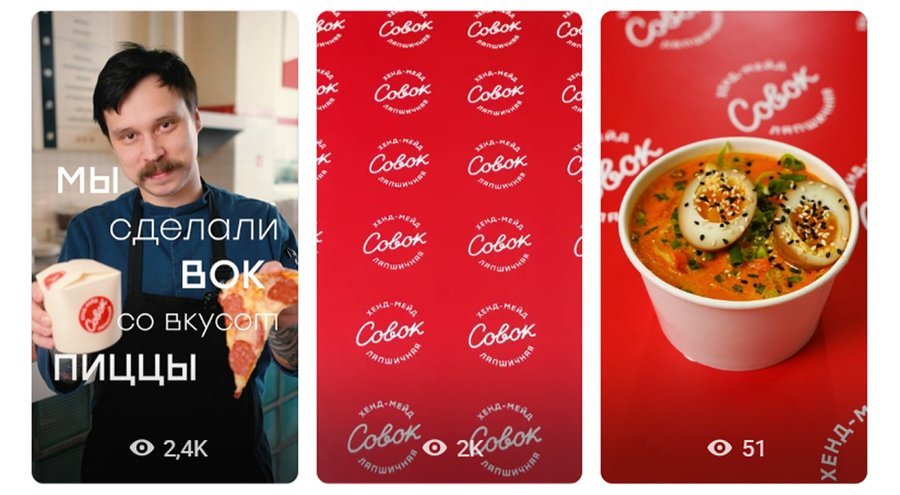
Vertical videos

Vertical videos (clips)

They get more views (2,000–2,500) and likes (20+) than regular posts. Video is a more lively format. There are some invitations to dialogue.

Overall conclusion on content: The content is interesting, creative, with collaborations and events. But it is almost completely monologic. The brand talks about itself but rarely asks the audience questions, does not start discussions, does not use polls.

Application of Dialogic Theory to the Brand’s Communication

Mutuality — recognising the audience as equal partners

• What exists: The brand replies to comments and reviews — so it acknowledges their importance. Collaborations with the audience (design school, festival) — an attempt to engage.

• What is missing: No polls, no user‑generated content contests. No way to influence the menu or service (except the abstract «we will take it into account»).

• Assessment: Low. The brand does not build equal dialogue but rather answers on a «question‑answer» basis like a support service.

Propinquity — speed and convenience of interaction

• What exists: On VK, replies exist (though with delay). On maps — they reply to all reviews.

• What is missing: Promptness. Delays from 3 days are unacceptable for a modern brand. No live chat, no phone number (except the strange one on maps). Telegram bot is a fiction.

• Assessment: Critically low. Propinquity is the weakest point.

Empathy — understanding and respecting the audience’s needs

• What exists: They respond to negative comments with regret. They invite people to the bot (though it’s useless).

• What is missing: Specific apologies, personalised replies, compensation (e.g., «send us the receipt — we will refund you» or «next time we’ll give you a discount»). The template «we will take your wishes into account» without follow‑up is a mockery of empathy.

• Assessment: Low. The audience does not feel truly heard.

Risk — willingness to engage in open dialogue, including criticism

• What exists: The brand does not delete negative reviews; it replies to them. That is a positive sign.

• What is missing: Public admission of specific mistakes (e.g., «yes, that day our wok broke down, so cooking took 40 minutes»). No discussion of solutions. No posts where the brand itself raises a problem.

• Assessment: Medium. The brand does not hide from criticism but also does not engage in risky, honest dialogue. It uses safe, meaningless phrases.

Commitment — long‑term relationships

• What exists: The brand runs social media regularly. It replies to reviews — albeit with delay — but systematically. It holds an annual festival. These are signs of a long‑term strategy.

• What is missing: Regular updates on changes (e.g., «today we are closed for inventory»). No series of posts that build community (e.g., «a subscriber’s noodle story»).

• Assessment: Above average. The brand does not abandon communication, but it remains superficial.

(5) Conclusion & Recommendations

Examples of Effective and Ineffective Dialogue

Effective dialogue

Perhaps the only relatively effective example is the reply to a VK comment (post from May 23, reply on May 26, 3‑day delay).

• A 3‑day delay is not instant but tolerable for a social network. • The very fact that the brand noticed a single comment is a plus.

0

Replies to comments on VK

Ineffective dialogue (many examples)

1. Review about dirty tables from August 19 → reply on August 29 (10 days).

• Why it’s bad: Within 10 days, the problem is either forgotten or the customer has already switched to competitors. • Principles violated: Propinquity (speed) and empathy (problem not solved promptly).

2. Template reply to negative feedback: «We are very sorry… we will take your wishes into account.»

• Why it’s bad: No concrete actions, no apology from a specific employee, no offer of compensation. • Principles violated: Risk (fear of admitting a specific mistake) and empathy.

3. Invitation to a Telegram bot where there is no way to contact Sovok.

• Why it’s bad: This is false dialogue. The customer thinks they are being directed to a solution, but they hit a dead end. • Principles violated: Mutuality (betrayal of expectations for equal communication).

4. Phone number on Yandex.Maps that is not on the website or in social media.

• Why it’s bad: It is unclear if it works. If a customer calls and gets no answer, it creates double negativity. • Principles violated: Propinquity (inconvenient and unreliable).

0

Reviews

Conclusion

The analysis of Sowok Noodle House through the lens of Dialogic Theory shows that the brand has built a recognizable identity and maintains a regular presence across several communication channels. Its content is creative, visually engaging, and consistent with the interests of its target audience. Collaborations, events, and video content help the brand attract attention and strengthen its image.

However, the communication strategy remains largely one-way. Although Sowok responds to comments and reviews, interaction is often delayed, formal, and lacks meaningful dialogue. The brand rarely encourages audience participation through questions, discussions, polls, or user-generated content. As a result, several key principles of Dialogic Theory — especially mutuality, propinquity, and empathy — are only partially fulfilled.

Overall, Sowok successfully communicates its brand identity but does not fully use the potential of social media and digital platforms to build strong relationships with customers. The brand’s communication can therefore be considered moderately effective: it informs and attracts audiences, but does not consistently engage them in dialogue.

Recommendations

Increase audience interaction. Sowok should use more interactive content, such as polls, questions, contests, and requests for customer opinions. This would encourage participation and strengthen mutuality between the brand and its audience.

Improve response speed. Many replies on VK and review platforms appear several days or even weeks later. Faster responses would improve customer experience and strengthen the principle of propinquity.

Make communication more personal. Instead of using standard phrases like «we will take your wishes into account, ” the brand should provide specific responses and explain how customer feedback will be used. This would increase empathy and trust.

Develop more effective communication channels. The website, mobile app, and Telegram bot should offer direct ways to contact the brand. Adding a live chat, feedback form, or functional support channel would make communication more accessible.

Build a stronger community. The brand could create content focused on customers, such as sharing customer stories, featuring user-generated content, or showing how feedback leads to improvements. This would help strengthen long-term relationships and customer loyalty.

(6) Sources

Bibliography
1.

Kent, M.L., & Taylor, M. Toward a Dialogic Theory of Public Relations // Public Relations Review. — 2002. — Vol. 28, No. 1. — P. 21–37.

2.

Kent, M.L., & Taylor, M. Fostering Dialogic Engagement: Toward an Architecture of Social Media for Social Change // Social Media + Society. — 2021. — Vol. 7, No. 1.

3.

Sovok Noodle Shop [Online Resource] // Tourist Nizhny Novgorod. — Available at: https://nn-grad.ru/eng/what-to-visit/SOVOK__Noodle_Shop/ (Viewed 04.06.2026).

4.

Sovok [Online Resource] // VKontakte. — Available at: https://vk.com/sowokfood (Viewed 04.06.2026).

5.

Sovok | Delivery [Online Resource]: Mobile Application / Sovok. — Google Play, 2026. — Available at: https://play.google.com/store/apps/details?id=starter.sowok.client (Viewed 04.06.2026).

6.

AAAnya. Sovok Noodle House [Online Resource]. — May 18, 2018. — Available at: https://aaanya.ru/2018/05/19/nizhny-novgorod-restaurants/lapshichnaya-sovok/ (Viewed 04.06.2026).

Image sources
1.

Google Images. Retrieved from https://www.google.com/ (Viewed 13.06.2026)

2.

Sowok Noodle House Official VK Page. Retrieved from https://vk.com/sowokfood (Viewed 13.06.2026)

3.

Sowok on Yandex Maps. Retrieved from https://yandex.ru/profile/1646646210 (Viewed 13.06.2026)

4.

Sowok on 2GIS. Retrieved from https://go.2gis.com/aHNVT (Viewed 13.06.2026)

5.

Sowok on Yandex Food. Retrieved from https://eda.yandex.ru/r/lapshichnaya_sovok?placeSlug=sovok_xmdsk (Viewed 13.06.2026)

6.

Sowok Delivery Telegram Bot. Retrieved from https://t.me/sowok_delivery_bot (Viewed 13.06.2026)

We use cookies to improve the operation of the website and to enhance its usability. More detailed information on the use of cookies can be fo...
Show more