Rubricator
1. catching the wave — introduction 2. mapping the spots — communication channels 3. the wave of ideas — theoretical framework 4. brewing belonging — analysis through Uses and Gratifications Theory 5. shaping participation — analysis through Affordance Theory 6. conclusion and sources
*Instagram is a project of Meta Platforms Inc., an extremist organization whose activities are banned in Russia.
Catching the wave
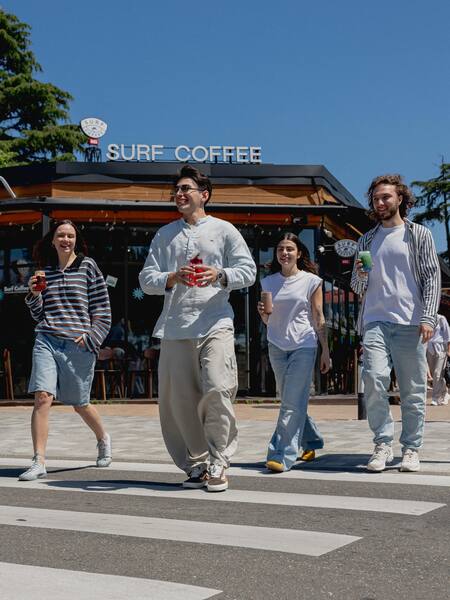
Surf Coffee is not only a coffee shop chain. The brand presents itself as an international lifestyle community where coffee is connected with surfing, music, street culture, local spots and friendship. Its communication turns a coffee purchase into an experience of belonging.

Surf Coffee’s positioning is built around three ideas: coffee expertise, freedom and community. Coffee gives the product base; surfing creates the image of movement and escape; community turns the customer from a buyer into a participant.

The target audience is young urban consumers who value informal spaces, coffee culture, music, mobility, visual identity and street culture.
Mapping the spots
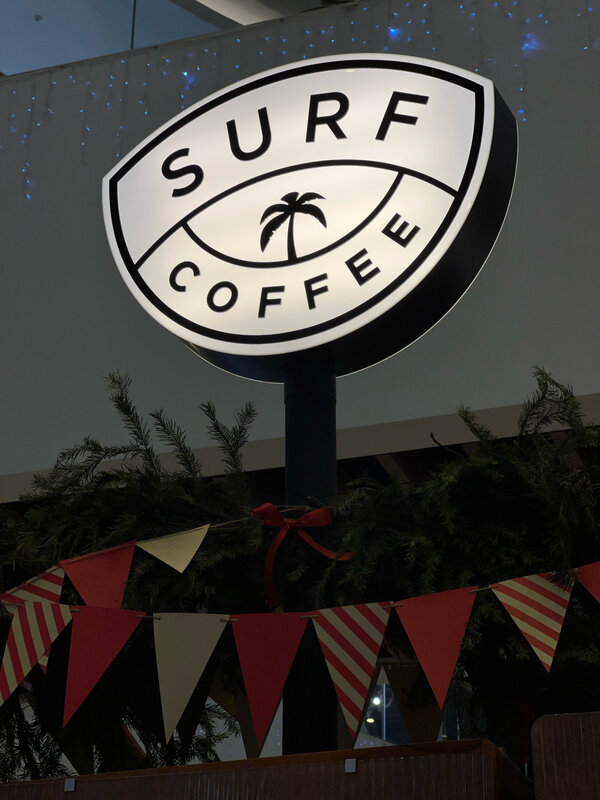
The key word in Surf Coffee’s communication is spot. A spot is not just a coffee shop: it suggests a local, informal and social place where people can stay, work, meet friends and feel the brand atmosphere.
Surf Coffee communicates through an ecosystem: official website, physical spots, social media, Propaganda Machine, merch, packaging, franchise communication and team communication. Its PR strategy is built through the whole system, not through one channel.
Physical spots are the strongest communication channel. Interior, music, lighting, furniture, posters, barista interaction and product placement transmit the brand’s values before the guest reads any text.
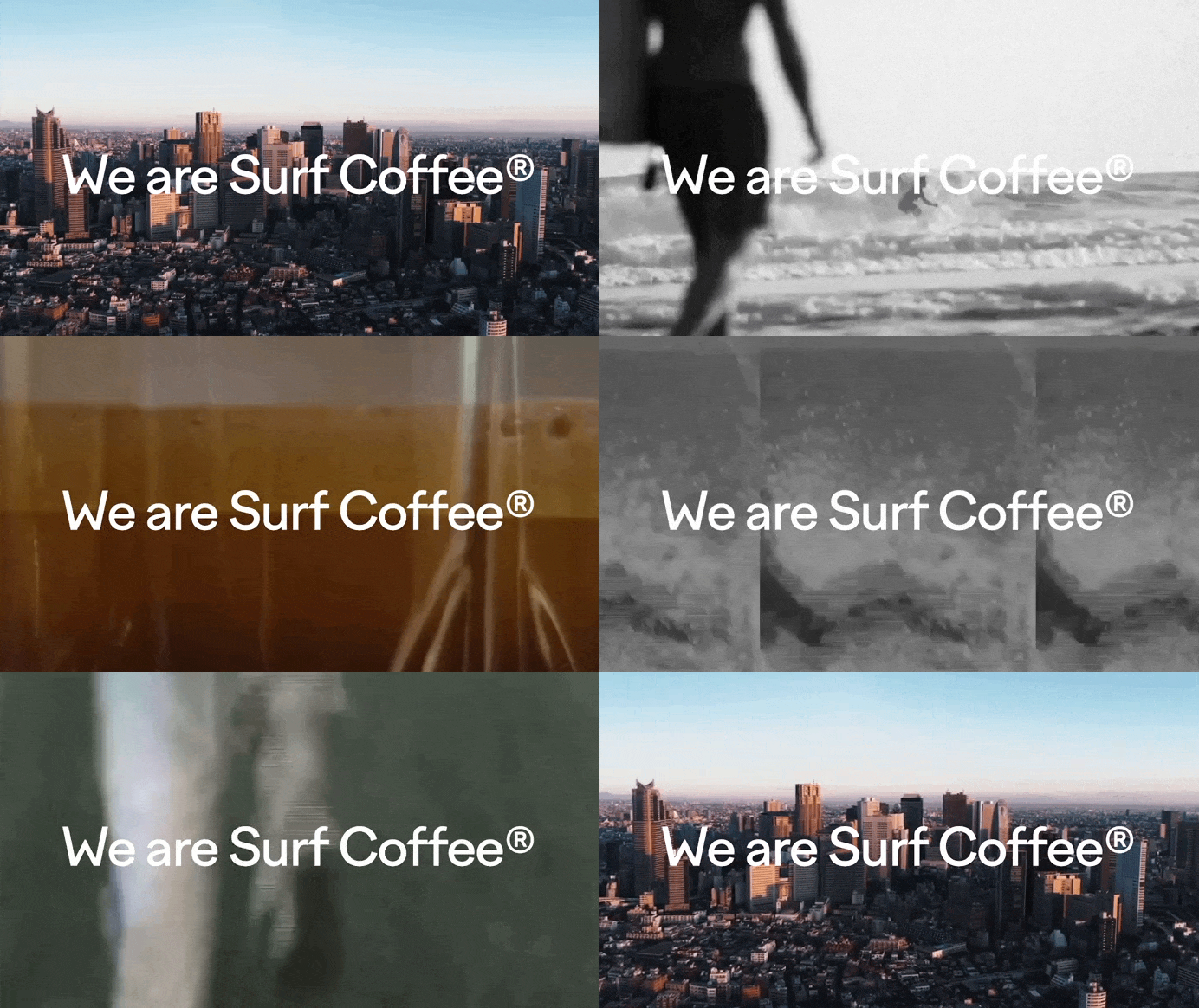
The official website works as a brand manifesto. Phrases such as «we are culture», «we are community», «we are team» and «we are your friends» construct a collective identity.
Merch and packaging make the brand mobile. Clothing allows customers to wear the Surf Coffee lifestyle, while cups, drip coffee and coffee bags carry the brand identity into streets, offices, homes and social media photos.
Propaganda Machine expands the brand beyond coffee. Podcasts, music releases and DJ-sets turn Surf Coffee into a cultural participant, while social media extends the spot atmosphere into everyday digital life.

Merch and packaging make the brand mobile. Clothing allows customers to wear the Surf Coffee lifestyle, while cups, drips and coffee bags carry the brand identity into streets, homes, offices and social media.
The wave of ideas
The project uses two course theories: Uses and Gratifications Theory and Affordance Theory. UGT explains what audience needs the brand satisfies. Affordance Theory explains what actions become possible through Surf Coffee’s spaces, media and design.
Brewing belonging
Through UGT, Surf Coffee can be seen as a brand that satisfies four needs: diversion, personal relationships, personal identity and surveillance. People interact with the brand not only to buy coffee, but also to pause, communicate, express themselves and observe the brand’s cultural life.
Diversion + relationships. Surf Coffee works as a small escape from routine: coffee becomes a pause, a change of rhythm and a relaxed atmosphere. At the same time, the brand speaks about guests as friends, employees as a team and spots as meeting places.
Identity + surveillance. Choosing Surf Coffee can express an urban, mobile and informal self-image. Through social media, users observe new drinks, events, baristas and cultural projects. Reviews show whether the promised atmosphere is confirmed by real experience.
Shaping participation
Affordance Theory shows that Surf Coffee does not only send messages. It creates situations for action: to visit, stay, work, meet, listen, share, wear the brand, attend events or join the team.
The spot affords several scenarios at once: quick purchase, individual pause, work, meeting, conversation with baristas or observation of the atmosphere. This makes the physical space more than a point of sale.
Music, events, merch, packaging and digital channels create different levels of involvement. A person can attend a DJ-set, follow Propaganda Machine, buy clothing, photograph a cup, repost content or read reviews.
Conclusion and recommendations
Surf Coffee’s main strength is coherence. Coffee, surf symbolism, street culture, music, merch, spot design and friendly tone of voice support one idea: the brand is a cultural environment, not just a coffee chain.
The main risk is decorative community. If real service in a specific spot does not match the promise of friendship and belonging, the communication starts to look superficial.
Recommendations:
1. Show more real stories of guests, baristas, artists and local teams. 2. Connect Propaganda Machine with physical spots through QR-codes, playlists and event posters. 3. Explain coffee expertise more clearly: beans, roasting, barista skills and drink development.
О компании // Surf Coffee URL: https://www.surfcoffee.ru/ (дата обращения: 13.06.2026).
Haley R. Gwin A Coffee Shop A ee Shop Attributes' Impact on W ttributes' Impact on Work Beha ork Behavior: P vior: Perceptions ceptions of Regular Working Patrons: дис. Elke Altenburger Environmental Psychology наук: 5.10.3. — Illinois, 2023. — 89 с.
Maria Zaretskaya Factors Influencing Youth Loyalty to Coffee Shops in the Russian Market: дис. Alexandra Zaharova Advertising and Public Relations наук: 42.03.01. — М., 2025. — 141 с.
https://ru.wikipedia.org/wiki/Surf_Coffee (дата обращения: 13.06.2026).
https://www.surfcoffee.ru/olymph (дата обращения: 13.06.2026).
https://www.instagram.com/surfcoffee.msk/ (дата обращения: 13.06.2026).
https://t.me/surfcoffeexmsk (дата обращения: 13.06.2026).