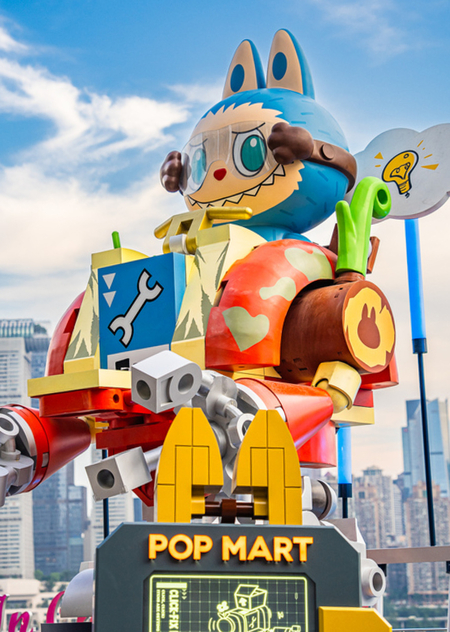

Original size 1140x1600

Communication theory based on the Pop Mart brend

PROTECT STATUS: not protected
This project is a student project at the School of Design or a research project at the School of Design. This project is not commercial and serves educational purposes
The project is taking part in the competition
big
Original size 3840x1169

1-indroduction

Brand history & key business model

post

Pop Mart is a Chinese company whose core business model revolves around selling blind boxes.

The company was founded in 2010 by Wang Ning, a Chinese entrepreneur whose net worth as of early 2025 was $22.3 billion, according to Forbes. The initial idea was to replicate the model of LOG-ON, a retail chain selling lifestyle products and accessories. Originally, Pop Mart did the same: their offline stores carried everyday stationery, small toys, gadgets, and cosmetics — with no figurines in sight. The only investor interested in growing the business was drawn to the offline factor; Wang Ning received rejections from others because the business model wasn’t exclusive or compelling, and in their opinion, the entrepreneur himself lacked the necessary skills.

The brand’s story changed drastically when Sonny Angel dolls began appearing on store shelves. People showed strong interest in these products, and the dolls generated the most profit. This led to a shift in the business model and the identification of their target audience.

1-indroduction

Brand positioning

Pop Mart positions itself as a creator of emotional experiences and a cultural phenomenon.

Four main aspects of the brand can be identified:

- Psychological comfort - Game mechanics - Status symbol - Exclusivity
post

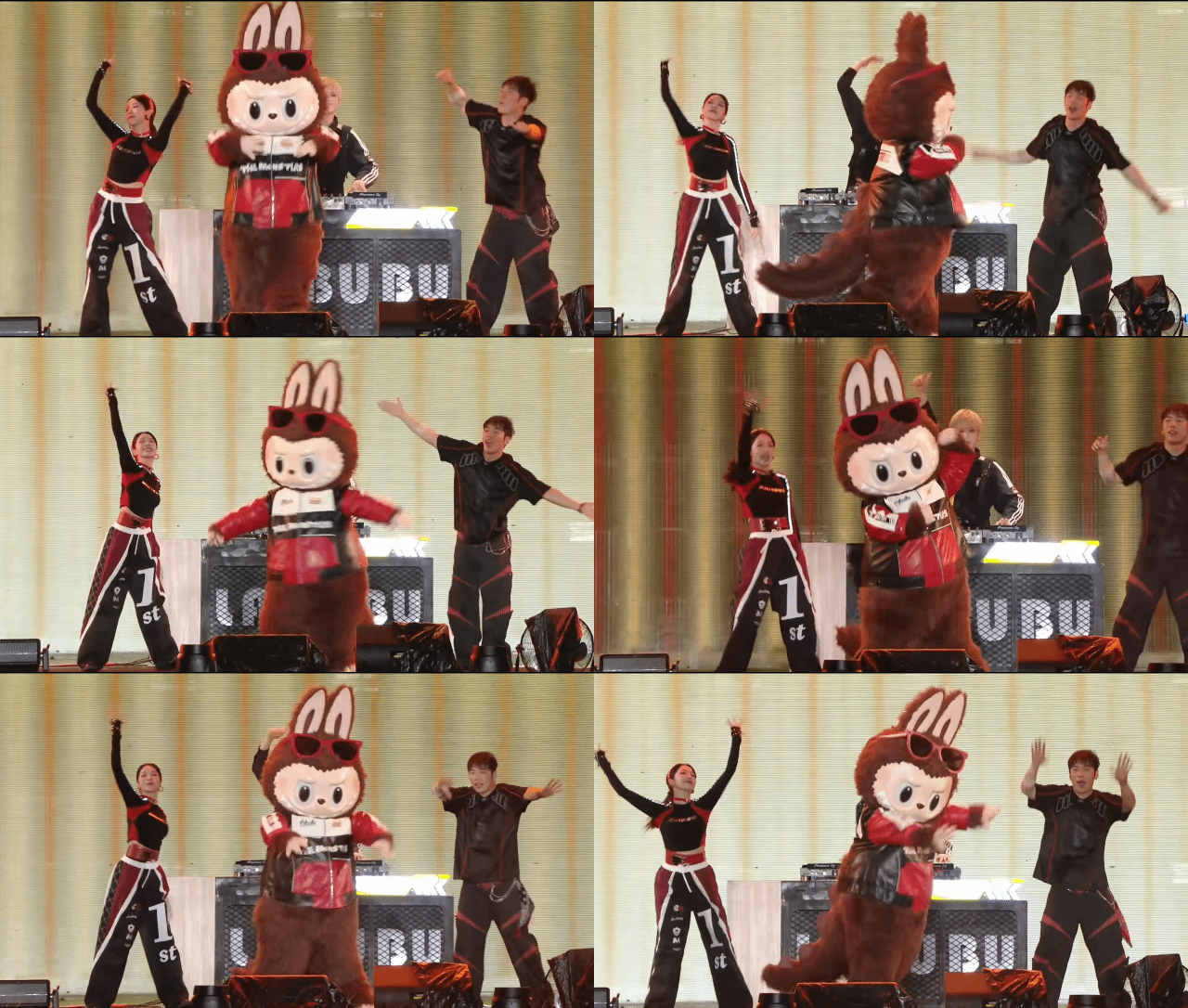
Limited-edition toys become an emotional remedy for anxiety; acquiring them mimics a game mechanic — specifically, a slot machine — and the chance of getting a rare item is like winning a lottery ticket. Moreover, within their own world, these items serve as a solid currency: they can be traded or resold at higher prices, which vary based on trends, year of release, and edition size.

1-indroduction

Target audience

The primary target audience is people aged 18 to 29, 75% — women.

Their main qualities are:

- Self-reward (selfish consumption) - Motivations: emotions (excitement, surprise, joy from «winning»); social belonging; collecting - Low price sensitivity — they are willing to spend significant amounts on figurines - Levels of engagement: Casual buyers, Collectors, Community members, Investors/Speculators

Original size 640x362

POPMART | SKULLPANDA Series Pkush Doll Pendant

1-indroduction

Communication channels

- Social media: TikTok, YouTube, Instagram, Reddit - Collaborations with artists and global brands - Events, offline locations, designer toy exhibitions - NFTs (digital collectibles) - Global sales reach (global expansion)
ASMR POPMART Blind Box Unboxing

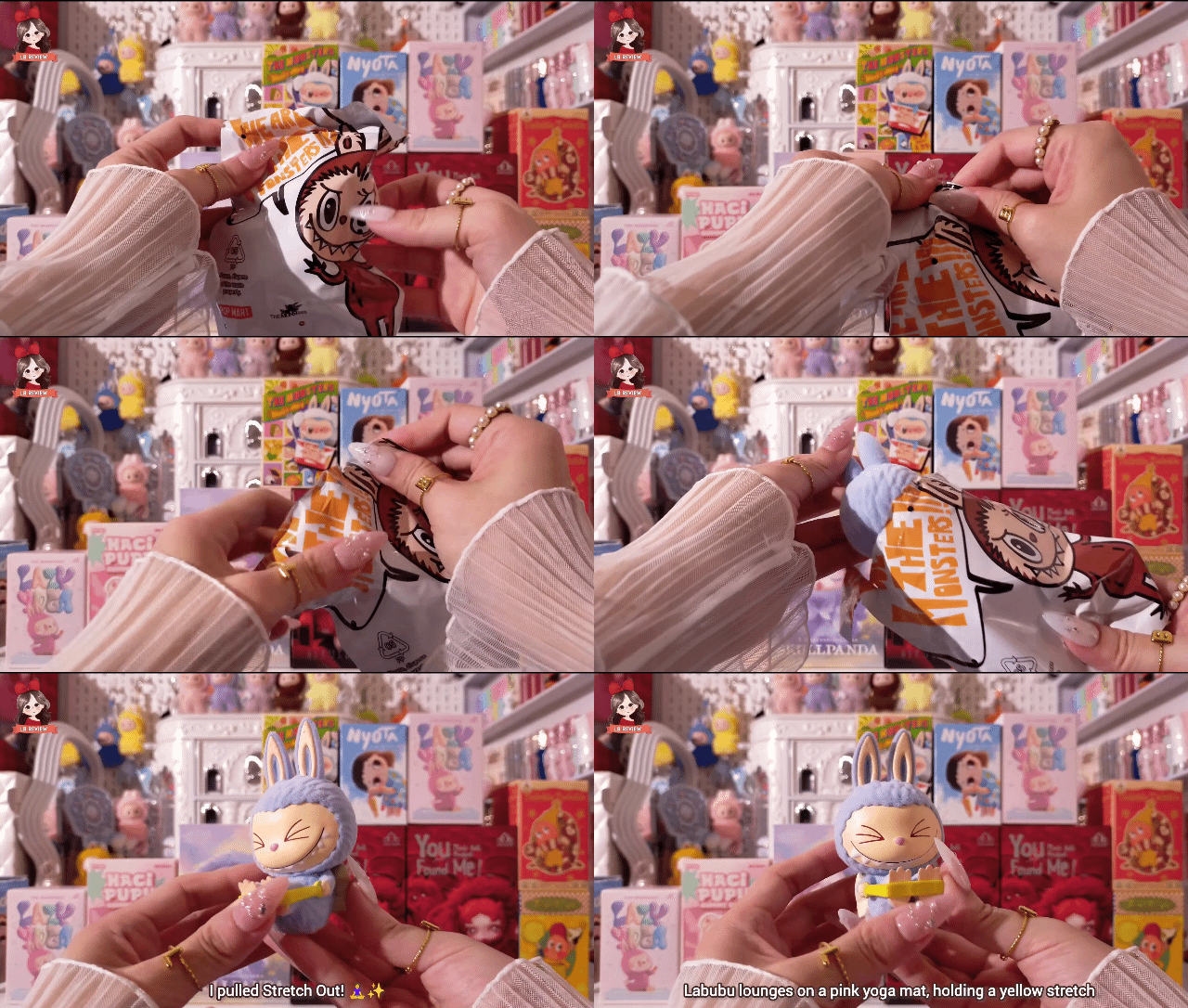
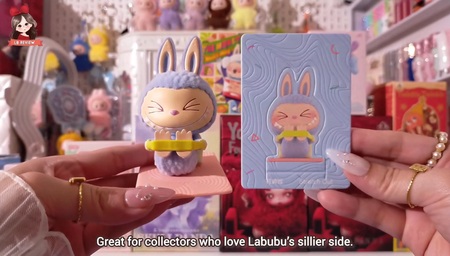
The brand’s communication is built on a multi-channel approach, with social media at its core. Pop Mart has almost no traditional advertising; audience engagement happens through dialogue and demonstration — for example, unboxings or viral videos that attract users and play with their interest and attention. Primary points of contact occur through influencer marketing, where the connection with the audience feels much closer.

In addition, community contact also happens outside the brand itself. People create their own local fan communities and discussions, forming a community that, as a separate mechanism, still works in the brand’s favor.

Collaborations with artists and global brands attract significant attention because they play two cards at once: exclusivity through the stylistic features of artists and their individual approaches, as well as a sense of connection to already popular things when working with other brands — whose target audience may even differ slightly from Pop Mart’s, thereby elevating the brand to a new level.
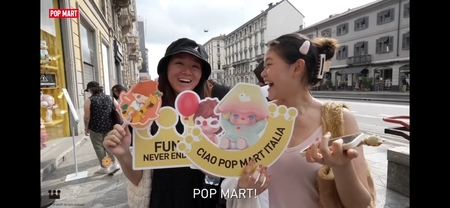
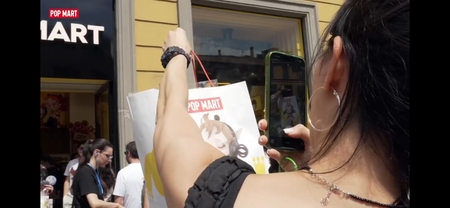
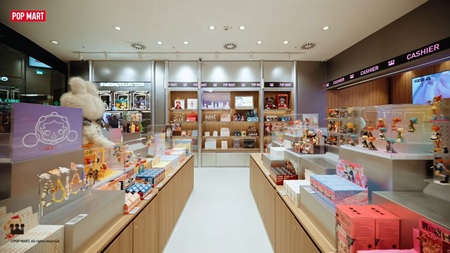
POPMART Milan store
post

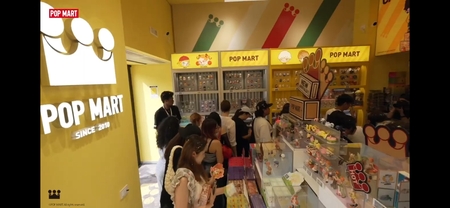
Offline events are also important, especially since we are dealing with physical objects and ownership. Stores serve as showrooms that capture visitors' attention. A certain museum-like quality works through visual imagery and adds a greater sense of belonging and engagement for the viewer. For today’s audience, the offline shopping process becomes a ritual, especially when it comes to «secrets» and «winning» (blind boxes); people want direct, real-time interaction with the object. Moreover, events, for example, involve changing setups that occur only at offline locations, adding exclusivity to the place itself through constantly changing visuals — people will want to come see and take part in an event that has a time limit.

Although Pop Mart primarily offers physical items, they are also evolving in the online world. Like many modern brands, they have NFTs, though much less emphasis is placed on them.

The brand’s popularity has led to its global expansion. The opportunity to purchase original toys has spread to many parts of the world — online and offline purchases, on marketplaces and in regular stores. Figurines have begun appearing everywhere, attracting even more attention. Even club membership has become available in different countries. Although the loyalty system may differ from place to place, the very fact that it exists and is used outside the brand’s home country speaks to its necessity and demand.

Original size 1280x608

POPMART | SKULLPANDA

2-theoretical basis

First srategy Rhetoric of image + Uses & Gratifications

Uses and gratifications theory — is the study of the interaction of the audience with the media. The main idea of this theory is based on the fact that media users are not just passive consumers of content, but are active participants in choosing their preferred media in accordance with their desires and needs.

The prerequisites for the creation of the theory have existed for a long time, but for the first time it was officially formulated on paper by scientist Elihu Katz in 1974. Then he made the assumption that people choose the media that suits them and that the platforms themselves have no influence on them. Later, his colleague Jay Blumer co-authored the book «The Uses of mass communications: current perspectives on gratifications research» which outlined the basics.

A list of the five basic needs that media satisfies according to the theory of Uses and gratifications theory:

Cognitive needs. A person strives to be aware of events and have an idea of the things around them.

Emotional needs. When a person lacks certain emotional experiences, they satisfy them through the media.

Integrative needs. The need to gain confidence, status, or authority.

Social integrative needs. The basic human needs are to be surrounded by loved ones, to have a connection with family and friends.

The need for stress relief. Relaxation, rest.

The theory puts forward the following basic concepts:

— People use mass media purposefully to satisfy a set of their needs; each user has their own motivation to consume a particular content.

— The media does not influence people, but on the contrary: active users influence the media content being created.

— Media platforms actively compete with other ways of meeting needs, such as personal communications. During the period of information development of society and the Internet, this competition becomes more noticeable.

— Consumers are rationally aware of their needs.

— The importance of a particular media in the communication environment depends on the preferences and mood of the audience.

The growth of this theory has led to the emergence of a new theory of communication studies, which believes that people become most dependent on the media that best meets their needs. This theory is called dependency theory. Thus, it is possible to trace the trends of the most popular media, and understand which needs are most in demand for people in certain historical periods.

2-theoretical basis

Second strategy Two-way symmetrical PR + Dialogic theory

Building relationships is one of the primary tasks of public relations specialists. The theory of dialogue is one of the oldest foundations of communication with society. To briefly describe its principle, it says that building contact between the organization and the public through the exchange of ideas and opinions makes it easier to achieve the organization’s goals. This principle puts the concept of a dialogic system more important than a monologue policy.

Here are the five fundamental principles of dialog:

Mutuality. Appeals to the fact that the organization and the public are interconnected. The main factor is voluntary cooperation.

Propinquity. Here it is understood as the willingness of the parties to an open exchange of views. The organization should listen and consult with the public about making decisions on a particular issue, when the public should be ready to give feedback.

Empathy. Empathy and support. This implies, firstly, creating an atmosphere of trust for the audience, and secondly, the design of platforms for exchanging opinions should be fairly easy and accessible to all interested participants.

Risk. The principle is based on the fact that each side of the relationship has certain risks associated with the unpredictability of public relations. The participants in the dialogue are vulnerable due to the appeal of information, which is a significant force in the information period of development. Also, communication can never go according to a pre-written plan, which entails the risks of unforeseen consequences.

Commitment. The participants in the dialogue should make the most of each other. Honesty and willingness to put aside your differences in order to make maximum progress are important here. Each side should be ready for dialogue and want to find a common solution.

Currently, the Internet is considered as one of the main communication tools. Its advantage is that it allows you to maintain a continuous dialogue between users and organizations. Due to the spread of the Internet, an organization can process up to millions of requests received from users every day. This factor has become the reason for the growing importance of using new media such as social networks, personal websites, etc. in order to maintain communication with the audience.

3-analysis

How strategies work

Rhetoric of image + Uses & Gratifications

Pop Mart uses visual rhetoric to turn toys into emotional and cultural symbols. Through cute characters, pastel advertising campaigns, celebrity style, and authentic visual effects, the brand creates a sense of joy, rarity, trust, and self-expression.

post

Blind box

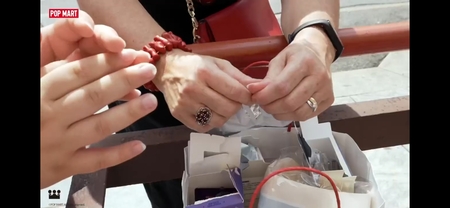
Pop Mart sells many collectable toys in blind boxes: the buyer does not know in advance which version they will receive.Reuters explicitly describes Pop Mart as a company that frequently sells figurines in blind boxes, where the buyer only discovers the exact design after opening the packaging.

According to the Uses & Gratifications theory, audiences choose media and content that meet their needs. A blind box functions as a mini media event: there is anticipation, uncertainty, discovery, an emotional reaction, and a desire to share the result. In other words, people are not just buying an object, but a scenario designed to evoke emotion and generate content. The visual rhetoric here is built around the closed box: the packaging promises a potential prize, but conceals the specific result. Therefore, the box itself becomes a visual trigger for curiosity.

Teen Vogue reported on a specific instance: on 16 April 2024, Lisa from BLACKPINK posted an unboxing of a Pop Mart box on her Instagram Stories, in which she unveiled The Monsters’ «Fall in Wild» vinyl plush doll; she also wore a Labubu pendant as a charm on her Kaithe Elena bag. I cannot confirm that this was a paid advertisement, so it would be better to refer to it in the project as «earned visibility / celebrity-driven visibility» rather than «advertising integration».

POPMART | Labubu Celebrity Fashion Trend Courtesy of BLACKPINK’s Lisa / Instagram: @lalalalisa_m

Two-way symmetrical PR + Dialogic theory

post

Pop Mart’s social media channels function as a conversational platform. Drops and restocks aren’t just advertisements—they’re points of engagement. The audience comments, waits, discusses availability, shares unboxing videos, and showcases their collections. This allows the brand to receive feedback while simultaneously fostering a sense of community.

Dialogue always carries a risk: the audience may criticize the brand, complain about shortages, accuse it of artificial rarity, or leave due to counterfeits. Instead of simply stimulating demand, brands must adapt their communication and sales strategies to the audience’s response.

Due to the scarcity and high popularity of Labubu, counterfeits have appeared, and the brand must not only sell the product, but also explain to the audience how to distinguish the original, where to buy safely, and why authenticity is important.

Two-way Symmetrical PR is characterised by communication becoming adaptive: the brand takes into account audience demand and behaviour.

Dialogic Theory is manifested through mutuality and propinquity: the brand and the audience are in constant contact, and the meaning of the product is shaped collaboratively.

4-conclusion&recommendations

Ways to improve

In general, Pop Mart’s communication strategy works effectively. The brand has been able to turn ordinary collectible toys into more than just a product; they have become a part of fashion, social media, and fan culture. People buy Labubu and other figurines not only because of their appearance, but also because of the emotions, rarity, desire to be trendy, and sense of belonging to a community.

From a persuasion theory perspective, Pop Mart often influences its audience through emotions and visual imagery. A customer sees a cute or unusual character, social media unboxing, limited collections, and starts to want the same toy. This works well because the decision to buy is often made quickly and emotionally. However, there is a risk associated with this strategy: if there is too much hype, counterfeiting, and reselling around the brand, people may start to trust Pop Mart less.

Pop Mart’s main recommendation is to make the brand more in-depth and trustworthy, rather than just more viral. The company can create a gaming authentication system with QR codes or NFC tags, allowing customers to verify original toys, receive digital character cards, bonuses, early access to gifts, badges, voting opportunities, discounts, or invitations to brand events. At the same time, Pop Mart should develop its characters beyond ordinary toys through comics, short animations, mini-games, AR filters, and collaborations in the fields of fashion and music, so that people can connect with their stories and personalities rather than just their rarity. Finally, the brand should shift its focus from mindless consumption to a culture of collecting, showcasing artists, the design process, storage of collections, personalization, sharing, and exhibitions. This will help Pop Mart to look less like a brand that only encourages people to buy more, and more like a platform for creativity, collecting, and self-expression.

Original size 1080x1350

POPMART | THE MONSTERS Labubu Then. Now. Forever

  • Instagram is a product of Meta Platforms Inc. The activities of Meta Platforms Inc. related to the operation of the social networks Facebook and Instagram are recognized as extremist and prohibited in the Russian Federation. This mention is used strictly for academic and analytical purposes and does not constitute advertising, promotion, or a call to use Instagram.
Bibliography
Show
1.

Michael L. Kent, Maureen Taylor Building Dialogic Relationships Through the World Wide Web. — JAI Press Inc, 1998. — 321-334 p.

2.

Michael L. Kent, Maureen Taylor Toward a dialogic theory of public relations. — New Brunswick: Elsevier Science Inc, 2001. — 21–37 p.

3.

Uses and Gratifications Theory in Media Psychology // Verywell Mind URL: https://www.verywellmind.com/what-is-uses-and-gratifications-theory-in-media-psychology-5217572 (reference date: 10.06.2026).

4.

Ungvarsky Janine, Uses and gratifications theory // EBSCO Information Services URL: https://www.ebsco.com/research-starters/communication-and-mass-media/uses-and-gratifications-theory (reference date: 10.06.2026).

5.

Rita Gomes Correia & João Carlos Graça, Uses and Gratifications Theory // Sage Publications URL: https://sk.sagepub.com/ency/edvol/the-sage-encyclopedia-of-mass-media-and-society/chpt/uses-gratifications-theory#_ (reference date: 10.06.2026).

6.7.8.

Sina Finance, «Пена Март» — это не просто продажа игрушек, а управление сообществом // Sina Finance URL: https://finance.sina.com.cn/enterprise/2024-09-05/doc-incnrssq1236202.shtml#: ~:text=%22%E6%B3%A1%E6%B3%A1%E7%8E%9B%E7%89%B9%E6%98%AF, %E6%9B%B4%E5%A5%BD%E7%9A%84%E4%BA%BA%E7%BE%A4%E9%81%8B%E7%87%9F%E3%80%82%22 (reference date: 10.06.2026).

9.

POP MART, Official Instagram account¹ // Instagram URL: https://www.instagram.com/popmart/ (reference date: 10.06.2026).

10.

Reuters, Pop Mart sees revenue hitting over $4 bln this year, to launch mini Labubus // Reuters URL: https://www.reuters.com/business/retail-consumer/pop-mart-sees-revenue-hitting-over-4-bln-this-year-launch-mini-labubus-2025-08-20/ (reference date: 10.06.2026).

11.

Business Insider, K-pop’s biggest stars are showing off their blind box pulls and fueling the Labubu frenzy that’s taking over South Korea // Business Insider URL: https://www.businessinsider.com/k-pop-stars-blind-box-fueling-labubu-frenzy-south-korea-2025-6 (reference date: 10.06.2026).

Image sources
Show
1.

POP MART Official // YouTube URL: https://youtube.com/@popmartofficial? si=G1T0_PHpTESBqQAd (дата обращения: 10.06.2026).

2.

ASMR Unboxing Blind Boxes// YouTube URL: https://youtu.be/z-irlmXHqq0?si=ehN8LhOd4XGa4UD0 (дата обращения: 10.06.2026).

3.

POP MART Official Website // POP MART URL: https://www.popmart.com/hu (дата обращения: 10.06.2026).

4.

POPMART | Labubu Celebrity Fashion Trend URL: https://www.teenvogue.com/story/blackpink-lisa-found-the-cutest-bag-charm-at-pop-mart (дата обращения: 10.06.2026).

5.

POPMART | THE MONSTERS Labubu Then. Now. Forever URL: ttps://www.instagram.com/popmart/p/DTunYdkjVwF/ (дата обращения: 10.06.2026).

6.

https://m-gss.popmart.com/1117#/pages/antiFakeCode? f=& t= (дата обращения: 10.06.2026).

7.

https://www.instagram.com/popmart/p/DAnhy3MReZ9/?img_index=1 (дата обращения: 10.06.2026).

8.

https://www.instagram.com/popmart/p/C42kXYtIUyN/ (дата обращения: 10.06.2026).

Communication theory based on the Pop Mart brend
Project created at 15.06.2026
We use cookies to improve the operation of the website and to enhance its usability. More detailed information on the use of cookies can be fo...
Show more