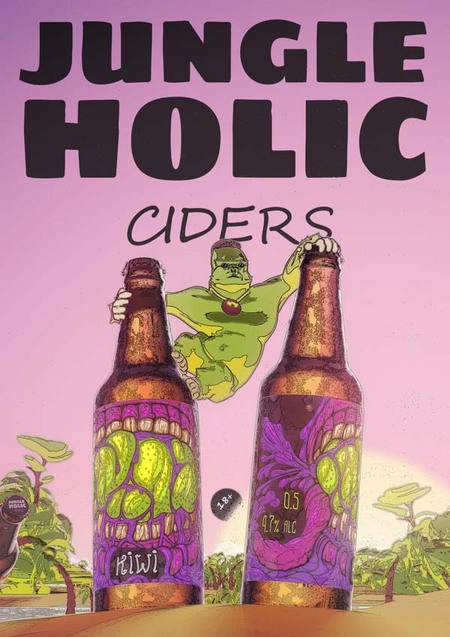
Original size 600x849

Communication theory: Jungleholic

PROTECT STATUS: not protected
This project is a student project at the School of Design or a research project at the School of Design. This project is not commercial and serves educational purposes

Сommunication theory in the field of design

Communication theory in  design posits that design serves as  a  structured process for transmitting information from a  sender (designer) to  a  receiver (audience), akin to  encoding and decoding messages while accounting for noise or  disruptions. Authors like Philip Meggs in «Type and Image: The Language of  Graphic as&nbsp0; outline this as&nbsp1; starting with as&nbsp2; information source generating original content, which the encoder (designer) adapts into as&nbsp3; communicable signal, received and interpreted as&nbsp4; the decoder amid potential interferences.
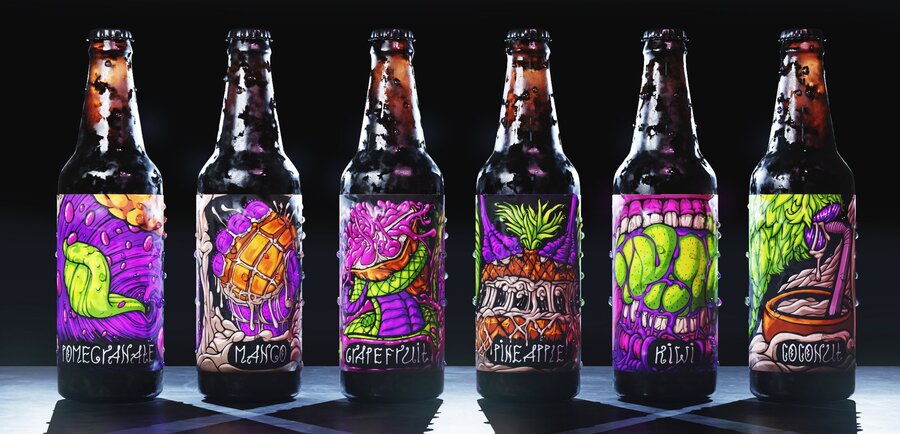
big
Original size 1600x772

the final product

This linear model emphasizes bidirectional exchange over mere transmission, evolving into multidirectional communication where design fosters interaction and meaning-making. Designers create contextual events for engagement, shifting focus from static objects to  dynamic persuasion that influences receivers’ thoughts or  behaviors.
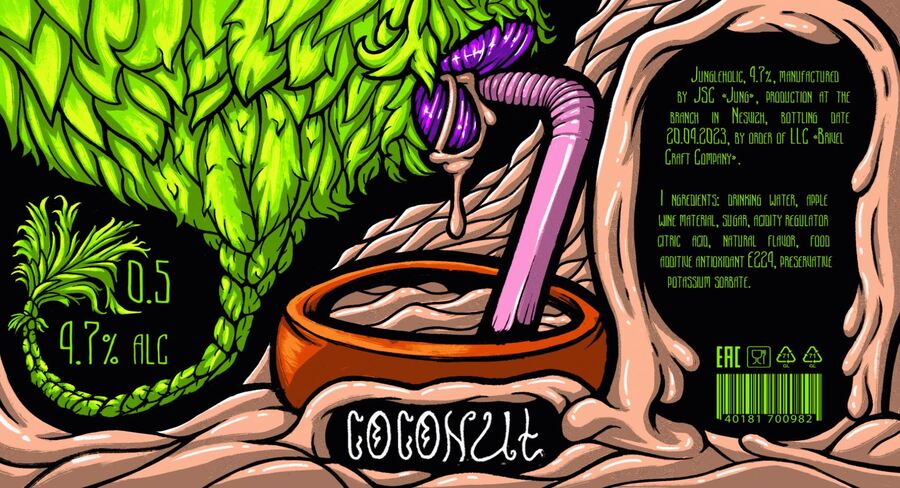
big
Original size 1447x785

the label

Message design logics, such as  expressive (personal belief-driven), conventional (context-appropriate cooperation), and rhetorical (goal-oriented adaptation), guide how communicators tailor messages within design contexts. These logics treat communication as  non-uniform, enabling designers to  align visuals and media with audience needs for effective information dissemination and behavioral change.

Original size 1446x774

the label

Presentation for a general audience

Welcome to  a  new world of  entertainment and flavor with our unique cider lineup! Now every bottle is  not just a  drink, but the start of  an  exciting  AR adventure. Point your phone camera at  the label to  unlock a&nbsp0; magical game where you raise your own pet.

Original size 1447x778

the label

Your care for the pet turns into real bonuses and discounts on  future purchases. The game offers enjoyable interactive communication and motivates you to  hunt for rare releases to  expand your collection and unlock even more privileges.

Original size 1446x778

the label

We  want you not only to  enjoy the taste of  cider but also to  become part of  our digital community with merch and additional products, while creating an  unforgettable brand.

Original size 1447x778

the label

Join our  AR family, where cider and gaming go  hand in  hand!

Presentation for a professional audience

We  present the cider lineup with integrated  AR game  — a  revolutionary approach to  brand communication that combines entertainment, flavor, and deep engagement.

Original size 1400x781

the label

Pointing a  smartphone camera at  the label activates marker-based AR  (ARCore/ARKit), where the user gets a  personal virtual pet to  raise  — from simple scanning to  a  full Tamagotchi experience.

Original size 1600x603

packs

Loyalty gamification leverages proven principles: Emotional attachment  — daily care → dopamine response and FOMO effect Collecting  — 12+ rare releases with unique pets Social proof  — sharing achievements on  social media with brand watermarks

Original size 1600x450

the packs' picture

Design system harmoniously combines: Fonts: Berlin Sans  FB (headings) + Montserrat (text)
 Colors: 
 • Primary: #00FF88 (bright green) 
 • Secondary: #8B00FF (purple)
 • Accents: FF69B4 (pink), FF8C00 (orange), F5F5DC (beige)

Original size 1600x603

characters' 3d sculpting

Technical Architecture and Monetization

  1. DETECTION: Image recognition (Vuforia/8th Wall)

  2. GAME ENGINE: Unity3D with AR  Foundation 

  3. BACKEND: Firebase (progress, discounts)

  4. ANALYTICS: Amplitude (heatmaps, drop-off)

  5. MONETIZATION: In-app merch + loyalty wallet
Original size 1500x736

JungleHolic app

We  invite you to  partner for co-branding and exclusive releases!

Communication theory as basis for the presentations

Communication theory structured the presentation’ s creation as  a  deliberate encoding process, where the designer (sender) crafts messages tailored to  distinct audiences (receivers), minimizing noise through contextual adaptation and bidirectional elements like  AR interactivity. This draws from linear models (sender-message-channel-receiver-feedback) evolving to  transactional/multidirectional ones, as  outlined by  Meggs, ensuring designs transmit meaning while fostering engagement and behavior change.

Message Design Logics

● Expressive logic infused personal belief in  cider’ s fun potential, evident in  the general audience’ s enthusiastic «Welcome to  a  new world» opener and „Join our  AR family,“ reflecting the creator’ s vision of  brand joy.

● Conventional logic ensured cooperation via familiar cider&rsquo0; casual, inviting language for consumers (e. g., „every bottle cider&rsquo1; not just cider&rsquo2; cider&rsquo3;) aligns with everyday product pitches, while professional sections use structured lists and jargon (e. g., „ARCore/cider&rsquo4;) for industry expectations.

● Rhetorical logic adapted goal-oriented persuasion: general version motivates purchases via emotional hooks (pet care, bonuses); pro version targets partnerships with specifics (dopamine/FOMO, tech stack), using cider&rsquo5; s ethos (credibility via tools like Unity3D/Firebase)

Audience Adaptation (Interpersonal/Group Lens)

Politeness and Social Exchange Theories from interpersonal/group communication informed receiver-focused encoding: positive face needs (appreciation via «unforgettable brand») and rewards (discounts, merch) outweigh costs (scanning effort), creating equity. Craig’ s traditions applied— rhetorical for persuasive speeches, socio-psychological for influence (FOMO/social proof), cybernetic for  AR feedback loops.

Persuasion and Feedback Mechanisms

Elaboration Likelihood Model (ELM) shaped routes: peripheral cues (vibrant colors, fun pet narrative) engage low-motivation general audiences; central route details (tech architecture, analytics) persuade high-ability professionals. Narrative Paradigm enhanced fidelity/coherence in  stories (Tamagotchi-like pet journey), with  AR enabling symbolic convergence (shared digital community) and dialogic principles (empathy via care, communal merch) for loyalty.

Linear/Transactional Model in  Practice

Meggs’ model sequenced creation: information source (cider innovation) → encoder adapts signal (fonts/colors, AR  game) → decoder interprets amid noise (e. g., tech unfamiliarity mitigated by  simple instructions). Bidirectional shift via  AR scanning/unlocking turns passive reception into interactive meaning-making, predicting engagement per Theory of  Planned Behavior (norms via social sharing, control via easy access).

Original size 3482x1350

characters and their bottles

Bibliography
1.

«Communication Theory: Bridging Academia and Practice» online-course

2.

Communication Design: What Is It & Everything Else You Need to Know. // Shillington URL: https://www.shillingtoneducation.com/blog/communication-design (05.12.2025).

3.

Message design logic // Wikipedia URL: https://en.wikipedia.org/wiki/Message_design_logic (05.12.2025).

4.

Milan Guenther Communication Design: Computer Science. Intersection, 2013

5.

Peter K Storkerson Designing Theory in Communication: Languages and Linguistics. 2003, Visible Language. — 33 p.

6.

Visual Communication Theory // pollution.sustainability URL: https://pollution.sustainability-directory.com/term/visual-communication-theory/ (дата обращения: 05.12.2025).

Image sources
1.

Jungleholic — сидр с AR // HSEDESIGN URL: https://hsedesign.ru/project/6deca8c5bc9248089558c4ab8c9af452 (дата обращения: 05.12.2025).

Communication theory: Jungleholic
Project created at 29.12.2025
We use cookies to improve the operation of the website and to enhance its usability. More detailed information on the use of cookies can be fo...
Show more