Original size 2000x3000

COMMUNICATION THEORY OF DIESEL

PROTECT STATUS: not protected
This project is a student project at the School of Design or a research project at the School of Design. This project is not commercial and serves educational purposes
The project is taking part in the competition

ABOUT

Diesel is  an  Italian fashion and lifestyle brand founded in  1978 by  Renzo Rosso. The brand became famous for its premium denim and later expanded into clothing, footwear, accessories, fragrances and lifestyle products. Unlike many fashion brands that focus on  exclusivity and status, Diesel built its identity around individuality, self-expression and freedom. Through bold campaigns, creative collaborations and unconventional communication, Diesel encourages people to  be  themselves and challenge social expectations. Its long-running communication platform, «For Successful Living,» reflects the idea that success is  not only about money or  status, but about living authentically and confidently.
big
Original size 1500x1000

BRAND POSITIONING

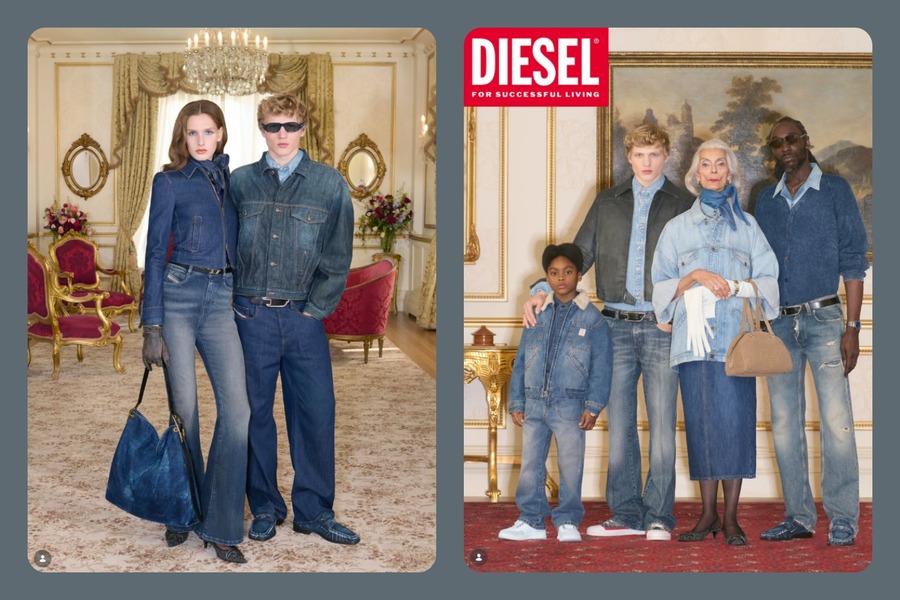
Diesel positions itself as  a  rebellious premium fashion brand built around self-expression, creativity and cultural non-conformity. The brand does not simply sell products. It  sells an  attitude and a  lifestyle. Across advertising campaigns, social media, collaborations and fashion shows, Diesel encourages consumers to  define success on  their own terms. Today Diesel occupies a  space between premium fashion, contemporary luxury and youth culture.
big
Original size 2000x2000

BRAND ARCHETYPES

THE OUTLAW Diesel encourages people to  challenge rules and express themselves freely. The brand often questions traditional ideas about fashion, beauty and success.

Original size 1240x1240

THE JESTER Humour, irony and unexpected ideas are central to  Diesel communication. Many campaigns are designed to  surprise people and start conversations.

Original size 1000x1000

Diesel RESORT 2026

By  Glenn Martens

THE CREATOR Diesel constantly experiments with fashion, design and visual communication through innovative collections and collaborations.

Original size 2554x1806

TARGET AUDIENCE

• Fashion-conscious Gen Z  and young adults • Streetwear and denim enthusiasts • Digital culture consumers • Creative communities and subcultures • Culture-driven consumers interested in  music, art and design

Original size 1500x1000

COMMUNICATION CHANNELS

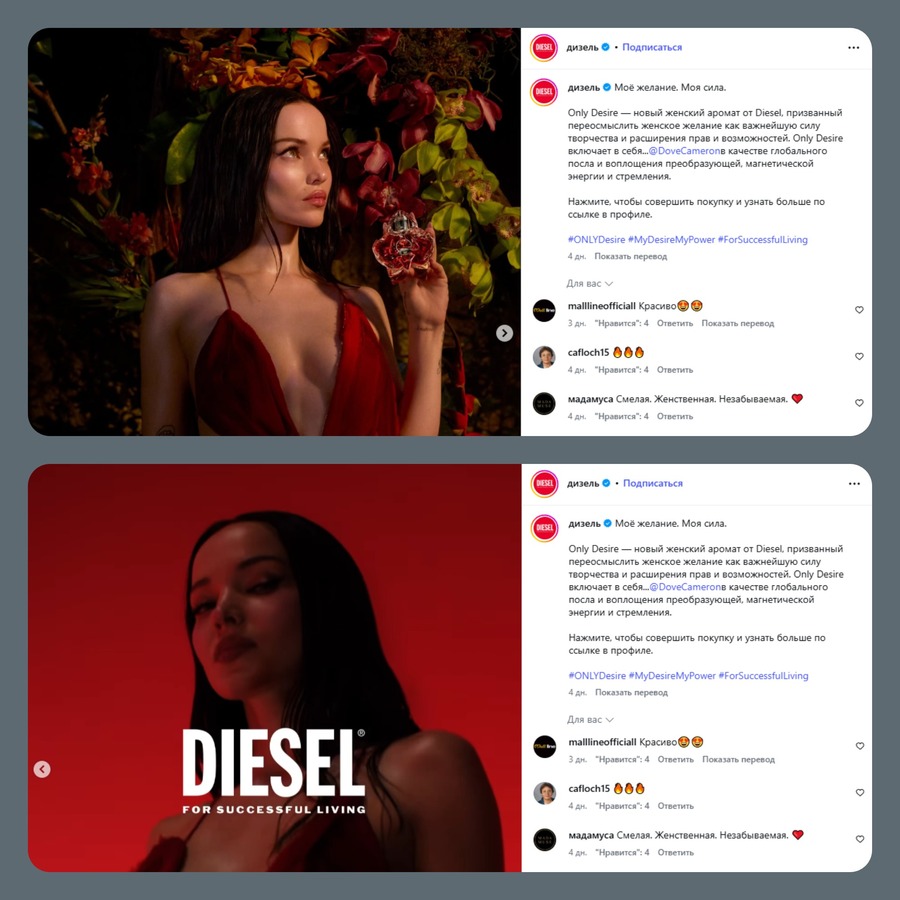
SOCIAL MEDIA Instagram and TikTok are among Diesel’ s most important communication channels. The brand uses them to  showcase collections, campaigns, collaborations and behind-the-scenes content. These platforms help Diesel create engagement, identity expression and viral reach.

Original size 1920x1200

FASHION SHOWS Diesel runway shows function as  communication events. Under Glenn Martens, the brand became known for immersive sets and large-scale installations that attract media attention.

Original size 1920x2880

Diesel FALL 2022  READY-TO-WEAR

By  Glenn Martens

COLLABORATIONS Partnerships with brands, artists and celebrities allow Diesel to  reach new audiences and strengthen its cultural relevance.

Original size 2554x1806

ADVERTISING CAMPAIGNS Diesel is  famous for provocative campaigns such as «Be  Stupid» and «Enjoy Before Returning». These campaigns use humour, irony and social commentary to  attract attention.

THEORETICAL FRAMEWORK

USES AND GRATIFICATIONS THEORY According to  Katz, Blumler and Gurevich, audiences actively choose media that satisfies their needs. These needs include entertainment, personal identity and social interaction. Rather than being passive recipients of  messages, consumers actively engage with content that provides value and helps them fulfil specific psychological and social needs. DIALOGIC  THEORY OF  PUBLIC  RELATIONS Kent and Taylor argue that effective communication depends on  dialogue and relationship building. Brands should encourage participation and interaction rather than only sending messages. Successful communication is  based on  mutual engagement, responsiveness and long-term relationships between organisations and their audiences.

Original size 1182x867

ANALYSIS

PERSONAL IDENTITY Diesel promotes confidence, individuality and self-expression. Consumers use Diesel content to  support and communicate their personal identity. The brand presents fashion as  a  way to  express values, attitudes and lifestyles rather than simply purchasing products.

Original size 1891x797

ENTERTAINMENT The brand creates entertaining content through humour, creative visuals and unexpected storytelling. Provocative campaigns, unusual runway shows and playful social media content encourage audiences to  engage with Diesel and remember its messages.

Original size 1191x522

SOCIAL INTERACTION Through comments, shares and discussions, Diesel creates opportunities for consumers to  participate in  fashion communities. Its digital platforms encourage conversations between consumers and allow audiences to  become part of  a  broader cultural network connected to  the brand.

USER PARTICIPATION Diesel encourages audience participation through social media engagement, influencer collaborations and user-generated content. Consumers are not only viewers but also active contributors to  the brand’ s communication environment.

Original size 1441x911

RELATIONSHIP BUILDING The brand focuses on  long-term engagement by  creating communities around creativity, freedom and individuality. This approach reflects the principles of  Dialogic Theory by  emphasising ongoing relationships rather than one-way promotional messages.

Original size 1115x795

CONCLUSION

Original size 1313x575

Diesel has developed a  communication strategy that goes beyond product promotion. The brand uses social media, fashion shows, collaborations and advertising campaigns to  communicate a  strong identity based on  individuality and self-expression. Uses and Gratifications Theory shows that consumers engage with Diesel because the brand satisfies important needs such as  identity expression, entertainment and social interaction. Dialogic Theory demonstrates that Diesel builds relationships through participation and engagement rather than one-way communication. As  a  result, Diesel remains one of  the most distinctive and culturally relevant fashion brands in  the contemporary fashion industry.

RECOMMENDATIONS

  1. Create a  permanent community hub featuring consumer stories and user-generated content.
  2. Develop more participatory campaigns that encourage audience involvement.
  3. Strengthen communication about sustainability initiatives and responsible fashion practices.
  4. Increase direct interaction with consumers across social media platforms
Original size 1462x819

LEGAL NOTICE

Meta Platforms Inc. (owner of  Instagram and Facebook) is  recognised as  an  extremist organisation in  the Russian Federation and its activities are prohibited on  the territory of  the Russian Federation.

Bibliography
1.

Katz, E., Blumler, J. G., & Gurevitch, M. (1973). Uses and Gratifications Research.

2.

Kent, M. L., & Taylor, M. (1998). Building Dialogic Relationships Through the World Wide Web.

3.

McQuail, D. (2010). McQuail’s Mass Communication Theory.

4.

Fill, C. (2013). Marketing Communications.

5.

Diesel Official Website: https://www.diesel.com

Image sources
1.

https://www.vogue.com/fashion-shows/designer/diesel (дата обращения: 14.06.2026)

2.

https://www.diesel.com (дата обращения: 14.06.2026)

3.

https://www.instagram.com/diesel (дата обращения: 14.06.2026)

4.

https://www.tiktok.com/@diesel (дата обращения: 14.06.2026)

COMMUNICATION THEORY OF DIESEL
Project created at 15.06.2026
We use cookies to improve the operation of the website and to enhance its usability. More detailed information on the use of cookies can be fo...
Show more