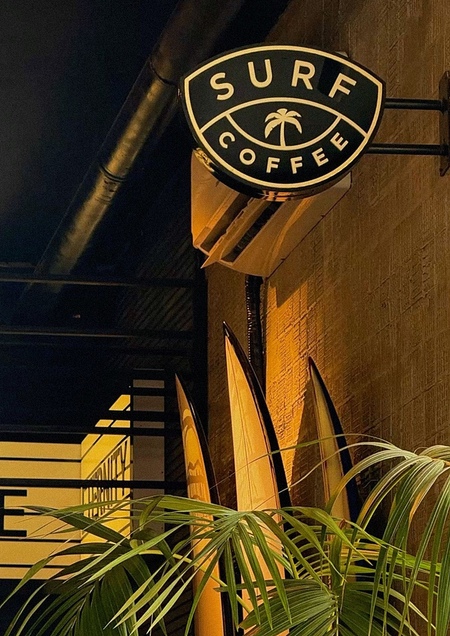
Brand Overview
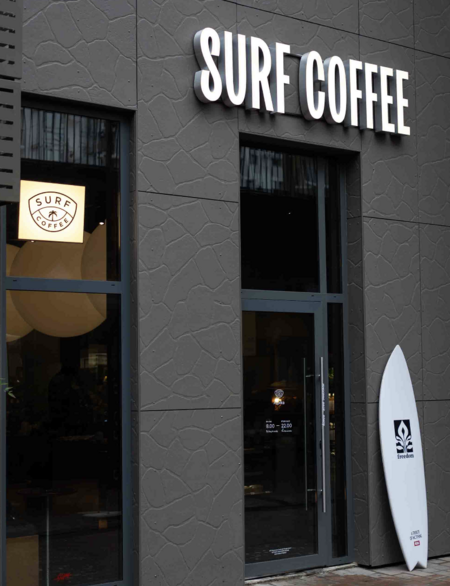
Surf Coffee is a Russian coffee shop chain. While the brand’s website lists dozens of locations across our and some neighboring countries, its identity differs from a typical coffee chain you see in the streets. Instead, Surf Coffee positions itself as a lifestyle brand rooted in street culture, music, and a creative community.

Core Positioning
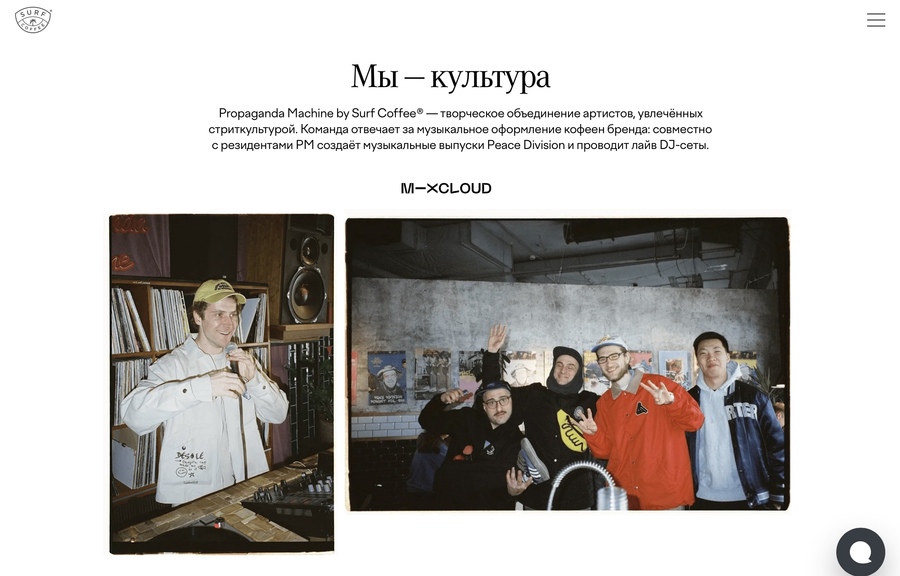
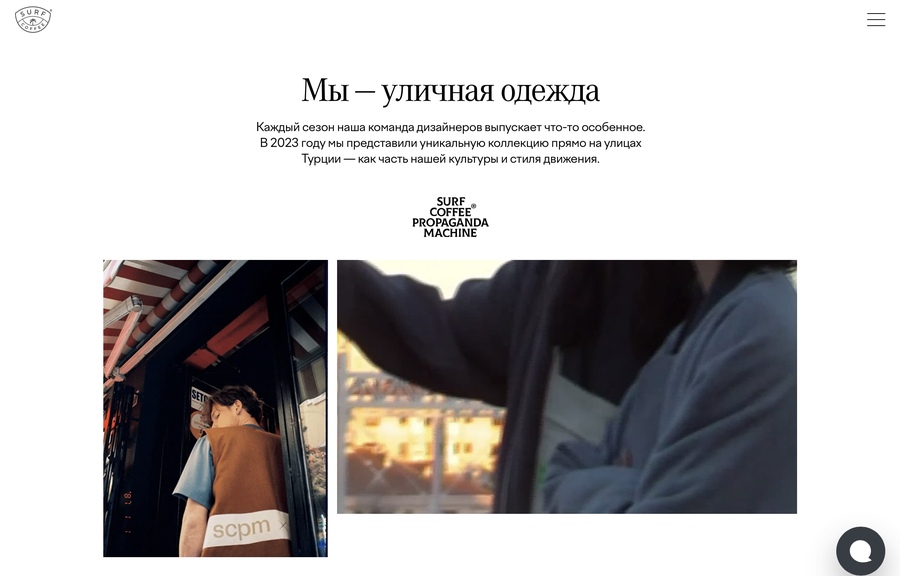
The brand’s core positioning revolves around the idea that it is «not just a coffee shop». Its slogan and visual communication imply a dual identity: a serious coffee player that also functions as a creative hub. The brand integrates coffee production with fashion (merchandise collections), music (the Propaganda Machine collective, DJ sets), and long-form storytelling. This positions Surf Coffee not merely as a place to buy a beverage, but as an entry point into a cultural aesthetic and friendly community.

Target Audience
Based on the brand’s communication style, content, and merchandise, the target audience can be described as:
- Demographics: young adults, primarily Gen Z and younger Millennials (approximately 18-35 years old).
- Psychographics: individuals who value authenticity, creativity, and self-expression. They are likely interested in streetwear, alternative music, specialty coffee, and local creative projects.
- Behavioral traits: this audience is digitally native and active on social media. They appreciate both deep expertise (e.g., coffee sourcing and experiments) and aesthetic, low-effort cues (e.g., cool collaborations and limited-edition drops).
Communication Channels
Surf Coffee employs a multi-channel communication strategy that blends digital and physical touchpoints, each serving a specific role in engaging their target audience.
Channel 1: official website and social media. Website serves as a clean, high-level introduction. Lists all store locations, displays industry awards, hosts the brand film, and outlines communities’ values. Designed for low cognitive load and intuitive navigation (e.g., menu, prices, contacts). Their socia media is used for two types of content: central route content (detailed posts about coffee experiments) and peripheral route content (aesthetic visuals, collaboration announcements, and merchandise drops). Also facilitates two-way communication in Q&A sessions and comment replies.
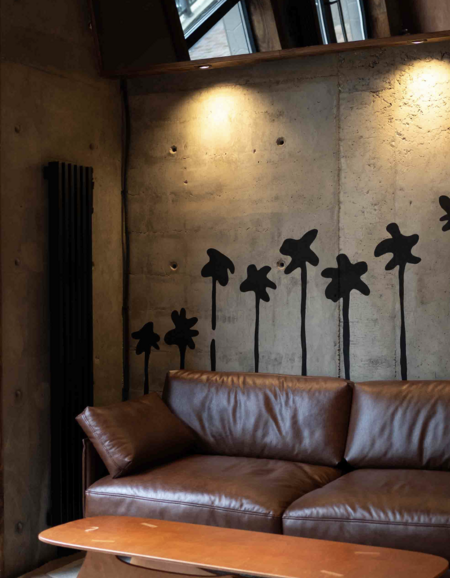
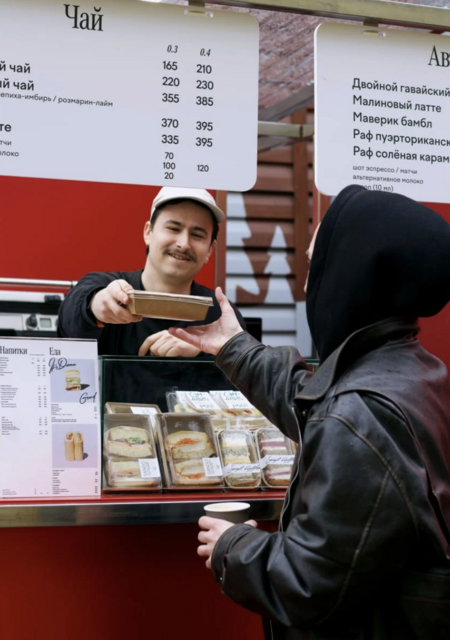
Channel 2: Physical (coffee shops and merchandise). The shops gather the community by making high quality products, setting the cozy environment and hosting DJ sets and music events. The collection of clothing, drinks, snacks, and energy bars with unique packaging serves as a mobile advertisement. Each product acts as a peripheral cue (liking, social proof).
Channel 3: long-form content. Lastly, their film creates a strong emotional connection, understanding of brand’s core values and builds deeper trust among customers.
Theoretical Framework
For this section, two specific theories from our course were chosen as the basis for analyzing the coffee shop.
The first theory is the Elaboration Likelihood Model (ELM). This model was proposed by Richard Petty and John Cacioppo in the 1980s. The theory explains how a persuasive message works to change the attitude of the reader or viewer (consumer). The model focuses on cognitive processes — that is, how a person thinks about information.
ELM assumes that there are two main routes of information processing that the message receiver follows:
- Central Route: — This is the path of deep cognitive processing. It requires a high level of involvement, strong interest in the topic, and significant cognitive effort. — Activation conditions: A person must be motivated to process and able to process the information. For this to happen, the topic must be personally relevant, and the person must have enough time and knowledge. — Outcome: If the arguments are strong (strong elaborated arguments), the central route leads to a strong and long-lasting attitude change. The change is based on a careful analysis of facts. — Example: A customer cares about coffee being made from good beans, is interested in different roasting methods and the origin of the beans, so they study information about the coffee shop and read reviews before visiting.
- Peripheral Route: — This is the path of «mental shortcuts.» A person accepts or rejects a message based on cues unrelated to the core issue (peripheral cues), rather than actively thinking about the problem. — Activation conditions: This route is activated when a person lacks the motivation or ability to deeply process information (e.g., no interest, no time, distractions). This happens very often, for example, when viewing advertisements. — Peripheral cues: The lecture lists the following key cues that can persuade us without deep analysis: — Reciprocation: «You owe me.» (Lead magnet) — Consistency: «We’ve always done it this way.» (Preserving traditions) — Social proof: «Everyone is doing it.» (Want to be part of the group) — Liking: Using celebrities. (Collaboration) — Authority: Instructions from a boss or a parent. — Scarcity: Limited product («Hurry, the product is running out»). — Contrast: First a big request, then a small one. — Outcome: The attitude change will be weak and short-lived.
In our project, we will examine which of these routes the chosen coffee shop uses: central, peripheral, or both. The brand’s communication happens through social media, and they also have their own website with information about them.
Central Route: From the very first frame on the Surf Coffee website, they demonstrate deep expertise in the coffee industry. «We don’t just brew coffee — we create it.» Next comes a short video with scenes of the creation process, which shows more of the aesthetics of the process rather than detailed material. Because the site is clean and not overloaded, we focus on meaning and aesthetics (cognitive load is minimal, arguments are neutral). But if we go to social media, we can find more detailed information about production, for example, this post about an experiment. The post describes process details (time, methods, ingredients) and data about the resulting product — these are strong arguments. They require motivation and cognitive effort from the reader, but in return, they provide a strong and long-lasting attitude change. Thus, Surf Coffee creates a path from peripheral attention to central processing.
Peripheral Route: If we continue to explore the coffee shop’s website, the information we find activates the peripheral route. By displaying awards on the website (SCA Moscow Barista Championship 2021, Russian Coffee Cup Final 2025, etc.), Surf Coffee uses the peripheral cue of authority. According to ELM, this cue requires no cognitive effort from the consumer.
Even without a deep analysis of coffee quality, the consumer tends to trust a brand recognized by experts. This leads to a weak but quick attitude change, especially among audiences not motivated to learn about coffee.
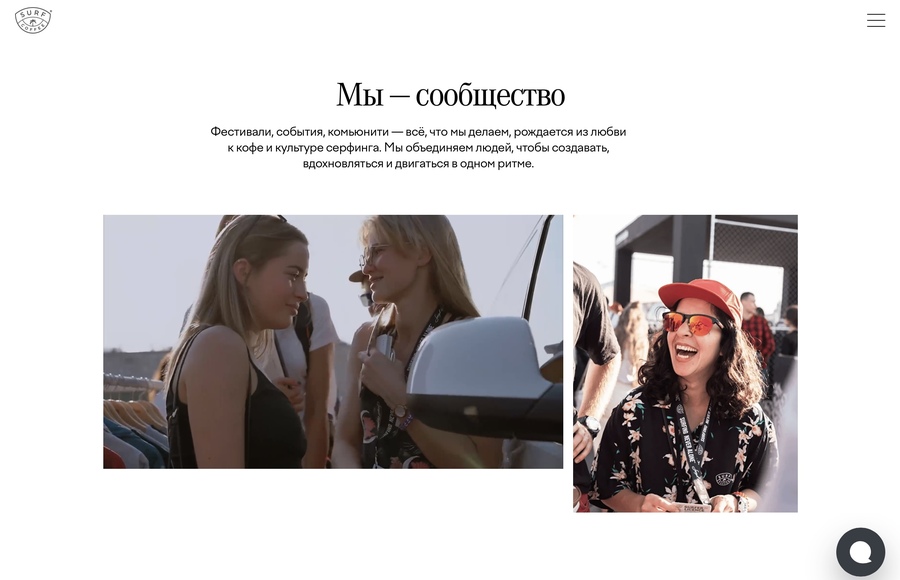
Launching products (soft drinks, snacks, protein bars) with unique packaging, new clothing collections, and creating the creative collective Propaganda Machine activate the peripheral cue of liking. The consumer transfers positive emotions associated with street culture and music onto the brand itself. The website also contains information about various collaborations with other well-known brands or people, which also corresponds to the liking cue. The phrase «We are a community» also uses the social proof cue — the desire to become part of a community.
Thus, Surf Coffee is an excellent example of a balanced ELM strategy. They attract audiences through a neutral, aesthetic website with the core idea of «becoming part of a community» (peripheral route), while posts with details of experiments and production (central route) retain the customer.
Dialogic Theory
Next, we will discuss the second theory from our course. This theory describes how brands and campaigns should build honest and quality relationships with their audience. Instead of simply managing opinions, it focuses on dialogue — an open exchange of ideas where both sides matter.
Dialogue is built on sincerity, respect, and a willingness to listen. The organization interacts with people as equal partners. This approach helps create long-term, trusting connections, not just a short-term effect.
We will use Dialogic Theory to assess the extent to which Surf Coffee’s communication is two-way. That is: — Does the brand only speak, or does it also listen? — Does the audience have a real opportunity to influence the coffee shop’s decisions? — How does the brand respond to feedback — formally or with genuine engagement? We will check whether Surf Coffee has a real conversation with its guests or simply broadcasts beautifully in one direction.
For the analysis, we will rely on the following five features of dialogue from the lectures:
- Mutuality: The campaign and the public are inextricably linked; a spirit of collaboration. Each participant feels comfortable discussing any topic.
- Propinquity: Communication happens in the present, before decisions are made, so the public can help shape the solution. There must be a shared space for communication (e.g., a website or a meeting place).
- Empathy: An atmosphere of support and trust. The organization creates a climate where others are encouraged to participate and their participation is facilitated.
- Risk: Dialogue is always associated with risk and vulnerability. You share information and beliefs without knowing how they will be used. This is the recognition of the strange otherness of the other.
- Commitment: The extent to which the organization gives itself over to dialogue, interpretation, and understanding. This is genuineness, honesty, and a striving for mutual benefit.
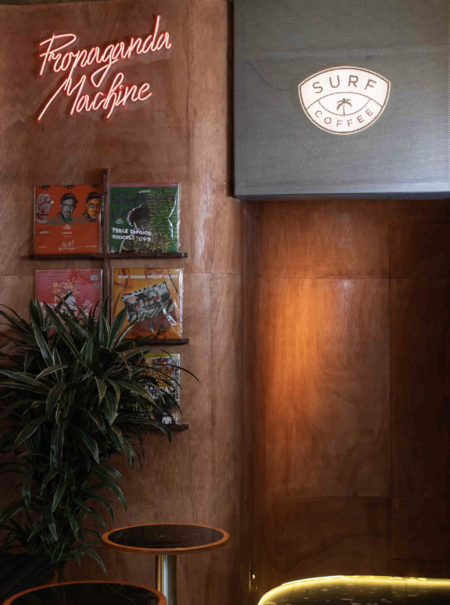
The creation of the creative collective Propaganda Machine and the integration of music into the coffee shop spaces demonstrate the spirit of mutuality. Surf Coffee does not just broadcast messages; it creates a shared cultural environment with its audience. According to Dialogic Theory, this is an acknowledgment that the organization and the public are «inextricably tied together.» Joint DJ sets and Peace Division music releases create propinquity — a space for communication (a meeting place).
The film «Chasing the Dream» corresponds to the feature of empathy. In the lecture, empathy is defined as «an atmosphere of support and trust.» By sharing a story about freedom and the journey, the brand creates a climate in which the audience is encouraged to participate. Furthermore, producing the film involves risk.