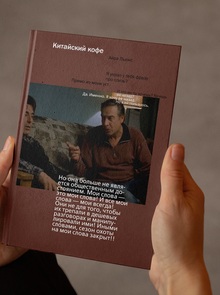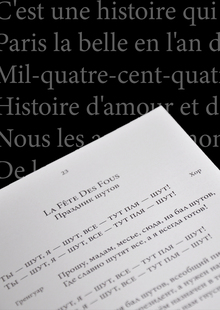
Книга о каталогизации: правилах и живой практике. Первая часть исследует теорию каталогизации, вторая документирует жизнь реальной библиотеки. Из энциклопедии — в зин. Из правил — в практику.
Первая часть мимикрирует под энциклопедический словарь: плотный текст, двухколонный набор, академическая строгость.

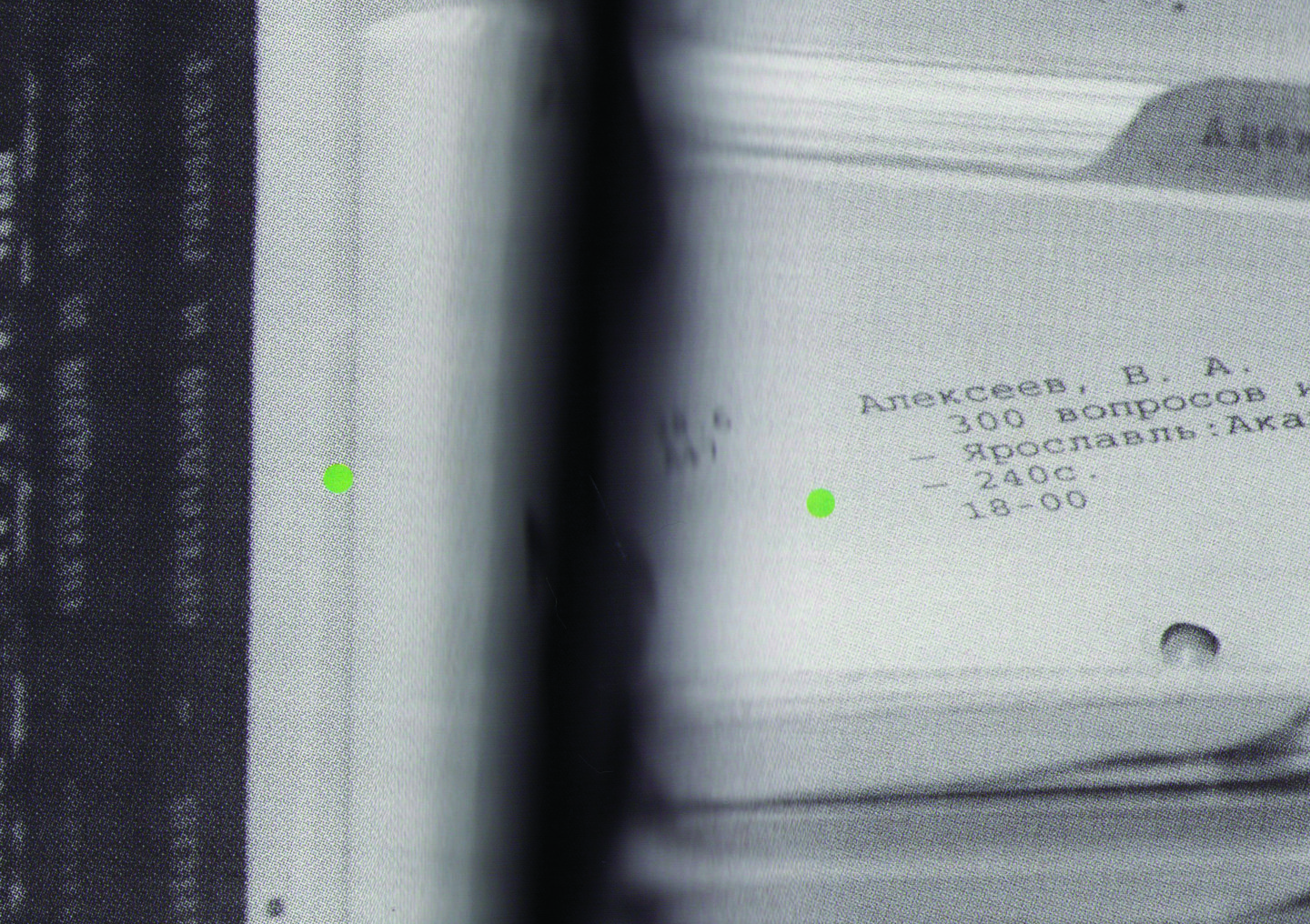
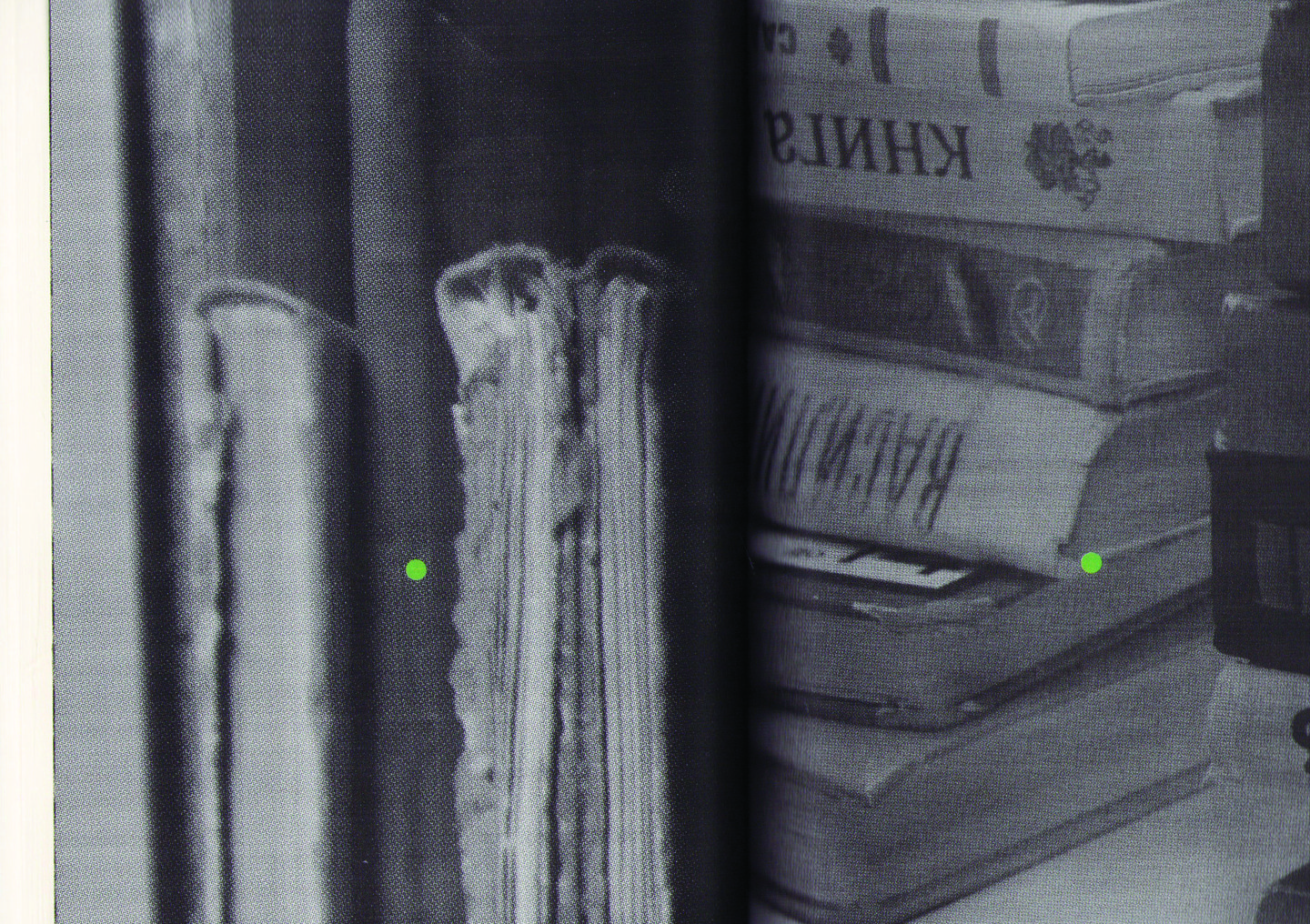
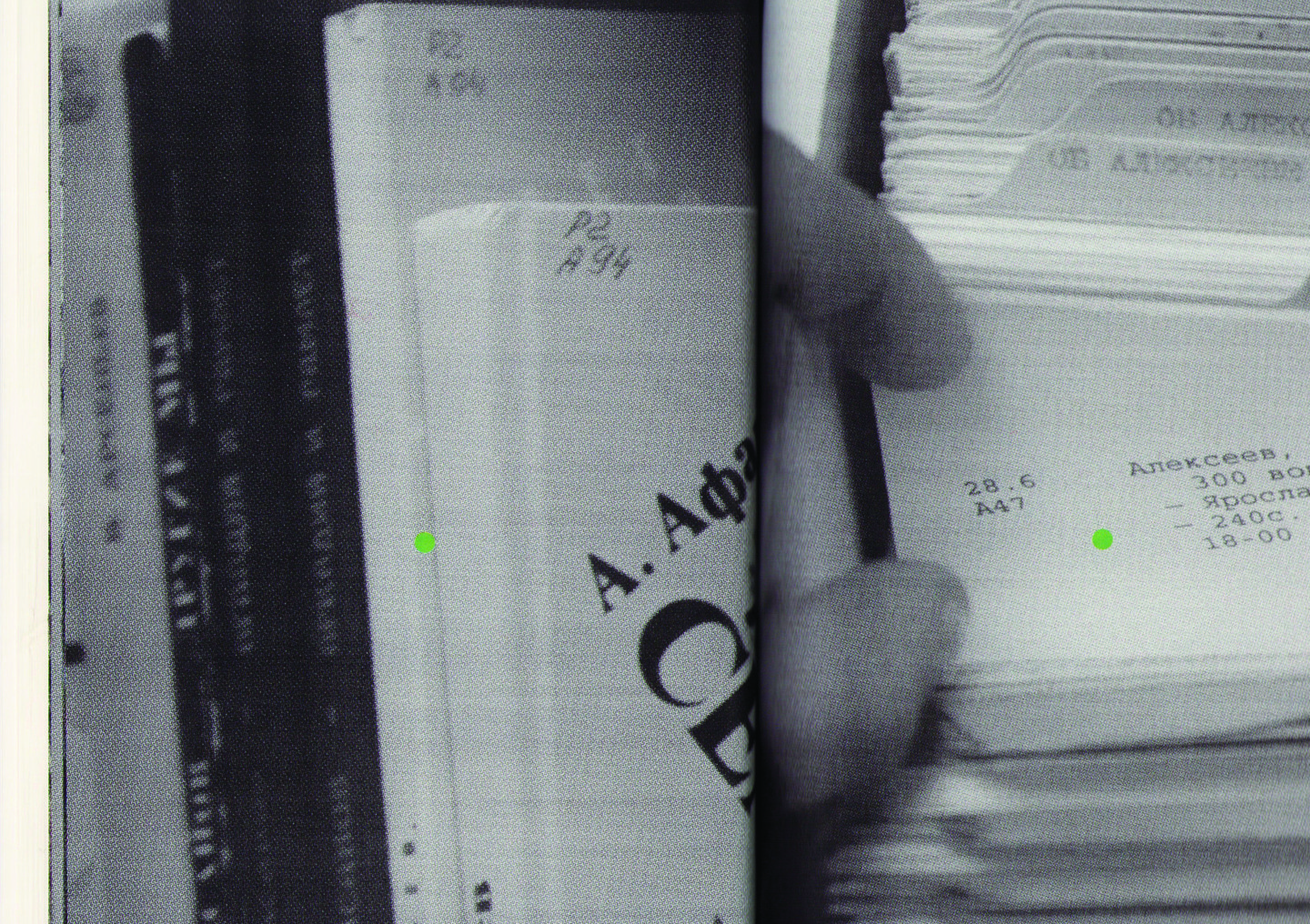
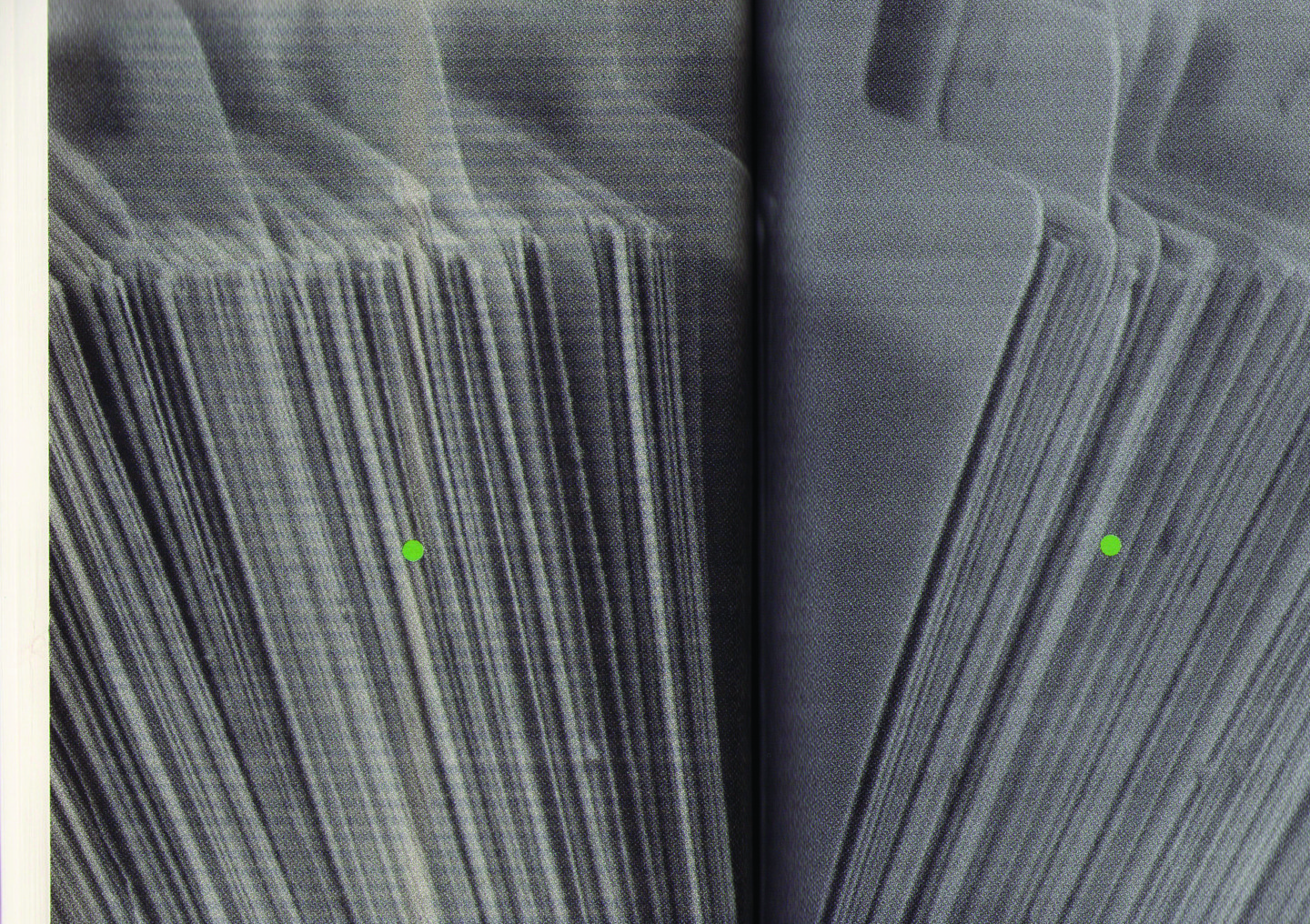
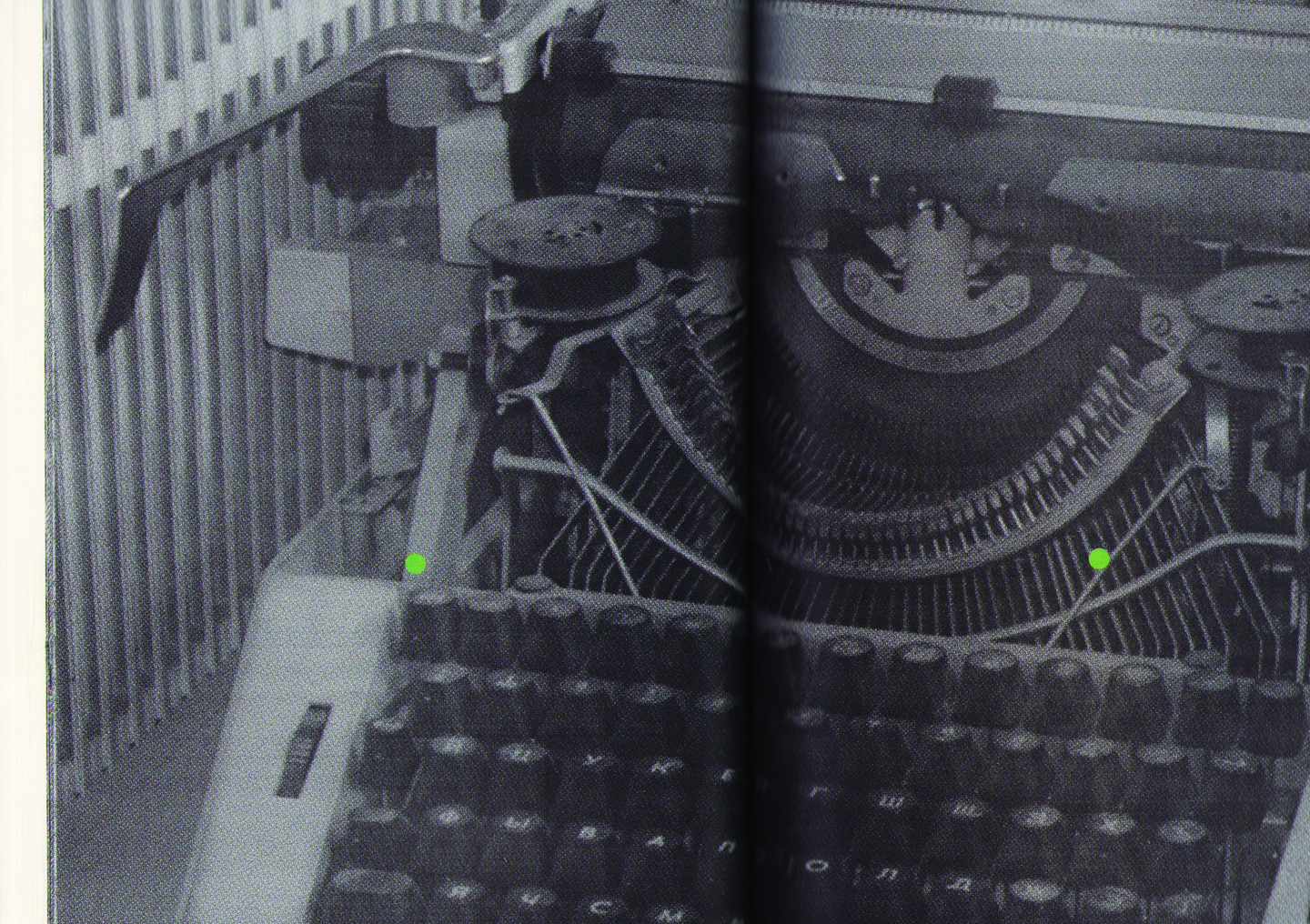
Зелёная точка отсылает к штырю картотеки, на который насаживаются архивные карточки. Проходит сквозь обе части книги — визуально связывает их между собой.
В ходе исследования была найдена архивная карточка с наклонным текстом. Случайная «ошибка» стала приёмом: названия глав, примеры и вопросы интервью набраны под углом 8 градусов.
Шмуцтитулы набраны на печатной машинке — название следующего раздела появляется на последней полосе предыдущего

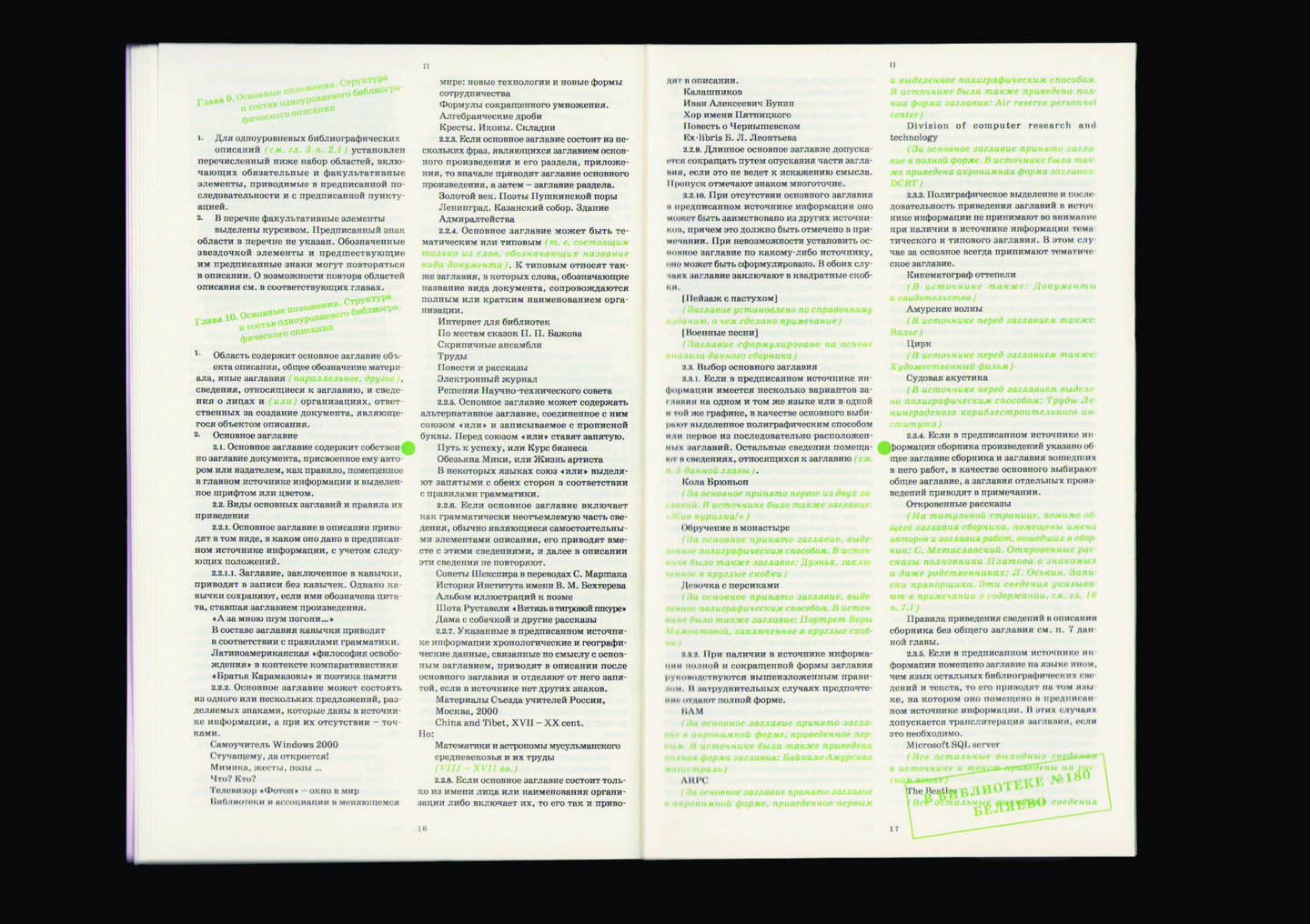
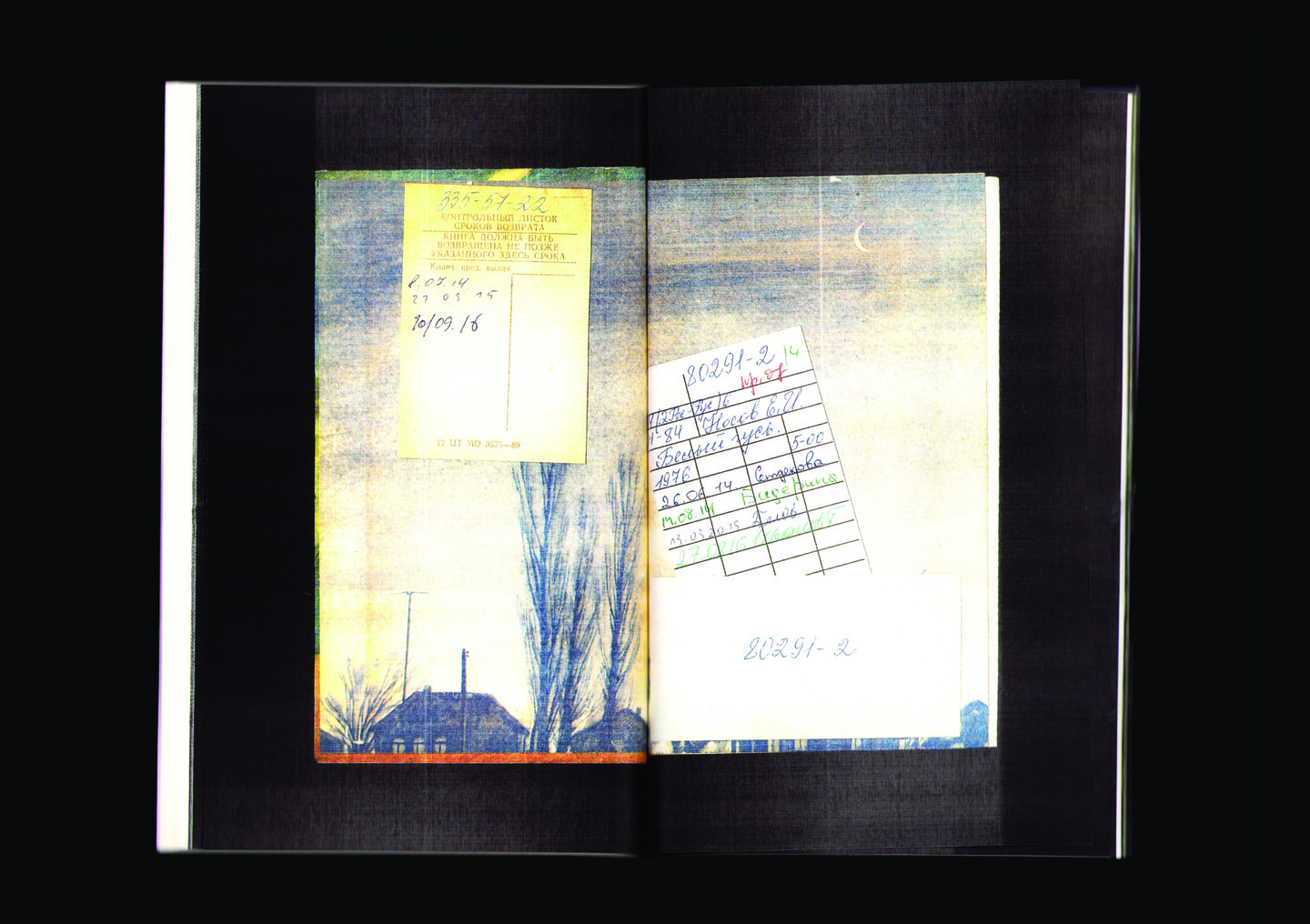
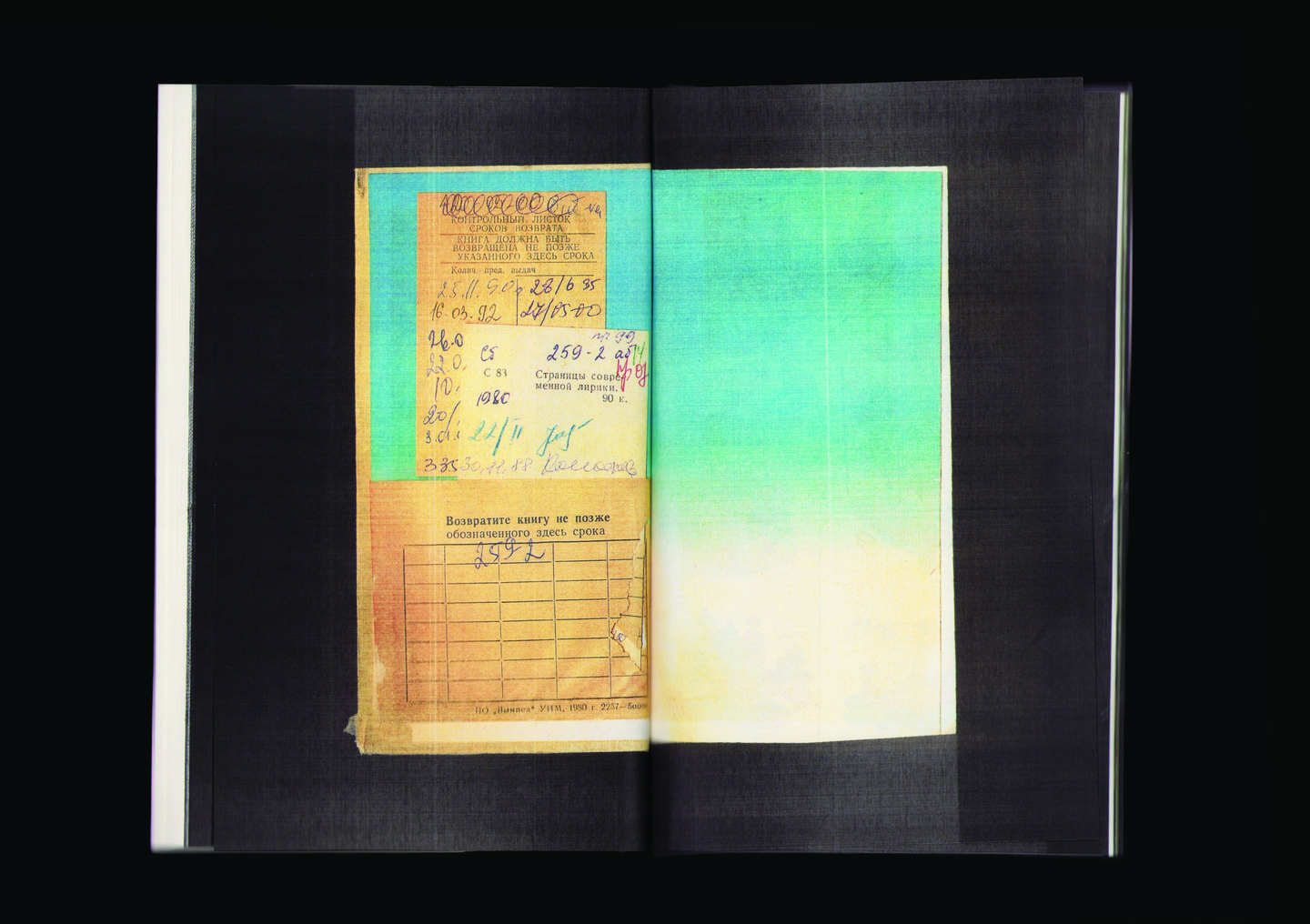
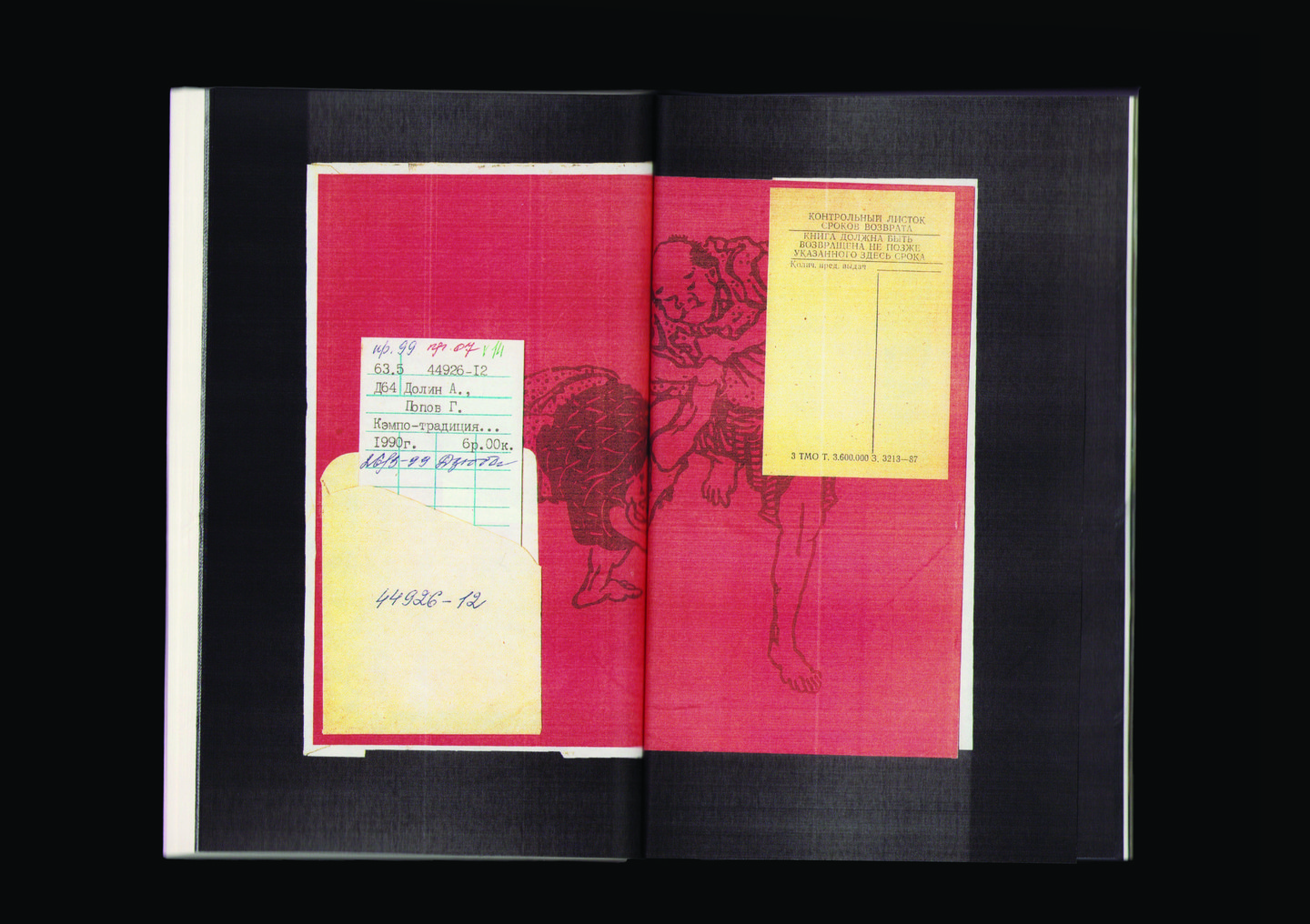
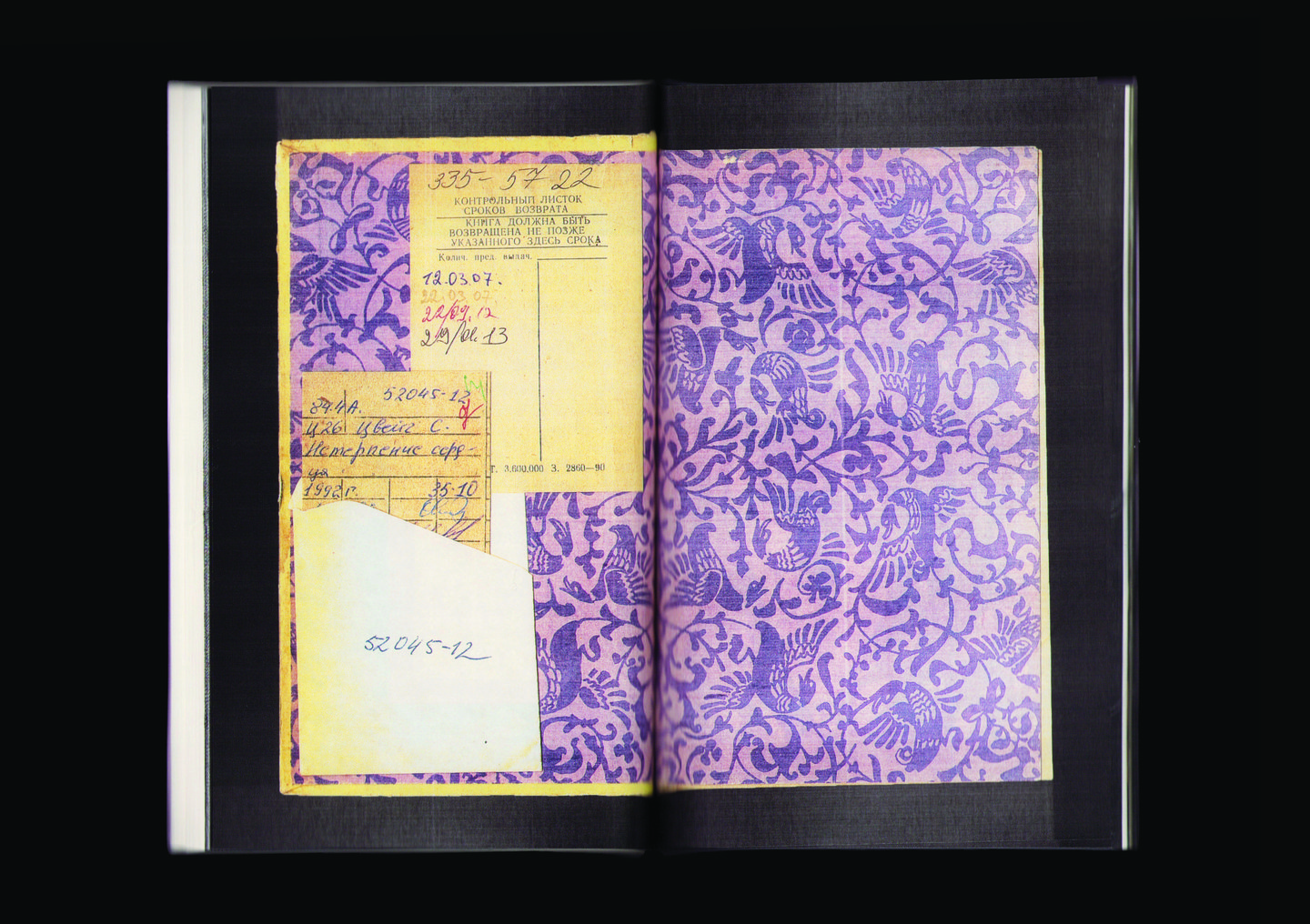
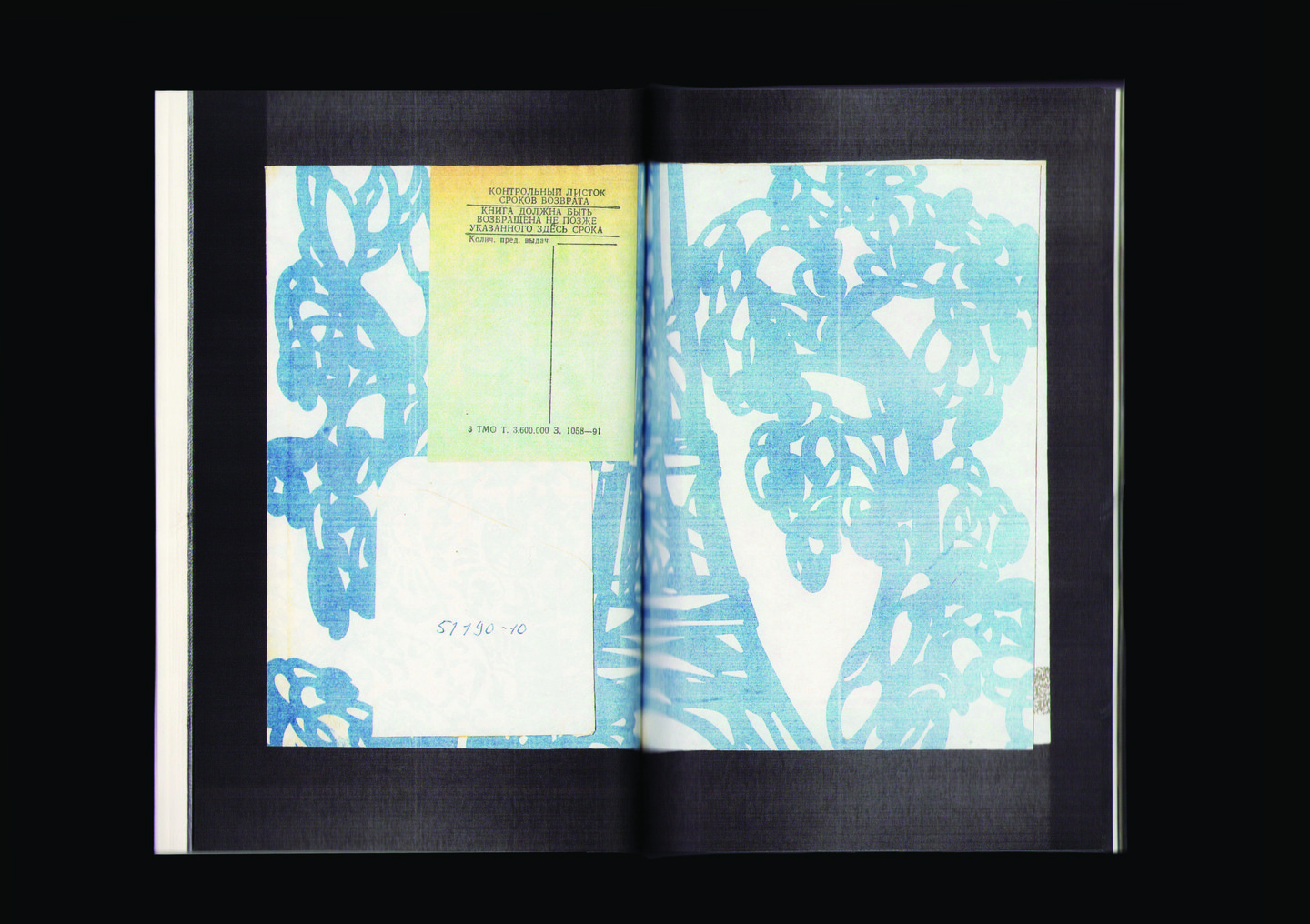
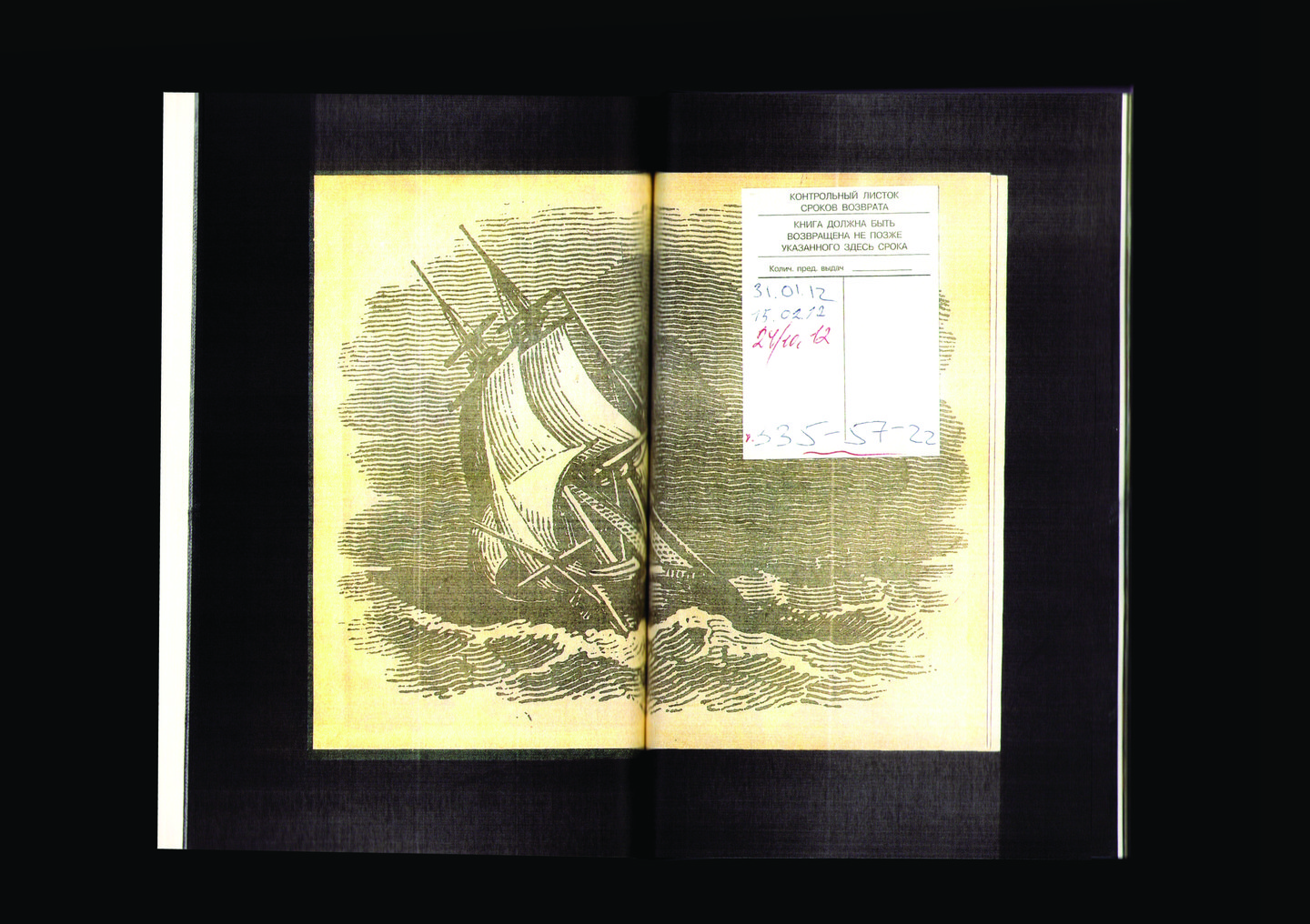
На некоторых полосах издания размещен библиотечный штамп
Полевое исследование. Вторая часть наследует эстетику зина, документирует жизнь современной библиотеки и практическое применение правил из первой части проекта.
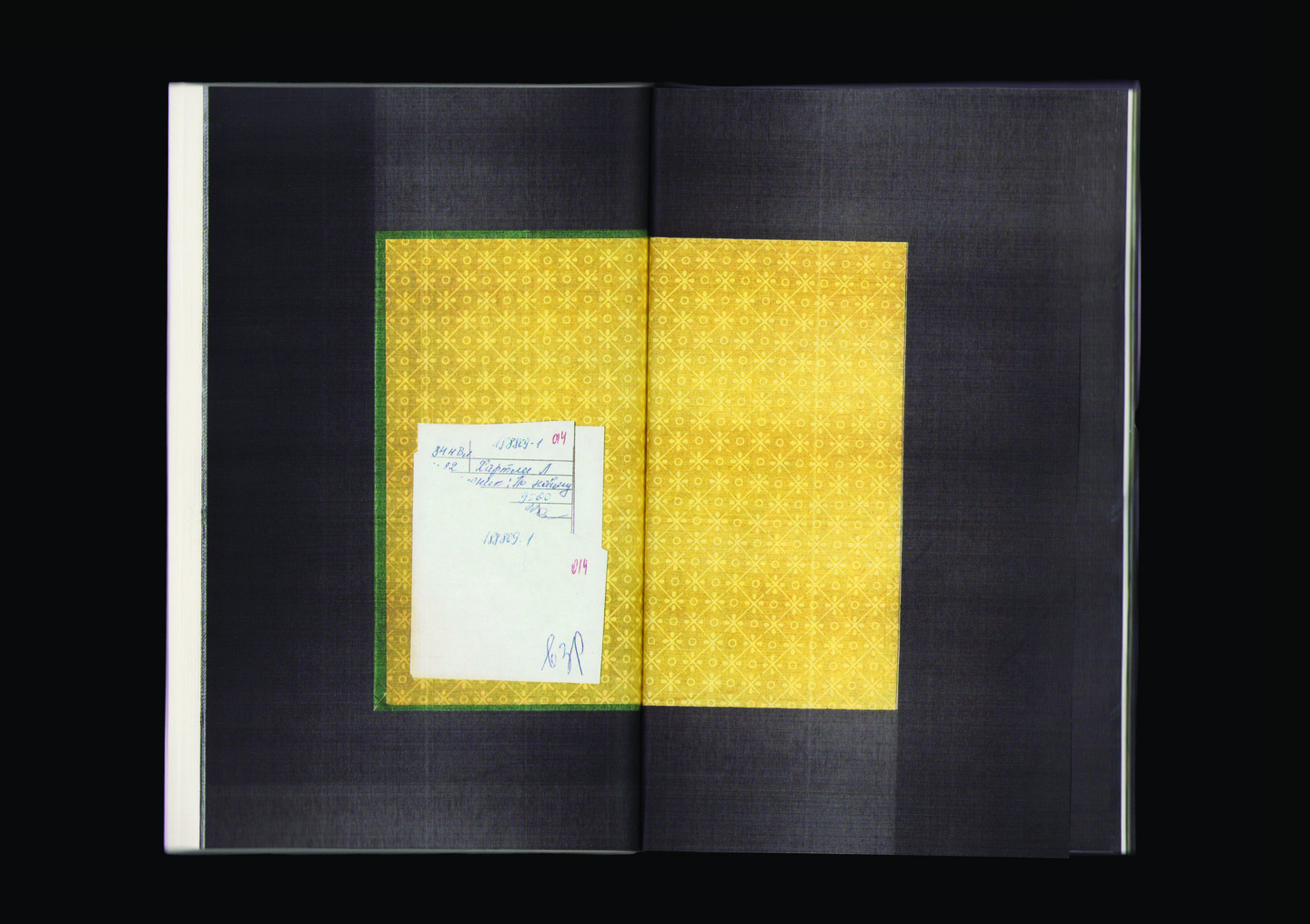
Съемка архива и сканы артефактов картотеки служат переходом из первой во вторую часть книги
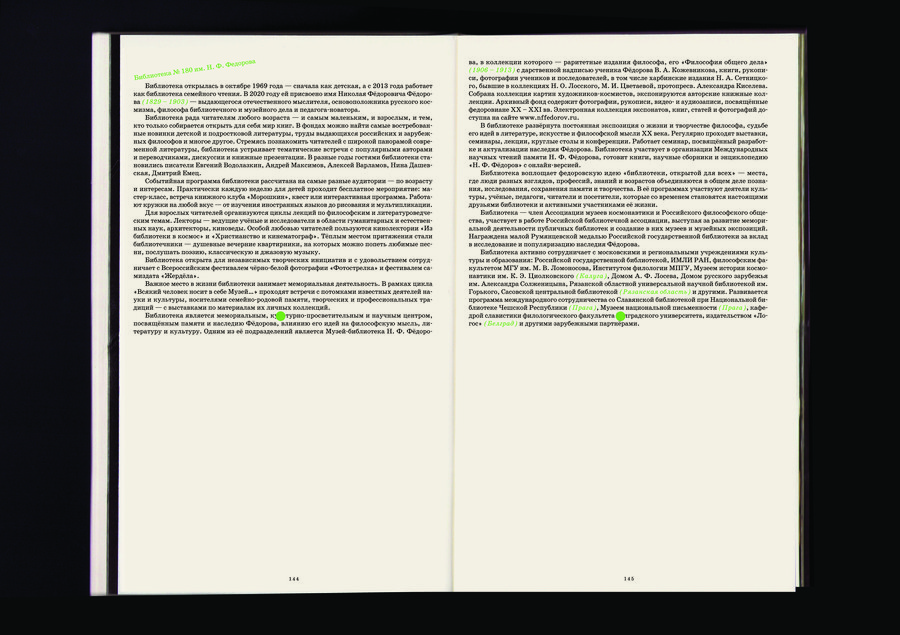
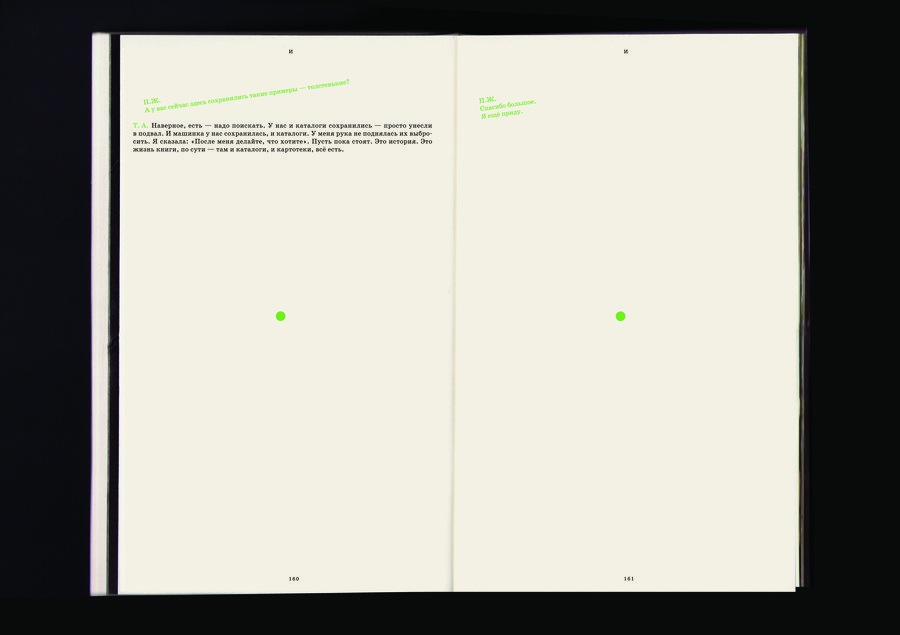
Интервью с заведующей библиотеки № 180 им. Н. Ф. Фёдорова о работе библиотекаря, исчезновении картотек и книжных формуляров, полном переходе в электронные каталоги.
После интервью следует фотораздел — снимки Анастасии Гумаровой, документирующие повседневную жизнь библиотеки. Поверх фотографий наложены отзывы посетителей с Яндекс Карт.
Вторую часть завершает программа библиотеки № 180 на март 2026 года.
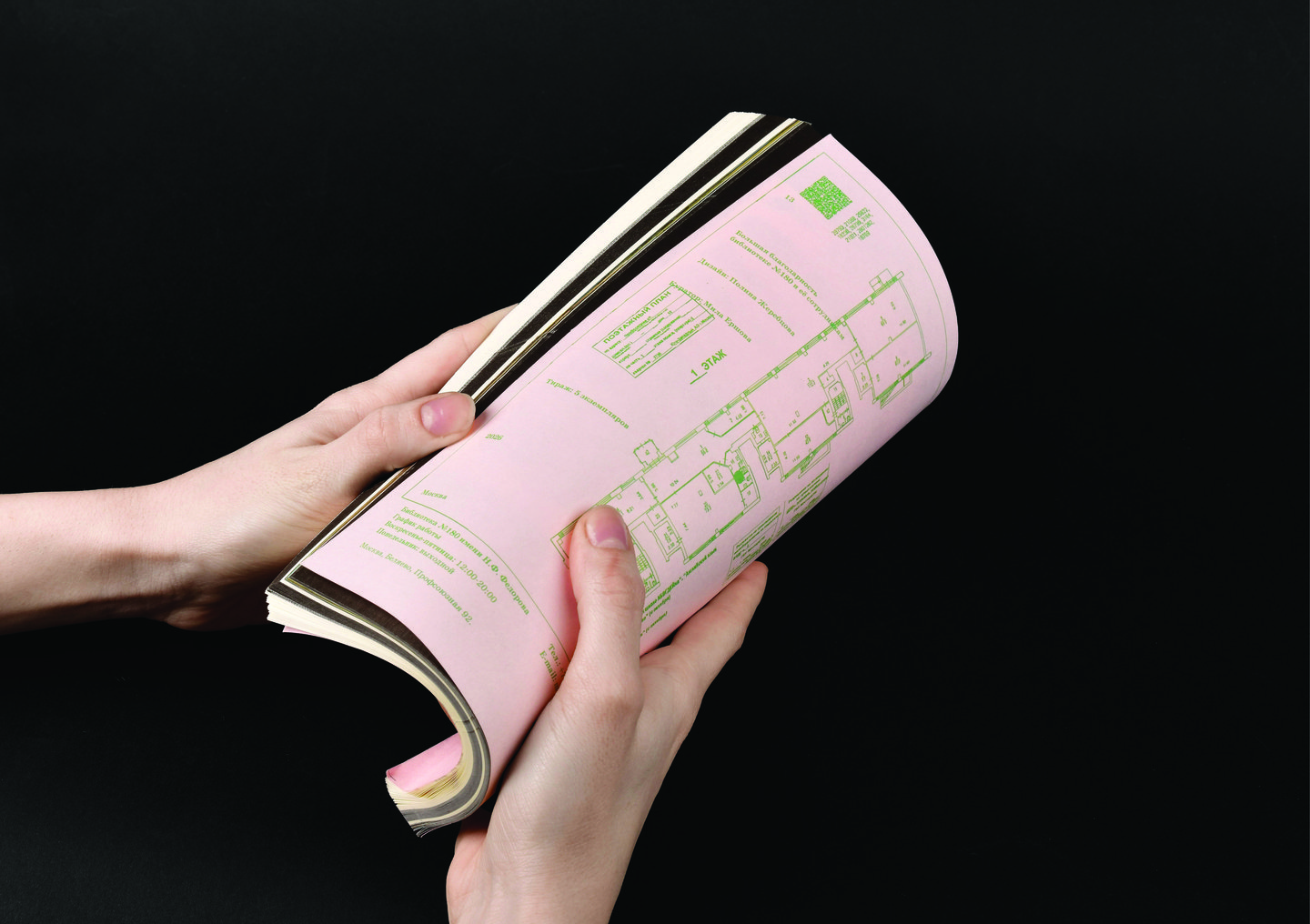
На четвёртой сторонке обложки — выходные данные, контакты библиотеки, её план и большая благодарность от меня сотрудникам за помощь в проекте.