UNO is a globally recognized, fast-paced card game originally created in 1971 and currently owned by Mattel. The game’s objective is simple: be the first player to get rid of all your cards by matching them by color or number, while using action cards (such as «Skip,» «Reverse,» and the infamous «Wild Draw Four») to thwart your opponents. Over the decades, UNO has evolved far beyond a physical card deck into a massive lifestyle and entertainment brand, featuring digital apps, video games, apparel collaborations, and numerous themed spin-off decks.
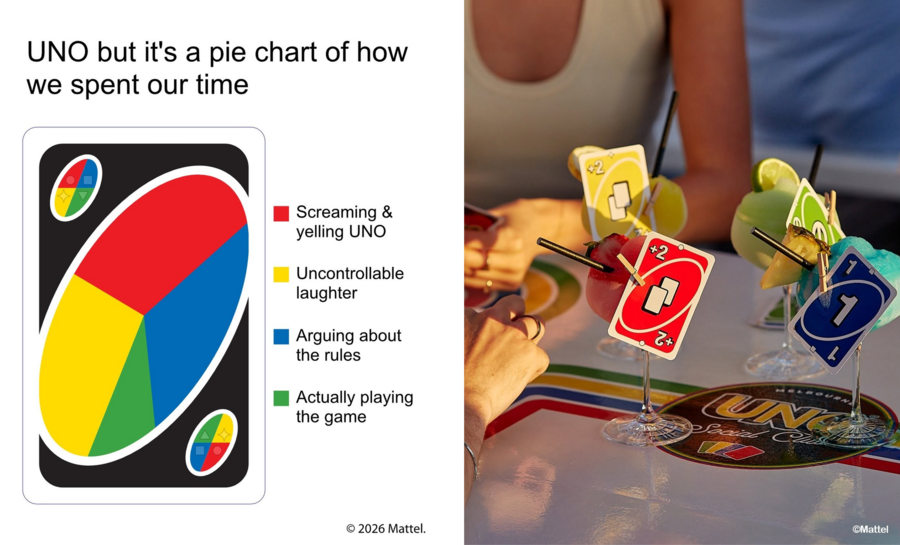
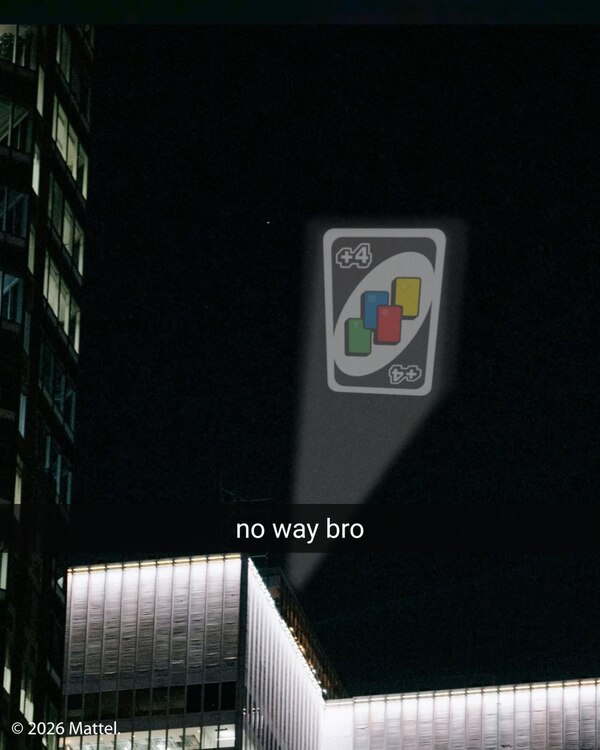
UNO’s meme in Instagram / UNO’s social club photoshoot in Instagram
UNO as a brand
Core Positioning
The core positioning of the brand is anchored in universal simplicity, immediate accessibility, and inclusive social play that transcends linguistic, cultural, and generational barriers.
While traditionally positioned as a family living room staple, the brand has expanded its target audience to engage a highly digital, culturally active demographic of Millennials and Generation Z
1. Universal Inclusion and Accessible Design
While traditionally positioned as a staple game for the family living room, UNO has modernized its positioning to ensure absolute inclusivity. A prime example of this is the brand’s product optimization to support colorblind players. By partnering with ColorADD, UNO integrated a proprietary «Color Alphabet» of graphic symbols into its cards, making the game accessible to the estimated 350 million colorblind individuals worldwide. This move fundamentally reinforced the brand’s positioning that UNO is a game truly meant for everyone.
2. Affordability and Resilience
UNO’s positioning is heavily supported by a structural brand promise of accessible pricing. Mattel aims to keep between 40% and 50% of its U.S. toy products priced under $20, providing consumers with a strong balance of price and value. This commitment to affordability underpins the brand’s resilience during economic shifts, ensuring that the physical card deck remains an impulse buy and maintains consistent household penetration
3. Shifting to an IP-Driven Cultural Asset
UNO’s modern positioning also reflects parent company Mattel’s broader corporate transformation from a traditional toy manufacturer into an intellectual property-driven (IP-driven) family entertainment business. UNO is no longer positioned merely as a physical card deck, but rather as a highly adaptable cultural asset. This is reflected in how the brand expands its reach through mobile apps, experiential pop-up social clubs, and «product-as-PR» collaborations with major franchises, fashion icons, and artists.Billie Eilish selfie with custom UNO’s collection / UNO’s custom collection dedicated to Billie Eilish
The brand occupies a dynamic public field, utilizing a multi-channel communication matrix to sustain relevance across diverse media environments. This ecosystem leverages digital engagement, product-as-PR collaborations, and experiential activations to transition passive consumers into active brand advocates.
UNO’s Communication Channels
Social Media Channels and Content Tactics
The digital communication strategy relies on short-form, platform-specific content distributed across TikTok, Instagram, Facebook, and Twitter/X*. The brand utilizes distinct tactics on each platform to maximize engagement:
- TikTok (@uno) and Instagram (@uno): The brand prioritizes highly visual, comedic, and employee-generated short-form video content. This content utilizes platform-native trends and relatable situational humor that mirrors user-generated gaming content
- Twitter/X (@realUNOgame): The channel functions primarily as an arena for direct consumer interaction and rule arbitration. The brand maintains a witty, authoritative, and conversational voice that actively participates in long-standing debates regarding gameplay rules.
- Facebook (@UNO): The platform is utilized for broader community engagement, rule clarifications, and facilitating conversational threads among older demographics and parents
*Further and throughout this research, there will be mentions of social networks belonging to Meta Platforms Inc., which are banned in the Russian Federation.
UNO’s Communication Channels
Experiential and Collaborative Public Relations
Formula collaboration with UNO
Collaborative and Cult Decks
The brand frequently releases specialized, themed decks with entities ranging from popular intellectual properties (Marvel, Star Wars, Toy Story 5, Minecraft, Barbie, Harry Potter, BTS, Seinfeld, Yellowstone, Wicked, Batman, Superman) to global cultural icons and high-end fashion and art institutions (Keith Haring, CASIO, ONLY, The Hundreds). These themed decks, sold through the direct-to-consumer platform Mattel Creations, function as collectible, low-cost impulse purchases that naturally trigger media coverage and social media dialogue.
Ken collaboration with UNO
UNO’s collaboration with independent artists from Instagram
Competitive Tournaments
The brand organizes major live-streamed competitive events, such as the first-ever UNO Championship Series Vegas Invitational, hosted by professional streamer Tyler «Ninja» Blevins and broadcasted live to global audiences via TikTok
UNO’s social club collaboration
Experiential Pop-Ups and Social Clubs
To leverage the growing tabletop culture, the brand established the «UNO Social Club». Launched in the summer of 2025 at the Palms Casino Resort in Las Vegas, the campaign featured a highly stylized, brand-themed suite. This was followed by a nationwide tour of pop-ups at bars and social venues in major U.S. cities, including Atlanta, Los Angeles, New York, Chicago, and Austin. These adult-centric, non-gambling events feature tournament-style play, custom brand-themed drink menus, and interactive photo spots, positioning the card game as the centerpiece of modern nightlife and casual socializing
How UNO applies theories on practice
Uses and Gratifications Theory
The Uses and Gratifications Theory (UGT), pioneered by Elihu Katz, Jay G. Blumler, and Michael Gurevitch, and further expanded by Denis McQuail, emphasizes shifting away from treating audiences as passive receivers of media effects to understanding them as highly active, goal-directed consumers. It argues that individuals deliberately choose and use specific media to fulfill pre-existing psychological and social desires, fundamentally changing the focus of media research from asking «What does media do to people?» to asking «What do people do with media?».
To evaluate this, the theory outlines four core dimensions of media gratification: Diversion (using media for entertainment, relaxation, and escaping daily routines), Personal Relationships (using media for social integration, facilitating conversations, and connecting with peers), Personal Identity (using media to negotiate self-image, express oneself, and compare oneself to others), and Surveillance (using media to acquire information and satisfy curiosity about the world). Online, this is facilitated through interactive digital platforms and social media, which allow users to actively engage in curated self-expression, trend participation, and community building to satisfy their highly personalized needs
UNO does not simply broadcast advertisements; it creates a participatory digital ecosystem. Using Blumler and McQuail’s four dimensions of gratification, we can decode exactly what consumers are doing with UNO’s media and why it drives such massive engagement.
1. Diversion (Hedonic Escapism and Entertainment)
In a fast-paced and often stressful digital landscape, users actively seek out media that provides immediate emotional pleasure, amusement, and a diversion from routine pressures. UNO satisfies this need for diversion by prioritizing highly visual, comedic, and culturally fluent short-form content.
A prime example is UNO’s April Fools' Day «+100 Draw» campaign. The brand posted a video on TikTok and Instagram featuring a fictional, comically cruel «+100» penalty card with the caption, «Draw 100, you fools». From a UGT perspective, this content functions as a «benign violation"—a piece of humor that playfully subverts the established, familiar rules of the game in a harmless way. By leaning into the internet’s love for absurdity and chaos, UNO provides its audience with instant hedonic gratification. The audience actively consumes and shares this content because it offers a quick, humorous escape from their daily routines, utilizing laughter as a tool for emotional release.
Post on 1st April in UNO’s instagram
2. Personal Relationships (Social Connection and Integration)
A core tenet of UGT is that individuals use media to strengthen interpersonal bonds, foster a sense of community, and participate in peer-to-peer discourse. UNO designs its communication to act as a digital catalyst for real-world social interaction.
The most famous instance of this is UNO’s viral Twitter/X debate regarding the «stacking» rule. The brand tweeted an image of a +4 card with the definitive statement: «If someone puts down a +4 card, you must draw 4 and your turn is skipped. You can’t put down a +2 to make the next person Draw 6. We know you’ve tried it. Rather than simply consuming this tweet passively, users weaponized it to interact with their own peers. Players flooded the comments, tagged their friends, and reignited long-standing „house rule“ debates. From a UGT standpoint, the brand’s digital space functions as a virtual extension of the living-room game table. Users engage with UNO’s content to satisfy their belonging needs, utilizing the brand’s controversial posts as a social currency to connect, argue playfully, and bond with their own social networks. UNO has even taken this digital social gratification into the physical world by launching „UNO Social Clubs"—pop-up events in cities like Atlanta and Las Vegas that leverage the desire for in-person tabletop gaming and face-to-face connection
UNO’s social club photoshoot
3. Personal Identity (Self-Presentation and Curation)
UGT suggests that modern media consumers utilize digital platforms for self-presentation—to curate an online identity and express who they are to their peers. UNO has brilliantly tapped into this by giving users the vocabulary and visual tools to define their «gameplay personas.»
To promote the brand, UNO launched the #UNOWHOYOUARE social media campaign on TikTok and Instagram. The challenge prompted users to select and publicly share their specific player personality, choosing from archetypes like the «sore loser,» the «dodgy dealer,» the «victory dancer,» or the one who «makes their own rules». This campaign explicitly satisfies the utilitarian need for self-presentation. By challenging players to categorize themselves, UNO transforms its followers from passive viewers into active co-creators of brand meaning. Users participate in the hashtag challenge because it allows them to broadcast a relatable, humorous aspect of their own identity. This fulfills the psychological need to curate how they are perceived by others, seamlessly integrating UNO’s brand identity into the user’s personal digital identity.
Screenshots of UNO’s video campaign on #UNOWHOYOUARE
4. Surveillance (Information Acquisition and Cultural Monitoring)
The surveillance dimension of UGT explains that audiences use media to acquire knowledge, stay updated on societal trends, and satisfy their curiosity about broader cultural movements. UNO fulfills this need by positioning its social media feeds as a hub for pop-culture crossovers.
The brand frequently announces exclusive, co-branded «product-as-PR» decks via its social channels, featuring collaborations with massive cultural touchstones like Formula 1, Harry Potter, The Beatles, Barbie, Naruto and Marvel. Users follow UNO not just to learn about a card game, but to monitor which cultural phenomenons the brand will integrate with next. The digital feed satisfies the audience’s need for surveillance by providing them with valuable, shareable information about pop culture and limited-edition collectibles. Furthermore, UNO uses its platforms to share utilitarian information about inclusive design innovations—such as their partnership with ColorADD to embed graphic symbols on cards, making the game accessible to the 350 million people globally with color blindness. By disseminating this information, UNO allows socially conscious users to stay informed about how the brand is adapting to promote inclusivity, thereby satisfying their need for meaningful knowledge acquisition
UNO’s collaboration with anime series
UNO’s collaboration with Beetles
How UNO applies theories on practice
The Dialogic Theory of Public Relations
The Dialogic Theory of Public Relations, pioneered by Martin Buber and later applied to public relations by Michael L. Kent and Maureen Taylor, emphasizes shifting away from one-way corporate broadcasting to an ethical, two-way symmetrical model of relationship building. It argues that organizations must interact with publics honestly and equitably, establishing a «conversational human voice».
To achieve this, the theory outlines five core features: Mutuality (recognizing the organization and publics are tied together), Propinquity (spontaneous, present-focused interaction in a shared space), Empathy (supportiveness and communal orientation), Risk (willingness to interact on the public’s terms and face unanticipated consequences), and Commitment (genuineness and desire for mutual understanding). Online, this is facilitated through practical principles like the Dialogic Loop, which requires organizations to allow publics to query them and to actively respond to those queries
Embracing Risk and the Dialogic Loop
UNO uses Twitter/X as its primary arena for direct consumer interaction, customer service, and «rule arbitration».
- Rule Debates and «Risk»: Dialogic theory requires organizations to take on Risk by making themselves vulnerable to unscripted, spontaneous interactions. UNO famously did this by tweeting: «If someone puts down a +4 card, you must draw 4 and your turn is skipped. You can’t put down a +2 to make the next person Draw 6. We know you’ve tried it». This sparked a massive, unscripted debate with fans arguing against the creators. By telling fans they were playing the game «wrong,» UNO took a relational risk that ultimately validated the public’s emotional attachment to the game and fostered intense dialogue.
- The Dialogic Loop in Action: Whenever users tweet at UNO asking if they can stack specific cards or use a certain house rule, the brand actively replies. This perfectly executes the Dialogic Loop, allowing the public to query the organization and receiving a direct, conversational response rather than a sterile corporate statement.
UNO’s posting rules of games in Twitter
Propinquity and Mutuality
On TikTok, UNO leverages highly visual, comedic, and employee-generated short-form videos to engage younger audiences.
- Spontaneous Humor and «Propinquity»: Dialogic propinquity involves present-focused, spontaneous engagement. For April Fools' Day, UNO posted a video introducing a fake «+100 Draw» card with the caption «Draw 100, you fools». This timely, trend-focused prank invited users into a shared cultural moment, prompting fans to flood the comments with jokes and reactions, which UNO engaged with.
- The #UNOWHOYOUARE Challenge: UNO launched a hashtag challenge asking users to create and share videos showcasing their «player personalities,» such as the «sore loser» or the «dodgy dealer». This campaign demonstrates Mutuality — the collaborative orientation where the organization treats the public as equals. By asking fans to co-create content, UNO acknowledges that its brand identity is inextricably tied to how its community plays the game.
Tiktok feed while searching #unowhoyouare
Tiktok post with UNO’s meme
Empathy and Generation of Return Visits
Instagram serves as a highly visual platform where UNO utilizes meme marketing and interactive campaigns.
- Creating a Supportive Climate («Empathy»): By promoting the #UNOWHOYOUARE campaign on Instagram, UNO encouraged users to post photos of their gameplay styles. This fosters Empathy by creating a supportive climate where users' personal experiences and creativity are validated and celebrated by the brand.
- Generating Return Visits: Kent and Taylor note that websites and social platforms must offer updated, engaging content to keep users coming back. By consistently posting culturally relevant, highly shareable memes (like the «+100 Draw» card, which saw a 40,7% engagement rate on Instagram), UNO ensures its page is a dynamic forum that users want to revisit repeatedly.
Post of a creator participating in #UNOWHOYOUARE challenge
Communal Orientation
UNO utilizes Facebook to target an older demographic, heavily focusing on parents and broader community engagement.
- Conversational Threads and «Communal Orientation»: A key feature of Dialogic Empathy is a communal orientation, where brands treat publics as colleagues and build local or global communities. On Facebook, UNO facilitates long conversational threads where parents and families discuss their own «house rules» and clarify gameplay mechanics. This strategy builds a strong community around shared family experiences, keeping the brand embedded in domestic life.
UNO’s facebook page
Commitment and Shared Space
Dialogic communication is arguably most powerful when it translates digital feedback into physical, real-world actions. UNO executes this brilliantly through experiential PR.
- Product Co-Creation («Commitment» & «Mutuality»): For years, fans argued with UNO online that stacking +4 and +2 cards should be allowed. Demonstrating ultimate dialogic Commitment (a genuine desire for mutual understanding) and Mutuality, UNO actually listened to this feedback and released a new physical product: *UNO Show 'Em No Mercy*. This deck officially codified the fan-favorite «illegal» stacking rules. By allowing the public’s voice to reshape the physical product, UNO proved its relationship with consumers is a true two-way exchange.
- UNO Social Clubs («Propinquity»): The brand launched «UNO Social Club» pop-up events in cities like Las Vegas, Atlanta, and Chicago, featuring tournament play, themed drinks, and photo ops. This experiential campaign embodies Propinquity by creating a physical «shared space» where the brand and the public can interact in the present moment, shifting the game from a private living room activity to a communal, public spectacle.
- Universal Design («Ease of Interface» & «Empathy»): UNO partnered with ColorADD to create the world’s first colorblind-accessible deck, utilizing proprietary graphic symbols. This offline initiative perfectly aligns with the dialogic principles of Empathy (acknowledging and supporting a marginalized public) and Intuitiveness / Ease of Interface (designing an accessible environment that facilitates interaction for the 350 million colorblind people globally)
UNO’s social club photoshoot
Conclusion
Recommendations for Brand Improvement
While UNO’s current strategy is robust, the brand can further elevate its relationship management and user engagement by implementing the following theoretically driven improvements:
- Implement a Digital «UNO Rule Arbitrator» (Dialogic Theory): While UNO frequently engages in spontaneous rule debates online, these interactions are currently fragmented across various social feeds. To optimize the Dialogic Loop and the Conservation of Visitors, UNO should build an interactive «Rule Arbitrator» tool housed directly on its official website. This would allow players to input conflicting cards during a real-world game and receive an instant, humorous official ruling, successfully driving recurring traffic back to the brand’s primary digital ecosystem.
- Establish an «UNO Creator League» (Uses & Gratifications Theory): To better satisfy the modern consumer’s desire for utilitarian self-presentation and active participation, UNO should introduce a decentralized, creator-led design model. By partnering with mid-tier digital creators to design custom, limited-run decks and allowing their audiences to vote on rules and designs, UNO can empower fans as active co-creators rather than passive consumers.
- Expand the «UNO Social Club» Globally (Dialogic Theory): UNO’s experiential pop-up events have been highly successful in major U.S. cities. To maximize dialogic Mutuality and Propinquity (spontaneous, present-focused interaction in a shared space), the brand should expand this model internationally. Partnering with independent board game cafés and bars for official «UNO Sanctuary» nights would reinforce the brand’s positioning as a global catalyst for real-world interpersonal connection
- Launch a «Reverse on Life» Cultural Campaign (Uses & Gratifications Theory): The UNO «Reverse» card has transcended the game to become a universal internet meme representing a comeback or witty retort. To maximize hedonic gratification and community identification, UNO should launch a campaign highlighting real-world comeback stories of athletes, musicians, and everyday people. Tying the game’s mechanics to broader cultural narratives of human resilience and wit would elevate the brand’s messaging far beyond simple toy promotion.
Almakaty, S. An Interpretive Phenomenological Analysis of Digital Media Gratifications: Re-Examining Uses and Gratifications Theory in the Contemporary Media Environment (2015–2025) / S. Almakaty // Preprints.org. — 2025. — URL: https://www.preprints.org/manuscript/202511.0829.v1 (date of access: 13.06.2026).
Classic UNO Card Game // Mattel: [official website]. — URL: https://shop.mattel.com/products/uno-gdj85 (date of access: 13.06.2026)
Media Stickiness in the Z Generation: A Study Based on the Uses and Gratifications Theory / S. Hoque, M. A. Hossain // Journal of Information Science Theory and Practice. — 2023. — Vol. 11, No. 4. — P. 92–108. — URL: https://doi.org/10.1633/JISTaP.2023.11.4.6 (date of access: 13.06.2026)
Karlovitch, S. Uno plays into game night trend with themed social clubs / S. Karlovitch // Marketing Dive. — 2025. — URL: https://www.marketingdive.com/news/uno-plays-into-game-night-trend-with-themed-social-clubs/748627/ (date of access: 13.06.2026)
About Us // Mattel: [official corporate website]. — URL: https://corporate.mattel.com/about-us (date of access: 13.06.2026)
Mehmet, S. UNO creators spark debate after revealing you can’t stack +2 and +4 cards / S. Mehmet // GoodtoKnow. — 2019. — URL: https://www.goodto.com/family/family-news/uno-debate-stack-cards-491741 (date of access: 13.06.2026)
The Art of Play and Persuasion: A Theoretical Evaluation of UNO’s Digital and Experiential Communication Strategy. — Text: electronic
UNO (@UNO): [official Facebook account] // Facebook. — URL: https://www.facebook.com/UNO (date of access: 13.06.2026)
UNO (@uno): [official Instagram account] // Instagram. — URL: https://www.instagram.com/uno/ (date of access: 13.06.2026)
uno (@uno): [official TikTok account] // TikTok. — URL: https://www.tiktok.com/@uno (date of access: 13.06.2026)
UNO (@realUNOgame): [official Twitter account] // Twitter. — URL: https://twitter.com/realUNOgame (date of access: 13.06.2026)
UNO «April Fool’s» Social Video // The Shorty Awards. — URL: http://shortyawards.com/17th/april-fools-day (date of access: 13.06.2026)
UNO: The color of inclusion // Weber Shandwick. — URL: https://webershandwick.com/work/showing-unos-true-colors (date of access: 13.06.2026)
Williams, R. Mattel’s Uno challenges players to share their game personalities on TikTok, Instagram / R. Williams // Marketing Dive. — 2020. — URL: https://www.marketingdive.com/news/mattels-uno-challenges-players-to-share-their-game-personalities-on-tiktok/581021/ (date of access: 13.06.2026)
Yeung, J. UNO Confirms You Can’t Stack +4 or +2 Cards / J. Yeung // Hypebeast. — 2019. — URL: https://hypebeast.com/2019/5/uno-cant-stack-4-or-2-cards-rule (date of access: 13.06.2026)
UNO (@UNO): [official Facebook account] // Facebook. — URL: https://www.facebook.com/UNO (date of access: 13.06.2026)
UNO (@uno): [official Instagram account] // Instagram. — URL: https://www.instagram.com/uno/ (date of access: 13.06.2026)
uno (@uno): [official TikTok account] // TikTok. — URL: https://www.tiktok.com/@uno (date of access: 13.06.2026)
UNO (@realUNOgame): [official Twitter account] // Twitter. — URL: https://twitter.com/realUNOgame (date of access: 13.06.2026)