

Logo of Yandex Travel
Introduction
Yandex Travel is a Russian digital travel service that helps users plan and book trips online. The platform allows people to search for hotels, apartments, train tickets, flights and tours in one place. Its core promise is convenience: users can compare options, choose suitable accommodation or transport, and make a booking quickly through the Yandex ecosystem. The brand positions travel planning as a simple, accessible and less stressful process for both leisure and business travelers.


Post from the social networks of Yandex Travel
Yandex Travel positions itself as a convenient and reliable digital travel assistant that simplifies trip planning. The brand focuses on saving users’ time, money and emotional effort by allowing them to compare and book hotels, apartments, flights, train tickets and tours within one platform.
The main target audience includes Russian digital users who plan leisure or business trips and prefer fast online booking. This audience values convenience, transparent prices, cashback, trustworthy reviews and the ability to organize the whole trip through a familiar Yandex ecosystem.


Post from the social networks of Yandex Travel
Communication channels
The official website is the main communication and conversion channel. It presents Yandex Travel as a practical tool for searching, comparing and booking hotels, apartments, flights, train tickets and tours.
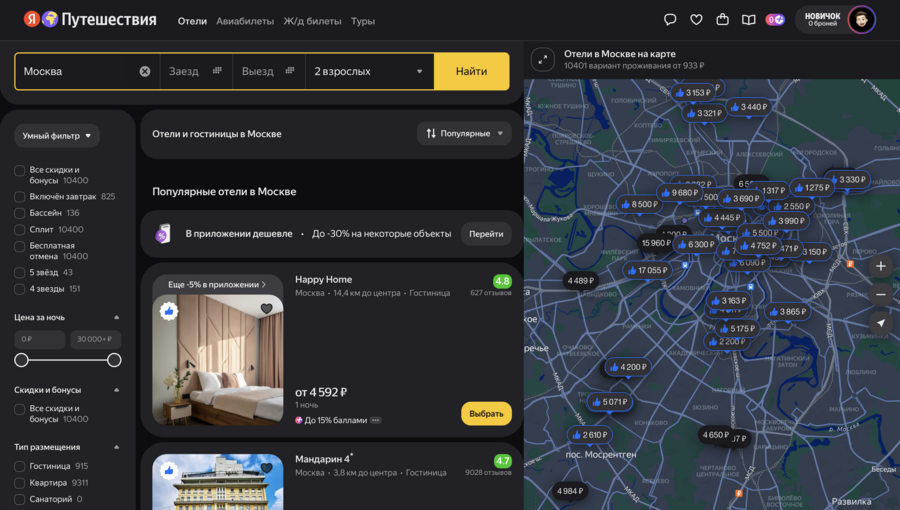
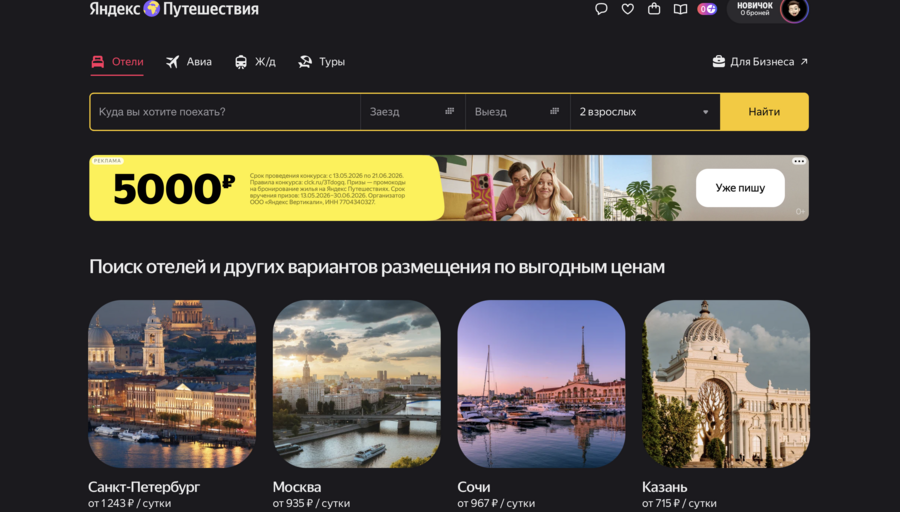
Website of Yandex Travel
The mobile app supports fast and convenient trip planning. It communicates the brand’s key values: speed, accessibility, cashback, transparent prices and control over the whole travel process.
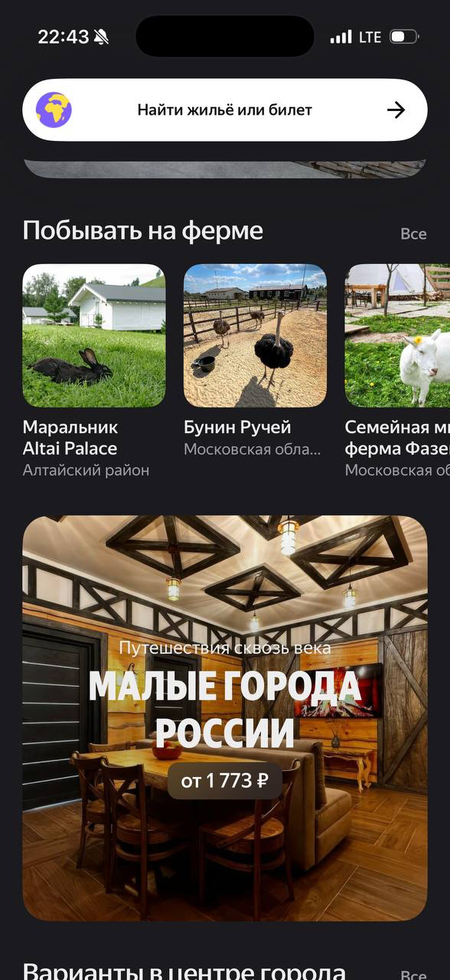
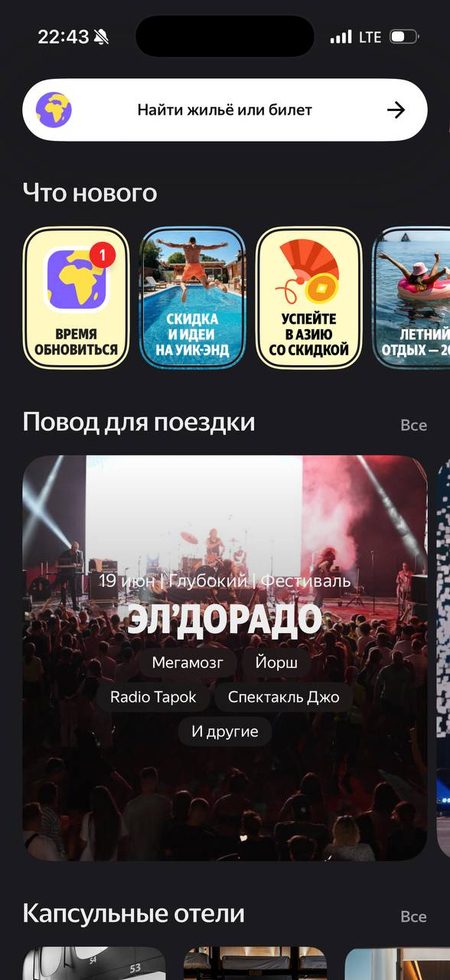
Mobile app of Yandex Travel
Banner from the application of Yandex Travel
The Travel Journal works as a content marketing channel. It publishes travel guides, destination ideas, service updates and lifestyle materials, combining useful information with inspiration.
Website of Yandex Travel Journal

Social media channels help the brand communicate in a lighter and more emotional way. They are used for travel inspiration, seasonal ideas, humor, promotional campaigns and interaction with the audience.



Publication from telegram channel of Yandex Travel
Yandex Travel uses PR to strengthen its expert image. Media articles, surveys and industry news present the brand not only as a booking service, but also as a source of travel insights and market knowledge.


Point of Yandex Travel on MyataFest

Collaborations, such as lifestyle or fashion-related projects, allow Yandex Travel to move beyond functional booking and connect with users emotionally through humor, identity and the idea of vacation culture.
Outdoor communication, such as street posters, billboards and banners, helps Yandex Travel reach people in their everyday urban environment. This channel works through short messages, recognizable visuals and simple travel-related emotions. Unlike the website or app, outdoor advertising does not give detailed information, but creates quick brand awareness and reminds people about the idea of planning a trip. Through this channel, Yandex Travel presents travel as something easy, accessible and desirable. Posters and banners can attract attention through bright images, short slogans, seasonal offers and the recognizable Yandex visual style.


Advertisement of Yandex Travel in metro
Posters of Yandex Travel outside
Theoretical framework
Two theories are most relevant for the analysis of Yandex Travel: the Elaboration Likelihood Model and Uses and Gratifications Theory.
The Elaboration Likelihood Model, developed by Richard Petty and John Cacioppo, explains two routes of persuasion. The central route is based on careful processing of rational arguments: price, cashback, reviews, booking conditions, convenience and service reliability. The peripheral route is based on quicker emotional cues: visual style, humour, travel mood, familiarity with the Yandex ecosystem and lifestyle associations.
Uses and Gratifications Theory explains why audiences choose certain media or services. It sees users as active: they use platforms to satisfy specific needs, such as information, convenience, entertainment, inspiration, emotional escape or self-expression.
These theories are useful for analysing Yandex Travel because the brand communicates both as a functional booking service and as a lifestyle travel brand. It helps users solve practical problems, but also creates an emotional image of travel as something easy, desirable and accessible.
Analysis: persuasion through the Elaboration Likelihood Model
Yandex Travel uses the central route most clearly in its website and app interface. When users search for hotels, flights, train tickets or tours, they need rational information. The brand answers this need through prices, filters, ratings, reviews, cashback labels, hotel descriptions and booking conditions. These elements reduce uncertainty and help users make a decision based on facts.
A good example for analysis is the booking interface on the website or in the app. The search bar, dates, number of guests, hotel cards, prices and reviews all work as central-route arguments. The user is not only emotionally attracted to travel, but also convinced that the service is practical, transparent and useful.
Banner from website of Yandex Travel
Banners from website of Yandex Travel
At the same time, Yandex Travel also uses the peripheral route. Travel-related visuals, short slogans, friendly interface design and the recognizable Yandex style create trust without requiring deep analysis. Outdoor posters and banners are especially connected with the peripheral route: they cannot provide detailed information, but they can quickly create awareness, mood and desire to travel.
Another example is the collaboration with SELA. This communication does not focus only on booking tickets or hotels. Instead, it connects travel with fashion, vacation mood, comfort and personal style. Through ELM, this works mostly as peripheral persuasion: the audience is influenced by aesthetics, lifestyle associations and emotional anticipation before a trip.
Posters of Yandex Travel outside